开放应用中的ip黑白名单

IP白名单配置

入口:集成应用>开放管理>应用>授权调整>IP白名单配置
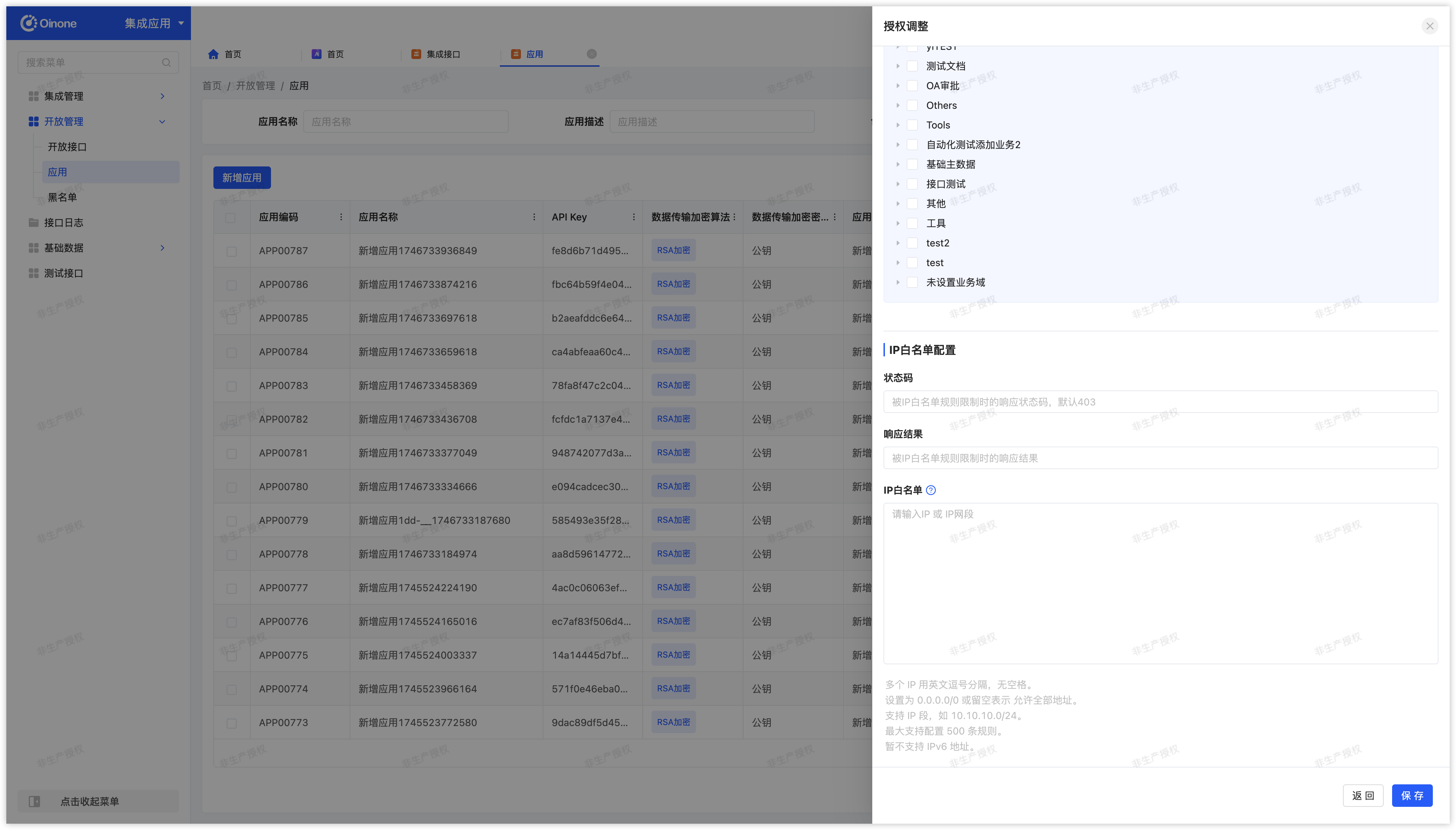
IP白名单

IP白名单取请求头中的X-Forwarded-For属性的最后一个值,X-Forwarded-For以英文,分割ip地址。

X-Forwarded-For: clientIP, proxy1IP, proxy2IP, ..., proxyNIP

根据 RFC 7239 标准所述,X-Forwarded-For含义如下:

  • clientIP:最左边的 IP,表示最初发起请求的客户端 IP(即真实用户 IP)。
  • proxyXIP:从左往右依次为中间各级代理服务器的 IP。
  • 最右边的 IP:表示离当前 Web 服务器最近的一层代理服务器(IP白名单拦截的此IP)。

Nginx配置示例

以Nginx为例,为确保X-Forwarded-For拿到的是真实的IP地址,需要增加配置。

proxy_set_header X-Forwarded-For $proxy_add_x_forwarded_for;

IP黑名单配置

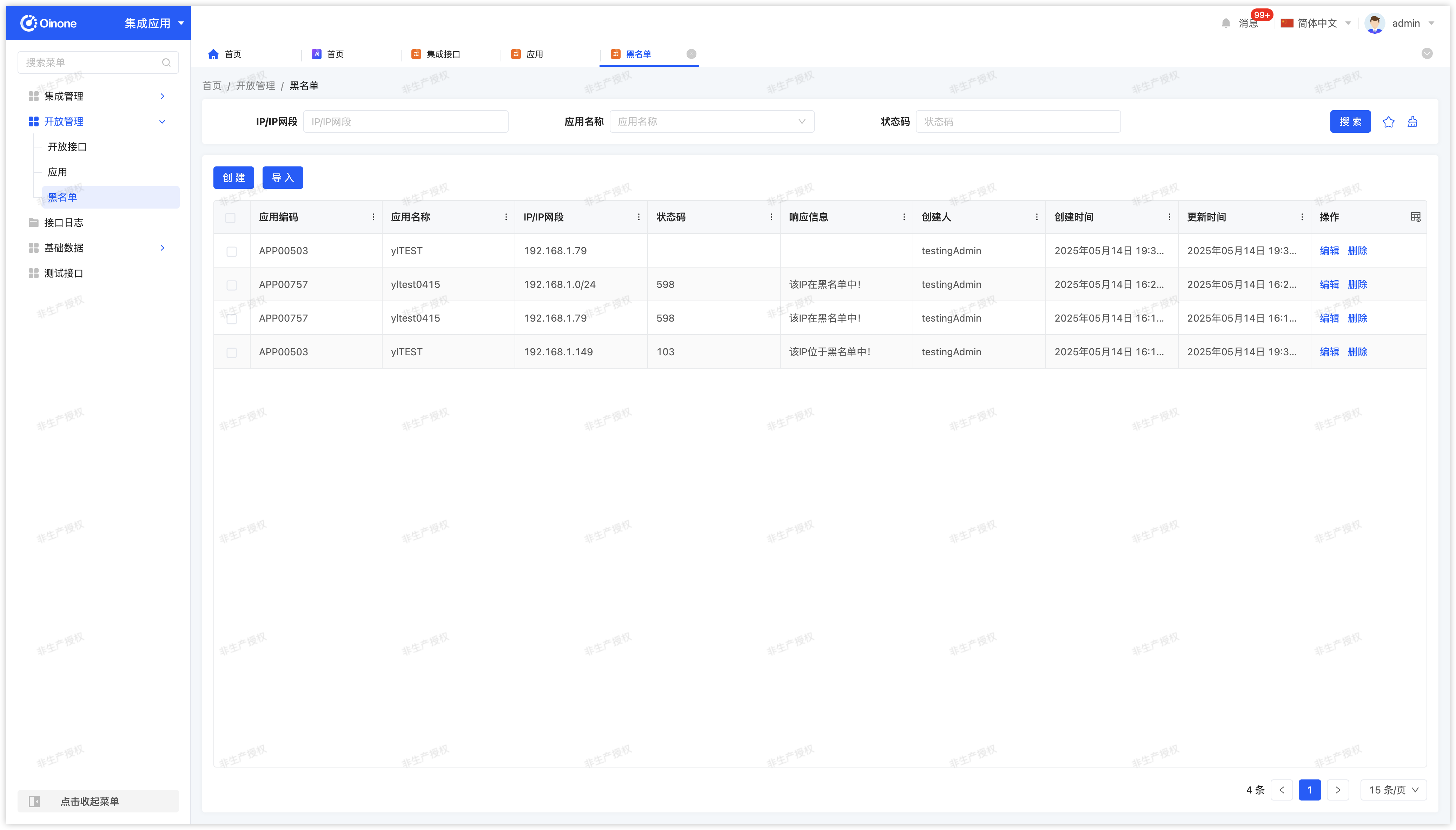
入口:集成应用>开放管理>应用>黑名单
IP黑名单

  • 取值来源:从请求头 X-Real-IP 中提取客户端 IP。
  • 验证逻辑:
    • X-Real-IP 不存在,直接拦截并返回异常提示:未获取到真实IP地址。
    • 检查提取的 IP 是否在阻止列表中。

相关文章

IP黑白名单实现拦截三方用户

Oinone社区 作者:夜神月原创文章,如若转载,请注明出处:https://doc.oinone.top/other/21148.html

访问Oinone官网:https://www.oinone.top获取数式Oinone低代码应用平台体验

Like (0)
夜神月's avatar夜神月数式员工
Previous 2025年5月12日 pm7:28
Next 2025年5月15日 am10:49

相关推荐

  • 如何实现业务表格跳转页面设计器设计器页面

    后端实现 代理继承界面设计器视图模型 @Model.model(MyView.MODEL_MODEL) @Model(displayName = "视图代理") @Model.Advanced(type = ModelTypeEnum.PROXY) public class MyView extends UiDesignerViewProxy { public static final String MODEL_MODEL = "hr.simple.MyView"; @Field.Integer @Field(displayName = "页面布局ID") private Long uiDesignerViewLayoutId; } 重写查询接口,返回页面布局ID,重写创建接口,实现创建页面逻辑。 package pro.shushi.pamirs.top.core.action; import org.apache.commons.collections4.CollectionUtils; import org.springframework.beans.factory.annotation.Autowired; import org.springframework.stereotype.Component; import pro.shushi.pamirs.boot.base.constants.ViewConstants; import pro.shushi.pamirs.boot.base.enmu.ActionTargetEnum; import pro.shushi.pamirs.boot.base.ux.annotation.action.UxAction; import pro.shushi.pamirs.boot.base.ux.annotation.action.UxRoute; import pro.shushi.pamirs.boot.base.ux.annotation.button.UxRouteButton; import pro.shushi.pamirs.framework.connectors.data.sql.Pops; import pro.shushi.pamirs.framework.connectors.data.sql.query.LambdaQueryWrapper; import pro.shushi.pamirs.meta.annotation.Action; import pro.shushi.pamirs.meta.annotation.Function; import pro.shushi.pamirs.meta.annotation.Model; import pro.shushi.pamirs.meta.api.dto.condition.Pagination; import pro.shushi.pamirs.meta.api.dto.wrapper.IWrapper; import pro.shushi.pamirs.meta.api.session.PamirsSession; import pro.shushi.pamirs.meta.constant.FunctionConstants; import pro.shushi.pamirs.meta.enmu.*; import pro.shushi.pamirs.top.api.model.MyView; import pro.shushi.pamirs.ui.designer.api.designe.UiDesignerViewLayoutService; import pro.shushi.pamirs.ui.designer.model.UiDesignerViewLayout; import pro.shushi.pamirs.ui.designer.pmodel.UiDesignerViewLayoutProxy; import java.util.List; import java.util.Map; import java.util.stream.Collectors; /** * @author Yexiu at 20:39 on 2025/3/27 */ @Component @Model.model(MyView.MODEL_MODEL) public class MyViewAction { @Autowired private UiDesignerViewLayoutService uiDesignerViewLayoutService; @Action.Advanced(name = FunctionConstants.create, managed = true) @Action(displayName = "创建", summary = "添加", bindingType = ViewTypeEnum.FORM) @Function(name = FunctionConstants.create) @Function.fun(FunctionConstants.create) public MyView create(MyView data) { UiDesignerViewLayoutProxy uiDesignerViewLayoutProxy = new UiDesignerViewLayoutProxy(); uiDesignerViewLayoutProxy.setBizType(data.getBizType()); uiDesignerViewLayoutProxy.setDesignerActionBarType(data.getDesignerActionBarType()); uiDesignerViewLayoutProxy.setViewType(data.getType()); uiDesignerViewLayoutProxy.setModel(data.getModel()); uiDesignerViewLayoutProxy.setModule(PamirsSession.getServApp()); uiDesignerViewLayoutProxy.setViewTitle(data.getTitle()); uiDesignerViewLayoutProxy.setUsingDefaultView(data.getLoadLayout()); UiDesignerViewLayoutProxy saveUiDesigner = uiDesignerViewLayoutService.create(uiDesignerViewLayoutProxy); data.setDesignerViewId(saveUiDesigner.getId()); return data; } @Function.Advanced(type = FunctionTypeEnum.QUERY, displayName = "查询列表") @Function.fun(FunctionConstants.queryPage) @Function(openLevel = {FunctionOpenEnum.API, FunctionOpenEnum.LOCAL}) public Pagination<MyView> queryPage(Pagination<MyView> page, IWrapper<MyView> queryWrapper) { LambdaQueryWrapper<MyView> wrapper = Pops.<MyView>lambdaQuery().from(MyView.MODEL_MODEL) .eq(MyView::getSys, Boolean.FALSE) .eq(MyView::getSystemSource, SystemSourceEnum.UI); Pagination<MyView> myViewPagination = new MyView().queryPage(page, wrapper); List<MyView> content…

    2025年3月31日
    56600
  • Oinone 初级学习路径

    文档说明 文档链接 介绍Oinone前端相关知识点 前端基础学习路径 介绍Oinone后端相关知识点 后端基础学习路径 介绍平台基础组件 平台基础组件 介绍平台设计器常用场景实操 设计器基础学习路径 设计器实操案例示例 7.2 实战训练(积分发放)

    2024年6月15日
    1.4K00
  • 如何通过业务数据拿到工作流用户任务待办

    在模型里面建一个非存储字段,用来传输工作流用户任务待办ID。。 界面设计器把这个字段拖到列表页里,并在跳转动作上配置上下文参数,把任务待办id传到表单页里。 重写教师模型的queryPage,通过业务数据id查询出每条业务数据的工作流用户任务待办id返回给前端。 @Function.Advanced(displayName = "查询教师列表", type = FunctionTypeEnum.QUERY, category = FunctionCategoryEnum.QUERY_PAGE, managed = true) @Function(openLevel = {FunctionOpenEnum.LOCAL, FunctionOpenEnum.REMOTE, FunctionOpenEnum.API}) public Pagination<Teacher> queryPage(Pagination<Teacher> page, IWrapper<Teacher> queryWrapper) { Pagination<Teacher> teacherPagination = new Teacher().queryPage(page, queryWrapper); List<Teacher> content = teacherPagination.getContent(); if (CollectionUtils.isEmpty(content)) { return teacherPagination; } List<Long> teacherIds = content.stream().map(Teacher::getId).collect(Collectors.toList()); List<WorkflowUserTask> workflowUserTasks = Models.data().queryListByWrapper(Pops.<WorkflowUserTask>lambdaQuery() .from(WorkflowUserTask.MODEL_MODEL) .in(WorkflowUserTask::getNodeDataBizId, teacherIds) .orderByDesc(WorkflowUserTask::getCreateDate) ); if (CollectionUtils.isEmpty(workflowUserTasks)) { return teacherPagination; } Map<Long/*业务id*/, WorkflowUserTask> userTaskMap = workflowUserTasks.stream().collect(Collectors.toMap( WorkflowUserTask::getNodeDataBizId, a -> a, (old, n) -> old) ); for (Teacher teacher : content) { if (userTaskMap.containsKey(teacher.getId())) { teacher.setWorkflowUserTaskId(userTaskMap.get(teacher.getId()).getId()); } } return teacherPagination; } 查看效果,任务待办id成功传到表单里面。

    2025年1月10日
    2.3K00
  • 打印支持非存储数据导出

    介绍 平台提供的默认打印功能没有支持非存储数据的导出。我们可以自定义打印导出功能,以满足业务中个性化的需求。 实现思路 重写打印任务模型,添加业务数据字段 自定义打印动作,前端将导出数据放到业务数据字段中 使用导出数据扩展点机制修改导出数据 代码示例 继承平台的打印任务模型,加上需要业务数据字段,这个字段用于传输需要打印的表单数据,但是需要自定义打印的表单往往不止一个,所以需要定义为通用的Object字段。 @Model.model(TransientPdfPrintTask.MODEL_MODEL) @Model(displayName = "传输模型Pdf打印任务") public class TransientPdfPrintTask extends PdfPrintTask { public static final String MODEL_MODEL="demo.TransientPdfPrintTask"; @Field(displayName = "业务数据") private Object businessData; } 自定义打印动作 @Model.model(TransientPdfPrintTask.MODEL_MODEL) @Component public class TransientPdfPrintTaskAction extends AbstractPdfPrintTaskAction<TransientPdfPrintTask> { @Resource private PdfFileService pdfFileService; @Action(displayName = "打印", contextType = ActionContextTypeEnum.CONTEXT_FREE, bindingType = {ViewTypeEnum.TABLE}) @Override public TransientPdfPrintTask createPrintTask(TransientPdfPrintTask data) { return super.createPrintTask(data); } @Override protected void doExport(TransientPdfPrintTask exportTask, PdfDefinitionContext context) { pdfFileService.doExportSync(exportTask, context); } @Function.Advanced(type = FunctionTypeEnum.QUERY) @Function(openLevel = FunctionOpenEnum.API) public TransientPdfPrintTask construct(TransientPdfPrintTask data) { String model = FetchUtil.fetchVariables(PdfConstants.MODEL); data.construct(); data.setModel(model); return data; } } 本篇文章只介绍同步打印,如果异步需要修改doExport方法。 编写导出的数据处理逻辑 @Ext(PdfPrintTask.class) public class PrintExportExt extends AbstractPdfExportFetchDataExtPointImpl implements PdfExportFetchDataExtPoint { // 这里使用扩展点表达式匹配需要打印的非存储模型,只有表达式为true才会走这段逻辑。 @Override @ExtPoint.Implement(expression = "context.model==\"" + ProductPricingClientTransient.MODEL_MODEL + "\"") public List<Object> fetchExportData(PdfPrintTask exportTask, PdfDefinitionContext context) { List<Object> result = new ArrayList<>(); List<Object> dataList = new ArrayList<>(); TransientPdfPrintTask transientPdfPrintTask = new TransientPdfPrintTask(); transientPdfPrintTask.set_d(exportTask.get_d()); dataList.add(transientPdfPrintTask.getBusinessData()); result.add(dataList); return result; } } 前端自定义打印按钮,将数据提交给业务数据字段,并使用同步导出打印。

    2025年10月13日
    77000
  • 外部系统接入SSO-OAuth2(6.3.x 之后版本支持)

    一、概述 统一身份认证系统提供了单点登录功能。本文档详述了统一身份认证系统单点登录接口,介绍了应用系统对接统一身份认证系统的过程和方法,用以帮助开发人员将应用系统接入统一身份认证系统。 本文档支持的协议:OAuth2 二、统一认证集成规范 2.1 SSO登录场景 序号 场景 预期结果 确认 1 登录跳转,在未登录的条件下,直接访问业务系统 跳转到单点登录界面 是 2 登录跳转,在已登录的条件下,直接访问业务系统 直接进入业务系统 是 3 正常登录,先登录认证,然后访问业务系统 直接进入业务系统 是 4 正常登出,在单点登录系统登出 访问业务系统要重新登录 是 5 正常登出,在业务系统登出 单点登录系统同步登出 是 2.2 认证流程 OAuth2 登录和认证流程 后端验证 token 后,创建本地会话(如 JSESSIONID 或自定义 Cookie); 后续应用请求靠本地会话维持登录状态,不再依赖原始 token; 本地会话有过期时间(如 30 分钟无操作过期); 三、认证服务接口 3.1 SSO服务端认证 浏览器登录 分类 说明 请求地址(开发环境) http://${host}:${port}/pamirs/sso/auth?client_id={client_id}&redirect_uri={redirect_uri}&state={state} 请求地址(测试环境) http://${host}:${port}/pamirs/sso/auth?client_id={client_id}&redirect_uri={redirect_uri}&state={state} 请求方式 GET 请求参数 redirect_uri:应用系统回调地址client_id:SSO 服务端颁发的应用 IDstate:可选但推荐,用于防止 CSRF 的随机字符串(UUID 随机码) 请求示例 http://${host}:${port}/pamirs/sso/auth?client_id=client123456&redirect_rui=http://app.example.com&state=abc123 响应说明 1. 已登录:重定向到 redirect 地址并携带授权码 code,如 http://app.example.com&state=abc123&code=xxx2. 未登录:重定向到服务器 SSO 登录地址 备注 SSO 登录成功后,会携带授权码并重定向到 redirect 地址 3.2 验证授权码 分类 说明 请求地址(开发环境) http://${host}:${port}/pamirs/sso/oauth2/authorize 请求地址(测试环境) http://${host}:${port}/pamirs/sso/oauth2/authorize 请求方式 POST 请求 Body {"grant_type":"authorization_code","client_id":"xxxx","client_secret":"xxxxx","code":"xxxx"} 请求示例 http://${host}:${port}/pamirs/sso/oauth2/authorize 响应说明 {"code":"0","msg":"成功","data":{"access_token":"xxxxx","expires_in":7200,"refresh_token":"xxxxxx","refresh_token_expiresIn":604800}} 备注 — 3.2 根据token获取用户信息 分类 说明 请求地址(开发环境) http://${host}:${port}/pamirs/sso/oauth2/getUserInfo 请求地址(测试环境) http://${host}:${port}/pamirs/sso/oauth2/getUserInfo 请求方式 POST 请求头 Authorization: Bearer xxxxxxxx 请求 Body {"client_id":"xxxx"} 请求示例 http://${host}:${port}/pamirs/sso/oauth2/getUserInfo 响应 {"code":"0","msg":"成功","data":{"name":"xxxxx","email":"xxxxx","login":"xxxxxx","id":"xxxxxxx"}} 备注 成功返回用户信息;失败返回错误码:1 根据实际情况其他协议的验证接口 3.3 单点登出接口 分类 说明 请求地址(开发环境) http://${host}:${port}/pamirs/sso/oauth2/logout 请求地址(测试环境) http://${host}:${port}/pamirs/sso/oauth2/logout 请求方式 POST 请求头 Authorization: Bearer xxxxxxxx 请求 Body {"client_id":"xxxx"} 请求示例 http://${host}:${port}/pamirs/sso/oauth2/logout 响应头 HTTP/1.1 200;Content-Type: application/html;charset=UTF-8 响应体 登出成功页面 备注 应用系统向 SSO 系统发起登出请求,SSO 收到后会通知所有其它系统登出该用户 四、服务注册 添加以下依赖 <!– sso相关 –> <dependency> <groupId>pro.shushi.pamirs.core</groupId> <artifactId>pamirs-sso-api</artifactId> </dependency> <dependency> <groupId>pro.shushi.pamirs.core</groupId> <artifactId>pamirs-sso-common</artifactId> </dependency> <dependency> <groupId>pro.shushi.pamirs.core</groupId> <artifactId>pamirs-sso-server</artifactId> </dependency> 配置文件 pamirs sso: enabled: true server: loginUrl: http://127.0.0.1:8091/login authType:…

    2026年1月7日
    53900

Leave a Reply

Please Login to Comment