提交数据动作如何把弹窗内的数据完全返回

场景介绍

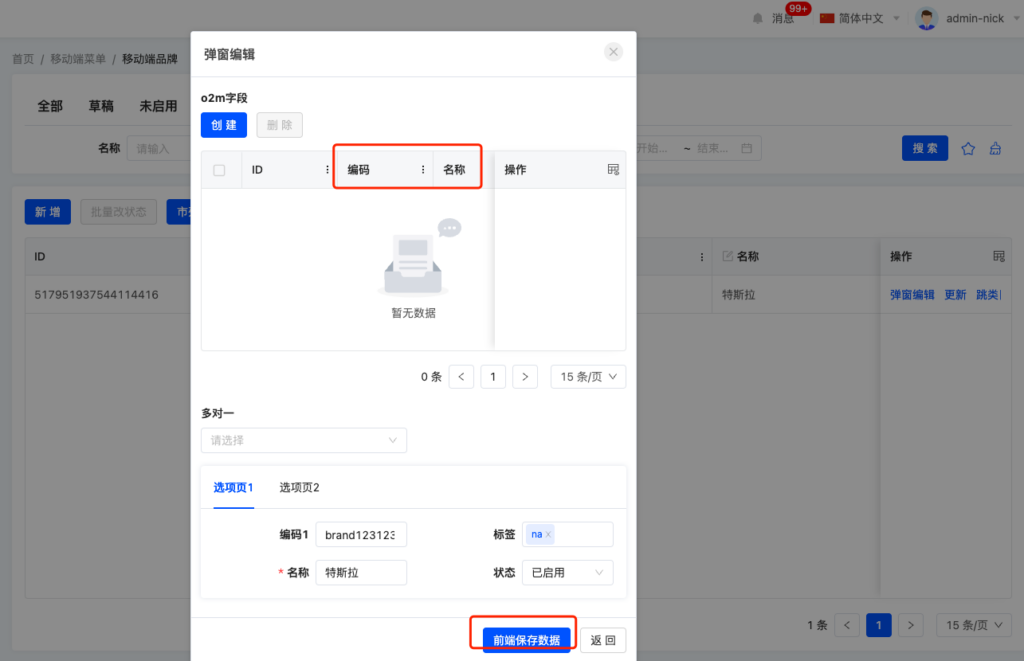
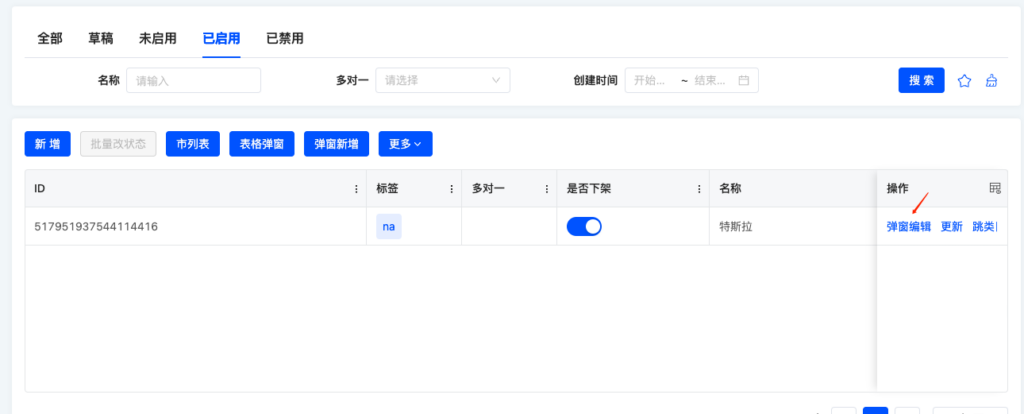
  1. 表格行的操作列有一个打开弹窗的动作
  2. 弹窗内为表格行数据的表单,表单内有一个o2m字段,展示了除关联关系字段(大部分场景为id)外的其他字段
  3. 弹窗底部动作区域有一个提交数据的客户端动作,该动作会将弹窗内表单的数据回写到表格行的数据上
场景截图
提交数据动作如何把弹窗内的数据完全返回
提交数据动作如何把弹窗内的数据完全返回

问题现象

点击提交数据的客户端动作,会将数据回写到表格行的数据上,但是表格行拿到的o2m字段的数据只有id字段,o2m字段的编码和名称并不会提交到表格行,o2m字段默认提交规则是只会提交关联关系字段(大部分场景为id)的数据

解决方案

该方案适合5.x版本,4.x版本新建的字段组件无法自动生成属性面板,建议拿下面的组件在SPI加上model和name注册实现

  1. 自定义o2m字段所在的组件,m2m字段或者其他类似问题的组件也是如下面组件一样覆写submit方法即可
    import {
    BaseFieldWidget,
    FormO2MTableFieldWidget,
    ModelFieldType,
    SPI,
    SubmitRelationValue,
    SubmitValue,
    ViewType
    } from '@kunlun/dependencies';
    @SPI.ClassFactory(
    BaseFieldWidget.Token({
    viewType: ViewType.Form,
    ttype: ModelFieldType.OneToMany,
    widget: 'SubmitAllDataO2MTable'
    })
    )
    export class MyFormO2MTableFieldWidget extends FormO2MTableFieldWidget {
    public async submit(submitValue: SubmitValue): Promise<Record<string, unknown> | SubmitRelationValue | undefined> {
    return { [this.itemName]: this.value };
    }
    }
  2. 在界面设计器的组件功能内新增对应业务类型的自定义组件,组件内的元件api名称填写上面组件的名称SubmitAllDataO2MTable
  3. 在界面设计器的设计页面切换o2m字段组件为SubmitAllDataO2MTable

参考文档

Oinone社区 作者:nation原创文章,如若转载,请注明出处:https://doc.oinone.top/frontend/14187.html

访问Oinone官网:https://www.oinone.top获取数式Oinone低代码应用平台体验

(0)
nation的头像nation数式员工
上一篇 2024年6月27日
下一篇 2024年6月28日

相关推荐

  • 前端6.2.x升级指南

    升级背景 从 6.2.x 版本开始,平台底层核心代码已全面开源(设计器相关代码除外),本次升级涉及包名变更和配置调整,以下是详细的升级步骤 1. 更新 .npmrc 配置 修改当前项目根目录 .npmrc 文件,内容如下: registry=https://registry.npmmirror.com/ @oinone:registry=http://nexus.shushi.pro/repository/kunlun/ @kunlun:registry=http://nexus.shushi.pro/repository/kunlun/ shamefully-hoist=true legacy-peer-deps=true link-workspace-packages = true prefer-workspace-packages = true recursive-install = true lockfile=true 2. 包名变更 以前的包是 @kunlun/xxxx,现在的包名是@oinone/kunlun开头,所以需要全部替换修改。 旧包名 新包名 @kunlun/dependencies @oinone/kunlun-dependencies @kunlun/vue-ui-antd @oinone/kunlun-vue-ui-antd 3. 升级依赖版本 修改所有 package.json 中更新所有平台相关依赖: – "@kunlun/dependencies": "~5.7.0" + "@oinone/kunlun-dependencies": "~6.2.0" boot工程的package.json新增devDependencies依赖 "devDependencies": { "@types/lodash": "4.14.182", "@types/lodash-es": "4.17.6", ….. } 4. 更新代码引用 全局搜索并替换代码中的所有 @kunlun/ 为 @oinone/kunlun- 完整的 main.ts import 'ant-design-vue/dist/antd.min.css'; import 'element-plus/dist/index.css'; import '@oinone/kunlun-vue-ui-antd/dist/oinone-kunlun-vue-ui-antd.css'; import '@oinone/kunlun-vue-ui-el/dist/oinone-kunlun-vue-ui-el.css'; import '@oinone/kunlun-designer-common/dist/oinone-kunlun-designer-common.css'; import '@oinone/kunlun-model-designer/dist/oinone-kunlun-model-designer.css'; import '@oinone/kunlun-workflow-designer/dist/oinone-kunlun-workflow-designer.css'; import '@oinone/kunlun-workflow/dist/oinone-kunlun-workflow.css'; import '@oinone/kunlun-data-designer/dist/oinone-kunlun-data-designer.css'; import '@oinone/kunlun-microflow-designer/dist/oinone-kunlun-microflow-designer.css'; import 'reflect-metadata'; import ElementPlus from 'element-plus'; import { App } from 'vue'; import { VueOioProvider, RuntimeContextManager } from '@oinone/kunlun-dependencies'; // 设计器 import '@oinone/kunlun-ui-designer-dependencies'; import '@oinone/kunlun-print-designer-dependencies'; import '@oinone/kunlun-workflow'; import '@oinone/kunlun-workflow-designer'; import '@oinone/kunlun-model-designer'; import '@oinone/kunlun-data-designer'; import '@oinone/kunlun-data-designer-open-pc'; import '@oinone/kunlun-eip-dependencies'; import '@oinone/kunlun-ai-dependencies'; import '@oinone/kunlun-microflow-designer'; import '@oinone/kunlun-designer-common-ee'; // 下面三个依赖是当前工程的包,请根据实际场景修改 import '@ss/oinone'; import '@ss/admin-widget'; import '@ss/project'; VueOioProvider( { browser: { title: 'Oinone – 构你想象!', favicon: 'https://pamirs.oss-cn-hangzhou.aliyuncs.com/pamirs/image/default_favicon.ico' } }, [ () => { /// 获取当前vue实例 const app = RuntimeContextManager.createOrReplace().frameworkInstance as App; } ] ); 当配置全部修改完成后,重写安装依赖 # 清理旧依赖 pnpm clean # 安装新依赖 pnpm install

    2025年6月17日
    41900
  • 前端 SPI 注册 + 渲染

    在阅读本篇文章之前,您需要学习以下知识点: 1: TS 结合 Vue 实现动态注册和响应式管理 前端开发者在使用 oinone 平台的时候会发现,不管是自定义字段还是视图,对应的 typescript 都会用到@SPI.ClassFactory(参数),然后在对用的class中重写initialize方法`: @SPI.ClassFactory(参数) export class CustomClass extends xxx { public initialize(props) { super.initialize(props); this.setComponent(FormString); return this; } } 本文将带您熟悉 oinone 前端的 SPI 注册机制以及 TS + Vue 的渲染过程。 不管是自定义字段还是视图@SPI.ClassFactory(参数)都是固定写法,区别在于参数不同,这篇文章里面详细描述了参数的定义。 SPI 注册机制 有自定义过字段、视图经验的开发者可能会发现,字段(表单字段)SPI 注册用的是FormFieldWidget.Token生成对应的参数,视图 SPI 注册用的是BaseElementWidget.Token,那么为什么要这样定义呢? 大家可以想象成现在有一个大的房子,房子里面有很多房间,每个房间都有自己的名字,比如FormFieldWidget就是房间的名字,BaseElementWidget也是房间的名字,这样一来我们就可以根据不同的房间存放不同的东西。 下面给大家展示下伪代码实现: class SPI { static container = new Map<string, WeakMap<object, object>>() static ClassFactory(token) { return (target) => { if(!SPI.container.get(token.type)) { SPI.container.set(token.type, new WeakMap()) } const services = SPI.container.get(token.type) services?.set(token, target) } } } class FormFieldWidget { static Token(options) { return { …options, type: 'Field' } } static Selector(options) { const fieldWidgets = SPI.container.get('Field') if(fieldWidgets) { return fieldWidgets.get(options)! } return null } } @SPI.ClassFactory(FormFieldWidget.Token({ viewType: 'Form', ttype: 'String', widget: 'Input' })) class StringWidget { } // 字段元数据 const fieldMeta = { name: "name", field: "name", mode: 'demo.model', widget: 'Input', ttype: 'String', viewType: 'Form' } // 找到对应的widget const widget = FormFieldWidget.Selector({ viewType: fieldMeta.viewType, ttype: fieldMeta.ttype, widget: fieldMeta.widget, }) 在上述代码中,我们主要是做了这么写事情: 1.SPI class class SPI { static container = new Map<string, WeakMap<object, object>>() } SPI 类是一个静态类,用于管理服务的注册和获取。 container 是一个静态属性,类型是 Map,它的键是字符串,值是 WeakMap。这个结构允许我们为每个服务类型(例如,Field)管理多个服务实例。 2.ClassFactory 方法 static ClassFactory(token) { return (target) => { if…

    2024年9月26日
    1.3K00
  • GraphQL请求详解(v4)

    阅读之前 什么是GraphQL? Oinone官方解读GraphQL入门 可视化请求工具 insomnia下载 概述 (以下内容简称GQL) 众所周知,平台的所有功能都是通过一系列元数据定义来驱动的,而GQL作为服务端和客户端交互协议,其重要性不言而喻。下面会从以下几个方面介绍GQL在平台中是如何运作的: 服务端定义元数据生成GQL对应的schema 通过HttpClient发起一个GQL请求 通过window.open使用GET方式发起一个GQL请求 客户端泛化调用任意API服务 客户端通过运行时上下文RuntimeContext发起GQL请求 准备工作 在开始介绍GQL之前,我们需要定义一个可以被GQL请求的服务端函数,以此来介绍我们的相关内容。(对服务端不感兴趣的同学可以跳过代码部分) DemoModel.java @Model.model(DemoModel.MODEL_MODEL) @Model(displayName = "演示模型", labelFields = {"name"}) public class DemoModel extends IdModel { private static final long serialVersionUID = -7211802945795866154L; public static final String MODEL_MODEL = "demo.DemoModel"; @Field(displayName = "名称") private String name; @Field(displayName = "是否启用") private Boolean isEnabled; } DemoModelAction.java @Model.model(DemoModel.MODEL_MODEL) public class DemoModelAction { @Action(displayName = "启用") public DemoModel enable(DemoModel data) { data.setIsEnabled(true); data.updateById(); return data; } @Action(displayName = "禁用") public DemoModel disable(DemoModel data) { data.setIsEnabled(false); data.updateById(); return data; } } 上面的java代码定义了演示模型的字段和动作: 字段 field id:ID 整数 Integer name:名称 字符串 String isEnabled:是否启用 布尔 Boolean 动作 action enable:启用 提交动作 ServerAction disable:禁用 提交动作 ServerAction 服务端定义元数据生成GQL对应的schema 模型和字段 type DemoModel { id: Long name: String isEnabled: Boolean } 动作 type DemoModelInput { id: Long name: String isEnabled: Boolean } type DemoModelQuery { queryOne(query: DemoModelInput): DemoModel …… } type DemoModelMutation { enable(data: DemoModelInput): DemoModel disable(data: DemoModelInput): DemoModel …… } PS:平台内置了多种Query和Mutation定义,通过模型继承关系将自动生成,无需手动定义。比如Query定义包括queryOne、queryPage等;Mutation定义包括create、update等。特殊情况下,默认逻辑无法满足时,服务端通常采用函数重载的方式进行替换,客户端则无需关心。 生成规则 type DemoModel:通过模型编码demo.DemoModel取.分隔后的最后一位,并转换为大驼峰格式。字段与声明类型一致。 type DemoModelInput:动作入参定义,未做特殊声明的情况下与模型定义一致。 type DemoModelQuery和type DemoModelMutation:Query和Mutation为固定后缀,分别生成动作相关类型。当函数类型为QUERY时,使用Query后缀,其他情况使用Mutation后缀。 (此处仅做简单解释,详细生成规则过于复杂,客户端无需关心) Query类型的GQL示例 query { demoModelQuery { queryOne(query: { id: ${id} }) { id name isEnabled } } } Mutation类型的GQL示例 mutation…

    2023年11月1日
    2.1K00
  • oio-switch 开关

    API 参数 说明 类型 默认值 版本 autofocus 组件自动获取焦点 boolean false checked(v-model: checked ) 指定当前是否选中 checkedValue | unCheckedValue false checkedChildren 选中时的内容 slot checkedValue 选中时的值 boolean | string | number true disabled 是否禁用 boolean false loading 加载中的开关 boolean false unCheckedChildren 非选中时的内容 slot unCheckedValue 非选中时的值 boolean | string | number false 事件 事件名称 说明 回调参数 change 变化时回调函数 Function(checked: boolean | string | number, event: Event)

    2023年12月18日
    79100
  • 如何实现页面间的跳转

    介绍 在日常的业务中,我们经常需要在多个模型的页面之间跳转,例如从商品的行可以直接点击链接跳转到类目详情,还有查看该订单发起的售后单列表,这里将给大家展示如何在oinone中如何实现这些功能。 方法一、通过界面设计器的无代码能力配置 表格行跳转到表单页/详情页 拖入一个跳转动作到表格行,保存动作后,在左侧的动作属性面板底部有个请求配置,里面的上下文属性就是配置跳转参数的地方,点击添加按钮可以增加一行参数 点击添加按钮后,可以看到新增了一行,行内有2个输入框,左侧输入框为目标视图模型的字段,右侧输入框为当前视图模型的表达式 注意 表达式中activeRecord关键字代表当前行的数据对象 “上下文”相关知识点 当前页面的模型和跳转后的页面模型相同的情况下,会字段带上当前行数据的id作为路由参数 上下文是从当前页面跳转到下个页面带的自定义参数 上下文会作为跳转后的页面数据加载函数的入参,后端的该函数需要根据该条件查询到数据返回给前端,典型的例子就是编辑页,根据id查询对象的其他字段信息返回 跳转后页面的数据加载函数可以在动作场景的时候选择加载函数,也可以在页面的加载函数处设置 方法二、通过低代码方式在自定义代码中调用 oinone提供了内置函数executeViewAction实现该功能 import { DefaultComparisonOperator, executeViewAction, QueryExpression, RuntimeViewAction, ViewActionTarget, ViewType } from '@kunlun/dependencies'; export class JumpActionWidget { protected goToObjectView() { executeViewAction( { viewType: ViewType.Form, moduleName: 'resource', model: 'resource.ResourceCountry', name: 'redirectUpdatePage', target: ViewActionTarget.Router } as RuntimeViewAction, undefined, undefined, { // 此处为id参数,目前只有表单和详情页需要 id: '12223', // 此处为上下文参数,context内对象的key是目标页面需要传递的默认值 context: JSON.stringify({code: 'xxx'}), // 此处为跳转后左侧菜单展开选中的配置 menu: JSON.stringify({"selectedKeys":["国家"],"openKeys":["地址库","地区"]}) } ); } protected goToListView() { const searchConditions: QueryExpression[] = []; searchConditions.push({ leftValue: ['countryCode'], // 查询条件的字段 operator: DefaultComparisonOperator.EQUAL, right: 'CN' // 字段的值 }); executeViewAction( { viewType: ViewType.Table, moduleName: 'resource', model: 'resource.ResourceCity', name: 'resource#市', target: ViewActionTarget.OpenWindow } as RuntimeViewAction, undefined, undefined, { // searchConditions相当于domain,不会随页面搜索项重置动作一起被清空 searchConditions: encodeURIComponent(JSON.stringify(searchConditions)), // searchBody的字段会填充搜索区域的字段组件,会随页面搜索项重置动作一起被清空 searchBody: JSON.stringify({code: 'CN'}), menu: JSON.stringify({"selectedKeys":["国家"],"openKeys":["地址库","地区"]}) } ); } } 扩展知识点 为什么executeViewAction跳转到的新页面不是入参的moduleName属性对应的模块? 答:跳转后所在的模块优先级为: 第一个入参的resModuleName属性对应的模块 执行executeViewAction时所在的模块 第一个入参的moduleName属性对应的模块 如何快速获取选中菜单的值? 答:先通过页面菜单手动打开页面,然后在浏览器自带调试工具的控制台执行decodeURIComponent(location.href),其中的menu参数就是我们需要的值

    2024年5月13日
    2.2K00

Leave a Reply

登录后才能评论