如何扩展行为权限

注意:5.2.8 以上版本适用

需求

我们的权限控制需要在页面上有交互才可以在管理中心控制该动作权限,在没有页面交互的动作是不能进行授权操作的。所以本文章将介绍如何将页面上没有交互的动作接入到系统权限中管理。

一、扩展系统权限的菜单页面

实现

步骤:

  1. 创建授权节点
    实现权限节点扩展接口:pro.shushi.pamirs.auth.api.extend.load.PermissionNodeLoadExtendApi#buildRootPermissions

    @Component
    @Order(88)
    public class MyTestNodeLoadExtend implements PermissionNodeLoadExtendApi {
    
    public static final String MODEL = AuthTest.MODEL_MODEL;
    public static final String MODULE = TopModule.MODULE_MODULE;
    public static final String FUN = "dataStatus";
    
    @Override
    public List<PermissionNode> buildRootPermissions(PermissionLoadContext loadContext, List<PermissionNode> nodes) {
        //创建授权根节点
        PermissionNode root = createMyNode();
        List<PermissionNode> newNodes = new ArrayList<>();
        //从缓存中读取需要授权的Action
        Action cacheAction = PamirsSession.getContext().getExtendCache(ActionCacheApi.class).get(MODEL, FUN);
        if (cacheAction != null) {
            //将该Action放入权限树
            //权限鉴权的path路径是根据【cacheAction.getModel() + cacheAction.getName()】拼接的。和MODULE没有关系,这里MODULE可以自定义。
            AuthNodeHelper.addNode(newNodes, root, AuthNodeHelper.createActionNode(MODULE, cacheAction, root));
        }
        nodes.add(0, root);
        return newNodes;
    }
    
    private PermissionNode createMyNode() {
        return AuthNodeHelper.createNodeWithTranslate("MyNode", "自定义节点");
    }
    }
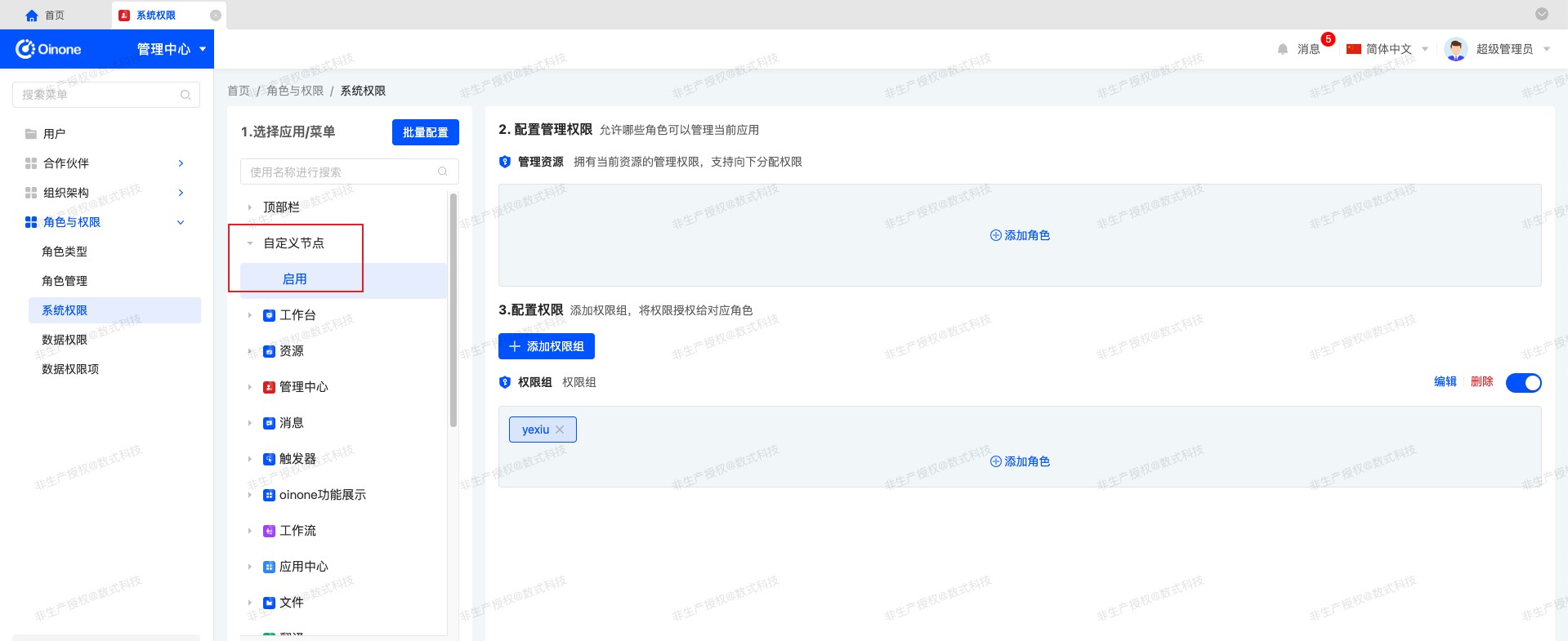
  2. 在管理中心中我们可以看到代码里创建的授权节点。
    如何扩展行为权限

  3. 给角色分配该动作的权限,调用我们配置的AuthTest模型的dataStatus动作看效果。
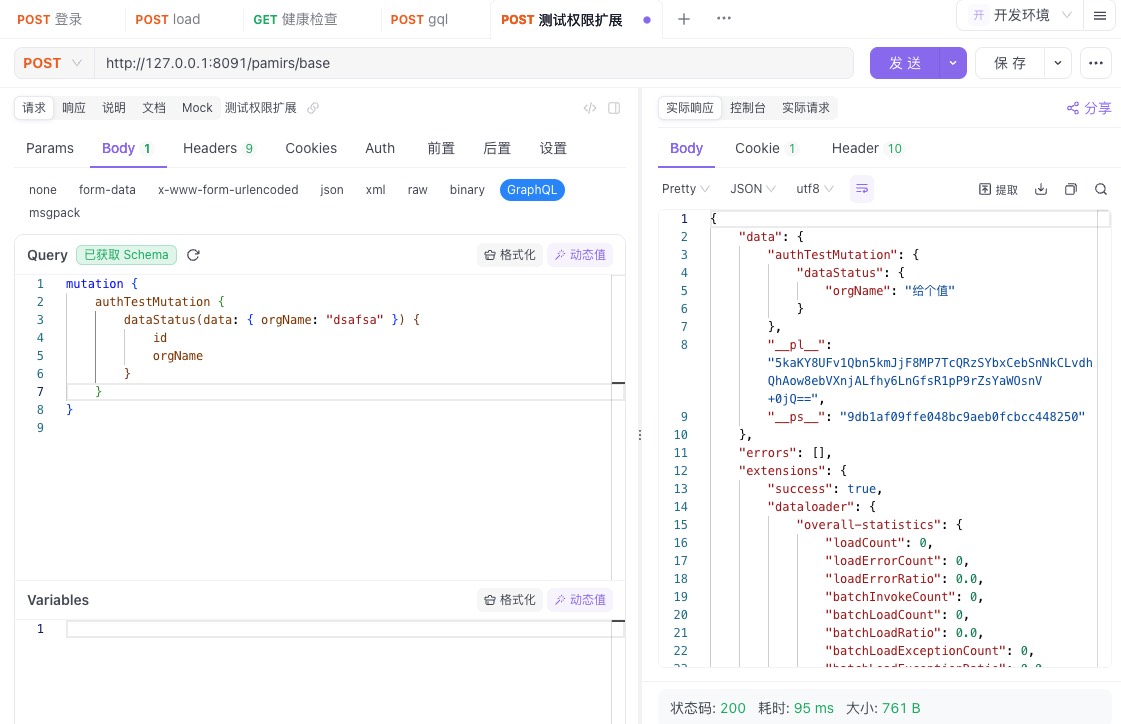
    如何扩展行为权限

    二、扩展菜单下的动作权限

    实现

    步骤:

  4. 创建viewAction用于作为权限菜单
    "permissionExtension"是自定义的viewAction的name,用于下面拼path路径鉴权。
    因为这里只需要在系统权限那边利用这个viewAction创建出授权节点。所以”权限扩展form“可以随意定义名字,系统会拿默认视图。

    @Model.model(AuthTest.MODEL_MODEL)
    @Component
    @UxRouteButton(
        action = @UxAction(name = "permissionExtension", displayName = "权限扩展", label = "权限扩展", contextType = ActionContextTypeEnum.CONTEXT_FREE),
        value = @UxRoute(model = AuthTest.MODEL_MODEL, viewName = "权限扩展form", openType = ActionTargetEnum.ROUTER))
    public class AuthTestAction {
    
    @Action(displayName = "启用", contextType = ActionContextTypeEnum.SINGLE)
    public AuthTest dataStatus(AuthTest data) {
        data.setOrgName("给个值");
        return data;
    }
    }
  5. 创建授权节点
    实现权限节点扩展接口:pro.shushi.pamirs.auth.api.extend.load.PermissionNodeLoadExtendApi#buildRootPermissions

    @Component
    @Order(88)
    public class MyTestNodeLoadExtend implements PermissionNodeLoadExtendApi {
    
    //创建授权根节点
    @Override
    public List<PermissionNode> buildRootPermissions(PermissionLoadContext loadContext, List<PermissionNode> nodes) {
    
        PermissionNode root = AuthNodeHelper.createNodeWithTranslate("CustomNode", "自定义节点");
        List<PermissionNode> newNodes = new ArrayList<>();
        newNodes.add(root);
        ViewAction viewAction = new ViewAction().setModel(AuthTest.MODEL_MODEL).setName("permissionExtension").queryOne();
        //将该Action放入权限树
        //权限鉴权的path路径是根据【viewAction.getModel(), viewAction.getName()】拼接的。和MODULE没有关系,这里MODULE可以自定义。
        if (viewAction != null) {
         root.getNodes().add(AuthNodeHelper.createViewActionNode(TopModule.MODULE_MODULE, viewAction, root));
        }
        nodes.add(0, root);
        return newNodes;
    }
    
    //创建权限组里的动作权限节点
    @Override
    public List<PermissionNode> buildNextPermissions(PermissionNode selected, List<PermissionNode> nodes) {
        //需要利用viewAction的path路径去判断当前选中节点是否是我们创建的自定义节点,返回为空则不向下处理授权节点。path路径是根据【viewAction.getModel(), viewAction.getName()】拼接的
        String path = "/" + AuthTest.MODEL_MODEL + "/" + "permissionExtension";
        if (!path.equals(selected.getPath())){
            return null;
        }
        List<PermissionNode> newNodes = new ArrayList<>();
        //从缓存中读取需要授权的Action
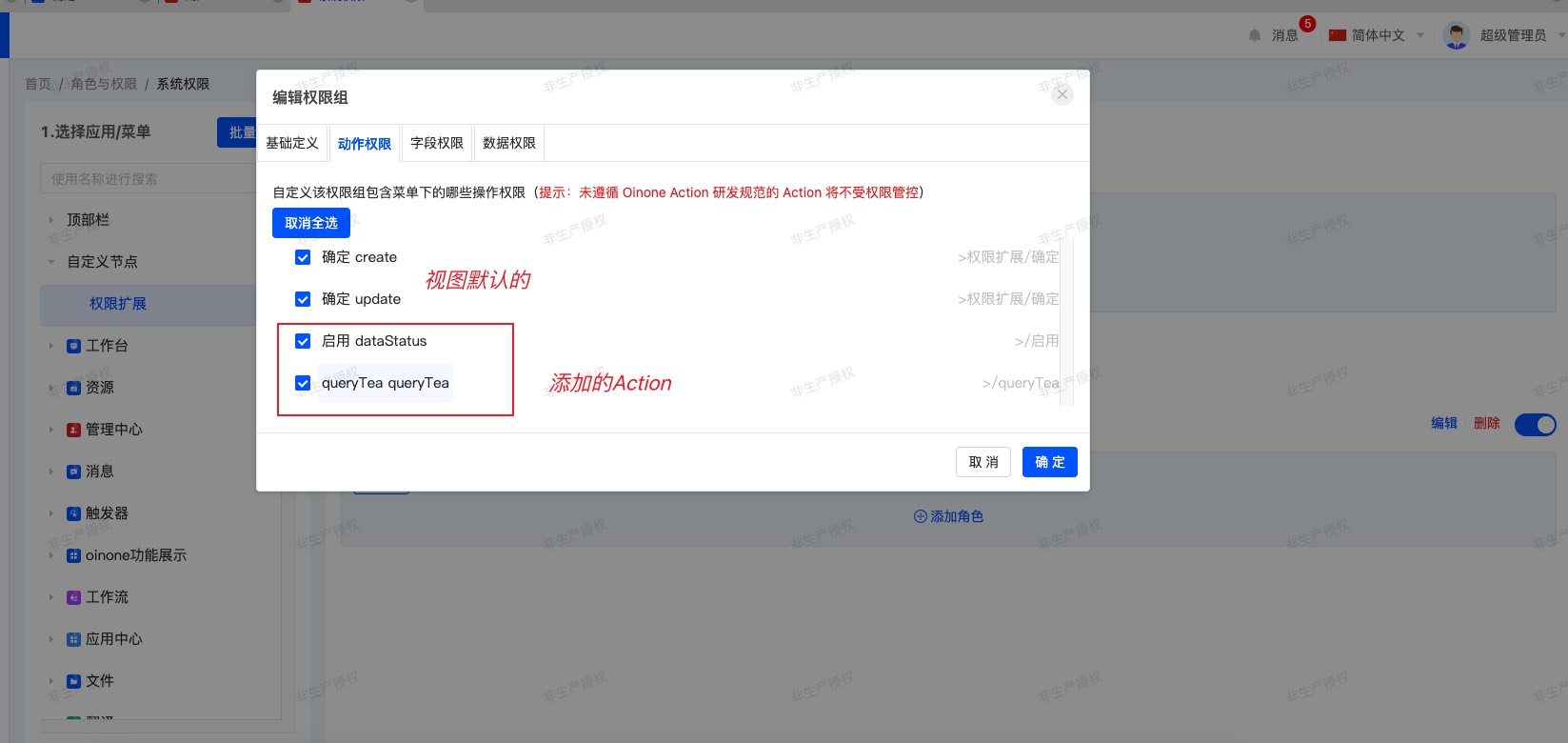
        List<Action> actions = new ArrayList<>();
        actions.add(PamirsSession.getContext().getExtendCache(ActionCacheApi.class).get(AuthTest.MODEL_MODEL, "dataStatus"));
        actions.add(PamirsSession.getContext().getExtendCache(ActionCacheApi.class).get(Teacher.MODEL_MODEL, "queryTea"));
        //将这些Action放入动作权限树用于授权
        //权限鉴权的path路径是根据【action.getModel(), action.getName()】拼接的。和TopModule.MODULE_MODULE没有关系,这里TopModule.MODULE_MODULE可以自定义。
        for (Action action : actions) {
            newNodes.add(AuthNodeHelper.createActionNode(TopModule.MODULE_MODULE, action, selected));
        }
        nodes.addAll(newNodes);
        return newNodes;
    }
    }
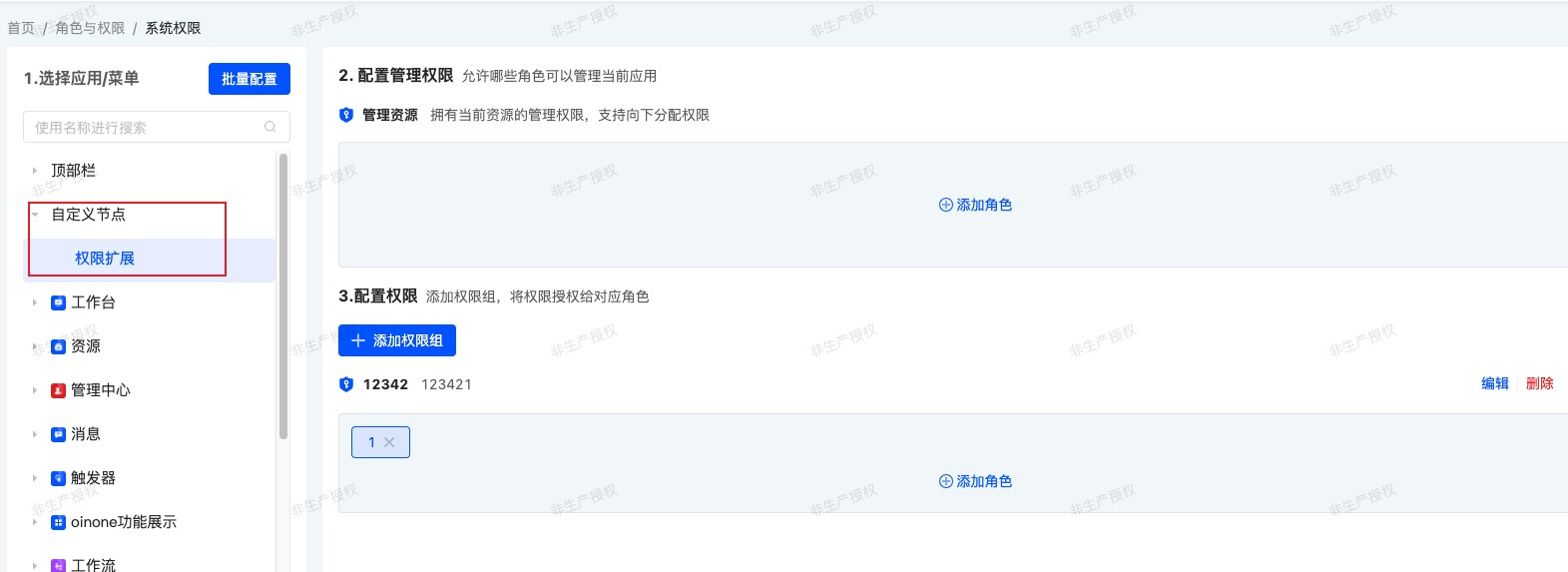
  6. 在管理中心中我们可以看到代码里创建的授权节点。
    如何扩展行为权限
    如何扩展行为权限

  7. 给角色分配该动作的权限,调用我们配置的AuthTest模型的dataStatus动作看效果。
    如何扩展行为权限

Oinone社区 作者:yexiu原创文章,如若转载,请注明出处:https://doc.oinone.top/dai-ma-shi-jian/18976.html

访问Oinone官网:https://www.oinone.top获取数式Oinone低代码应用平台体验

(0)
yexiu的头像yexiu数式员工
上一篇 2024年10月31日 pm9:58
下一篇 2024年11月1日 pm5:06

相关推荐

  • 左树右表,支撑不同场景的树表结构

    左树右表俩种情况 假设存在 A模型 B模型 1: 左树为A模型,右表为B模型 举例 A模型为类目 B模型为类目属性模型代码实例: @Model.model(AriesPlatformCategory.MODEL_MODEL) @Model(displayName = "平台后台类目", labelFields = "name") @Model.Advanced(type = ModelTypeEnum.PROXY) public class AriesPlatformCategory extends AriesCategory { public static final String MODEL_MODEL = "aries.item.AriesPlatformCategory"; @Field.many2one @Field.Relation(relationFields = {"parentCateCode"}, referenceFields = {"code"},store = true) @Field(displayName = "平台父类目") private AriesPlatformCategory platformCategory; @Field.one2many @Field(displayName = "类目属性") @Field.Relation(relationFields = "code", referenceFields = "categoryCode", store = true) private List<AriesPlatformCategoryAttr> platformCategoryAttrs; } @Model.model(AriesPlatformCategoryAttr.MODEL_MODEL) @Model(displayName = "Aries_平台类目属性", labelFields = "name") @Model.Advanced(type = ModelTypeEnum.PROXY) public class AriesPlatformCategoryAttr extends CategoryAttr { public static final String MODEL_MODEL = "aries.item.AriesPlatformCategoryAttr"; @Field.many2one @Field(displayName = "平台后台类目") @Field.Relation(relationFields = "categoryCode", referenceFields = "code", store = true) private AriesPlatformCategory platformCategory; } 在设计器设计左树右表之前,需要在模型 中配置好关联关系 。如下部分代码 配置好类目与父类目的关联关系。 @Field.many2one @Field.Relation(relationFields = {"parentCateCode"}, referenceFields = {"code"},store = true) @Field(displayName = "平台父类目") private AriesPlatformCategory platformCategory; 配置好 类目与类目属性的关联关系。一个类目可以有多个类目属性,一对多one2many @Field.one2many @Field(displayName = "类目属性") @Field.Relation(relationFields = "code", referenceFields = "categoryCode", store = true) private List<AriesPlatformCategoryAttr> platformCategoryAttrs; 在类目属性模型中,配置好属性与类目的关联关系,一个类目属性只属于一个类目,一个类目可以有多个类目属性。类目属性对类目多对一many2one @Field.many2one @Field(displayName = "平台后台类目") @Field.Relation(relationFields = "categoryCode", referenceFields = "code", store = true) private AriesPlatformCategory platformCategory; 设计器实例:1.需要选择 平台类目属性 做为主模型创建树表页面2.构建关联关系 选择平台后台类目 第一级的筛选条件 上级编码为空 表格关联关系字段 选择 平台类目属性。 3.表格拖拽好需要的属性字段 2: 左树为A模型,右表也为A模型 举例 左A模型 组织结构管理 右A模型 组织结构管理模型代码实例: @Model.model(BasicOrg.MODEL_MODEL) @Model(displayName = "组织结构管理", summary…

    2024年2月20日
    2.1K00
  • Oinone登录扩展:对接SSO(适应于4.7.8及之后的版本)

    适配版本 4.7.8及其之后的版本 概述 在企业内部,对于已有一套完整的登录系统(SSO)的情况下,通常会要求把所有的系统都对接到SSO中;本文主要讲解用Oinone开发的项目对接SSO的具体实现。 对接步骤 1、项目自定义实现UserCookieLogin,可参考示例说明: pro.shushi.pamirs.user.api.login.UserCookieLoginFree 2、对接SSO示例 对接流程说明: 1)【必须】从请求头Header或者Query中获取到token; 2)【必须】去SSO服务端验证token的有效性; 3)【可选】根据token去服务端获取用户信息;如果token可以直接反解析出用户信息,则该步骤忽略; 4)【可选】根据实际情况用户信息是否进行DB的存储; 5)【必须】验证token有效后,生成Session和Cookie(即token换cookie); 注意超时时间需要 <= SSO服务端token失效时间。 package pro.shushi.pamirs.demo.core.sso; import com.alibaba.fastjson.JSON; import org.springframework.beans.factory.annotation.Autowired; import org.springframework.core.annotation.Order; import org.springframework.data.redis.core.RedisTemplate; import org.springframework.stereotype.Component; import org.springframework.web.context.request.RequestContextHolder; import org.springframework.web.context.request.ServletRequestAttributes; import pro.shushi.pamirs.demo.core.sso.constant.HttpConstant; import pro.shushi.pamirs.demo.core.sso.constant.SessionUserTypeEnum; import pro.shushi.pamirs.demo.core.sso.model.ApiCommonTransient; import pro.shushi.pamirs.demo.core.sso.model.PermissionInfoResp; import pro.shushi.pamirs.demo.core.sso.utils.AuthenticateUtils; import pro.shushi.pamirs.meta.annotation.fun.extern.Slf4j; import pro.shushi.pamirs.meta.api.dto.model.PamirsUserDTO; import pro.shushi.pamirs.meta.api.session.PamirsSession; import pro.shushi.pamirs.meta.common.exception.PamirsException; import pro.shushi.pamirs.meta.common.spring.BeanDefinitionUtils; import pro.shushi.pamirs.resource.api.enmu.UserSignUpType; import pro.shushi.pamirs.user.api.cache.UserCache; import pro.shushi.pamirs.user.api.constants.UserConstant; import pro.shushi.pamirs.user.api.enmu.UserExpEnumerate; import pro.shushi.pamirs.user.api.enmu.UserLoginTypeEnum; import pro.shushi.pamirs.user.api.login.IUserLoginChecker; import pro.shushi.pamirs.user.api.login.UserCookieLogin; import pro.shushi.pamirs.user.api.login.UserCookieLoginSimple; import pro.shushi.pamirs.user.api.model.PamirsUser; import pro.shushi.pamirs.user.api.model.tmodel.PamirsUserTransient; import pro.shushi.pamirs.user.api.service.UserService; import pro.shushi.pamirs.user.api.utils.CookieUtil; import javax.servlet.http.HttpServletResponse; /** * * @author shushi * * 完全自定义login的过程 * 需要实现登陆部分login 以及拦截部分fetchUserIdByReq * 如果fetchUserIdByReq返回值为null的时候 将会被拦截 */ @Slf4j @Order(0) @Component public class DemoUserSSOCookieLogin extends UserCookieLogin<PamirsUser> { //刷新令牌 private static String REFRESH_TOKEN = "refreshToken"; //系统id private static String CLIENT_ID = "client-id"; //访问令牌 private static String AUTHORIZATION = "Authorization"; private IUserLoginChecker checker; @Autowired private UserService userService; @Autowired private RedisTemplate<String, String> redisTemplate; @Override public String type() { return UserLoginTypeEnum.COOKIE.value(); } @Override public PamirsUser resolveAndVerification(PamirsUserTransient user) { if (checker == null) { checker = BeanDefinitionUtils.getBean(IUserLoginChecker.class); } return checker.check4login(user); } /** * 重写登录拦截功能 * 该函数主要作用,通过三方权限校验. * @return */ // 版本升级需要修改 @Override public PamirsUserDTO fetchUserIdByReq() { String sessionId =…

    2024年4月2日
    1.9K00
  • 后端:如何自定义表达式实现特殊需求?扩展内置函数表达式

    平台提供了很多的表达式,如果这些表达式不满足场景?那我们应该如何新增表达式去满足项目的需求?目前平台支持的表达式内置函数,参考 1. 扩展表达式的场景 注解@Validation的rule字段支持配置表达式校验如果需要判断入参List类型字段中的某一个参数进行NULL校验,发现平台的内置函数不支持该场景的配置,这里就可以通过平台的机制,对内置函数进行扩展。 常见的一些代码场景,如下: package pro.shushi.pamirs.demo.core.action; ……引用类 @Model.model(PetShopProxy.MODEL_MODEL) @Component public class PetShopProxyAction extends DataStatusBehavior<PetShopProxy> { @Override protected PetShopProxy fetchData(PetShopProxy data) { return data.queryById(); } @Validation(ruleWithTips = { @Validation.Rule(value = "!IS_BLANK(data.code)", error = "编码为必填项"), @Validation.Rule(value = "LEN(data.name) < 128", error = "名称过长,不能超过128位"), }) @Action(displayName = "启用") @Action.Advanced(invisible="!(activeRecord.code !== undefined && !IS_BLANK(activeRecord.code))") public PetShopProxy dataStatusEnable(PetShopProxy data){ data = super.dataStatusEnable(data); data.updateById(); return data; } ……其他代码 } 2. 新建一个自定义表达式的函数 校验入参如果是个集合对象的情况下,单个对象的某个字段如果为空,返回false的函数。 例子:新建一个CustomCollectionFunctions类 package xxx.xxx.xxx; import org.apache.commons.collections4.CollectionUtils; import org.springframework.stereotype.Component; import pro.shushi.pamirs.meta.annotation.Fun; import pro.shushi.pamirs.meta.annotation.Function; import pro.shushi.pamirs.meta.common.constants.NamespaceConstants; import pro.shushi.pamirs.meta.util.FieldUtils; import java.util.List; import static pro.shushi.pamirs.meta.enmu.FunctionCategoryEnum.COLLECTION; import static pro.shushi.pamirs.meta.enmu.FunctionLanguageEnum.JAVA; import static pro.shushi.pamirs.meta.enmu.FunctionOpenEnum.LOCAL; import static pro.shushi.pamirs.meta.enmu.FunctionSceneEnum.EXPRESSION; /** * 自定义内置函数 */ @Fun(NamespaceConstants.expression) @Component public class CustomCollectionFunctions { /** * LIST_FIELD_NULL 就是我们自定义的表达式,不能与已经存在的表达式重复!!! * * @param list * @param field * @return */ @Function.Advanced( displayName = "校验集成的参数是否为null", language = JAVA, builtin = true, category = COLLECTION ) @Function.fun("LIST_FIELD_NULL") @Function(name = "LIST_FIELD_NULL", scene = {EXPRESSION}, openLevel = LOCAL, summary = "函数示例: LIST_FIELD_NULL(list,field),函数说明: 传入一个对象集合,校验集合的字段是否为空" ) public Boolean listFieldNull(List list, String field) { if (null == list) { return false; } if (CollectionUtils.isEmpty(list)) { return false; } for (Object data : list) { Object value =…

    2024年5月30日
    2.2K00
  • Nacos做为注册中心:如何调用其他系统的SpringCloud服务?

    Oinone项目引入Nacos作为注册中心,调用外部的SpringCloud服务 Nacos可以做为注册中心,提供给Dubbo和SpringCloud等微服务框架使用。 目前Oinone的底层使用的是Dubbo进行微服务的默认协议调用,但是我们项目如果存在需要调用其他系统提供的SpringCloud服务,Oinone其实并没有限制大家去这么写代码。 可以参考Nacos或SpringCloud的官方文档,只要不存在Jar包冲突等场景,很多的扩展其实大家都可以使用。 注意!!!Nacos、SpringCloud、SpringCloudAlibaba是有依赖版本严格要求的:点击查看 具体示例: 一、项目中增加依赖 主pom引入兼容的版本: <dependencyManagement> <dependency> <groupId>com.alibaba.cloud</groupId> <artifactId>spring-cloud-alibaba-dependencies</artifactId> <version>2.2.7.RELEASE</version> <!– 目前兼容的版本 –> <type>pom</type> <scope>import</scope> </dependency> </dependencyManagement> 使用模块的pom引入依赖: <dependency> <groupId>com.alibaba.cloud</groupId> <artifactId>spring-cloud-starter-alibaba-nacos-discovery</artifactId> </dependency> <dependency> <groupId>org.springframework.cloud</groupId> <artifactId>spring-cloud-starter-openfeign</artifactId> </dependency> 二、 配置 application.yml spring: cloud: nacos: discovery: server-addr: localhost:8848 username: nacos password: nacos 三、启动类添加注解 @EnableDiscoveryClient @EnableFeignClients public class NacosConsumerApplication { public static void main(String[] args) { SpringApplication.run(NacosConsumerApplication.class, args); } } 四、验证 创建 Feign Client 接口 import org.springframework.cloud.openfeign.FeignClient; import org.springframework.web.bind.annotation.GetMapping; @FeignClient(name = "nacos-demo") // 指定目标服务的名称 public interface ProviderClient { @GetMapping("/hello") String hello(); } 创建 Controller 调用 Feign Client @RestController public class ConsumerController { private final ProviderClient providerClient; public ConsumerController(ProviderClient providerClient) { this.providerClient = providerClient; } @GetMapping("/hello") public String hello() { return providerClient.hello(); } } 在浏览器中访问 http://localhost:8082/hello你应该会看到服务提供者返回的响应。

    2024年6月4日
    1.9K00
  • 动态视图支持权限配置

    动态页面在前端自定义之后,目前是没办法通过权限去控制路由页面的权限的,本篇文章将介绍如何解决这个问题。阅读本篇文章之前,应已经实现自定义页面渲染动态视图。参考文章:自定义视图内部渲染动态视图 实现思路: 通过自定义页面里设计的组件api名字,获取配置的路由页面名字。 解析路由页面包含的所有动作,拼接权限节点。 将路由页面的权限节点,拼到自定义视图所在菜单的权限管理上。 效果,路由页面的动作出现在自定义视图所在的菜单权限节点上 代码示例 package pro.shushi.pamirs.top.core.auth; import org.apache.commons.collections4.CollectionUtils; import org.springframework.beans.factory.annotation.Autowired; import org.springframework.core.annotation.Order; import org.springframework.stereotype.Component; import pro.shushi.pamirs.auth.api.entity.node.ActionPermissionNode; import pro.shushi.pamirs.auth.api.entity.node.PermissionNode; import pro.shushi.pamirs.auth.api.extend.load.PermissionNodeLoadExtendApi; import pro.shushi.pamirs.auth.api.loader.visitor.AuthCompileContext; import pro.shushi.pamirs.auth.api.loader.visitor.AuthCompileVisitor; import pro.shushi.pamirs.auth.api.loader.visitor.DslParser; import pro.shushi.pamirs.auth.api.pmodel.AuthResourceAuthorization; import pro.shushi.pamirs.auth.api.utils.AuthAuthorizationHelper; import pro.shushi.pamirs.boot.base.model.Menu; import pro.shushi.pamirs.boot.base.model.View; import pro.shushi.pamirs.boot.base.model.ViewAction; import pro.shushi.pamirs.boot.base.ux.model.UIView; import pro.shushi.pamirs.boot.base.ux.model.UIWidget; import pro.shushi.pamirs.boot.base.ux.model.view.UIField; import pro.shushi.pamirs.boot.web.loader.path.AccessResourceInfo; import pro.shushi.pamirs.boot.web.loader.path.ResourcePath; import pro.shushi.pamirs.boot.web.manager.MetaCacheManager; import pro.shushi.pamirs.meta.annotation.fun.extern.Slf4j; import pro.shushi.pamirs.meta.common.spi.SPI; import pro.shushi.pamirs.top.api.TopModule; import java.util.ArrayList; import java.util.List; import java.util.Map; import java.util.Optional; @Component @Order(88) @SPI.Service @Slf4j public class MyTestNodeLoadExtend implements PermissionNodeLoadExtendApi { @Autowired protected MetaCacheManager metaCacheManager; @Override public List<PermissionNode> buildNextPermissions(PermissionNode selected, List<PermissionNode> nodes) { // 动态页面所属的菜单name List<String> menuNames = new ArrayList<>(); menuNames.add("uiMenu3c094a75bd88461ba0ad780825069b32"); // 自定义组件api名称 List<String> apiNames = new ArrayList<>(); apiNames.add("dynamicView"); List<ActionPermissionNode> newNodes = new ArrayList<>(); for (String menuName : menuNames) { List<ActionPermissionNode> actionPermissionNodes = buildActionPermissionNodes(selected, menuName, apiNames); if (CollectionUtils.isNotEmpty(actionPermissionNodes)) { newNodes.addAll(actionPermissionNodes); } } nodes.addAll(newNodes); return nodes; } private List<ActionPermissionNode> buildActionPermissionNodes(PermissionNode selected, String menuName, List<String> apiNames) { String path = ResourcePath.generatorPath(TopModule.MODULE_MODULE, menuName); if (!path.equals(selected.getPath())) { return null; } Menu menu = metaCacheManager.fetchCloneMenus(TopModule.MODULE_MODULE).stream() .filter(v -> v.getName().equals(menuName)) .findFirst() .orElse(null); if (menu == null) { return null; } menu.fieldQuery(Menu::getViewAction); View mainView = fetchMainView(menu.getViewAction()); if (mainView == null) { return null; }…

    2025年9月10日
    73100

Leave a Reply

登录后才能评论