
如何在代码中使用自增ID和获取序列

在使用继承IDModel或CodeModel时,id和code是系统默认自动生成, 默认值规则:ID-->分布式ID; CODE-->根据定义的SequenceConfig规则自动生成。

在特定情况下需要落库前先生成ID或者Code,这些场景下可参照如下代码示例

一、使用自增ID

单个字段设置方式

// 主键字段,可以使用mysql的自增能力
@Field.Integer
@Field.PrimaryKey(keyGenerator = KeyGeneratorEnum.AUTO_INCREMENT)
@Field.Advanced(batchStrategy = FieldStrategyEnum.NEVER)
@Field(displayName = "id", summary = "Id字段,⾃增")
private Long id;

@Field.Integer
@Field(displayName = "自增版本")
@Field.Sequence(sequence = "SEQ", initial = 1)
private Long version;

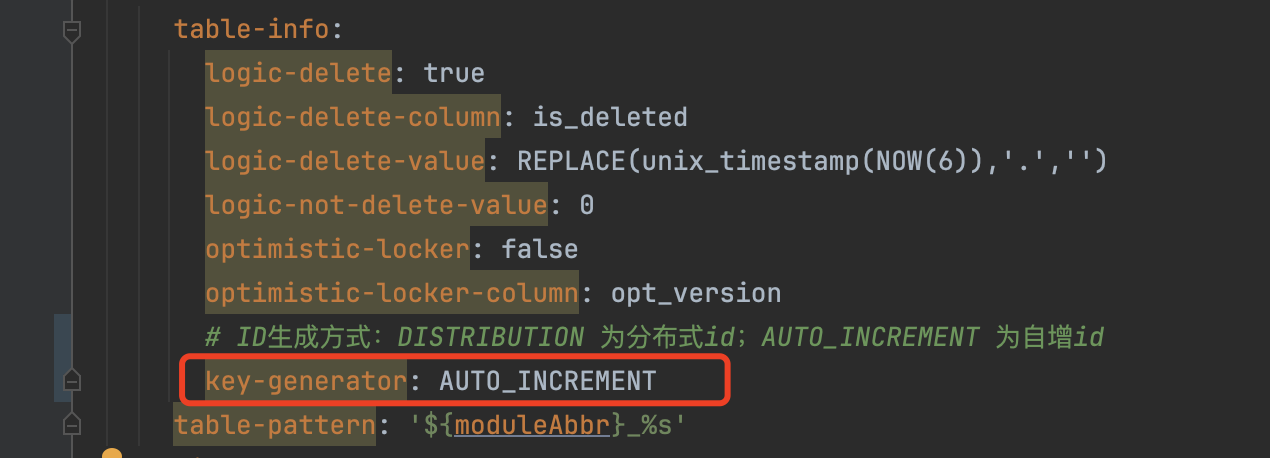
全局设置方式

该方式会作用到每一个存储模型的id字段,在application.yml配置文件中修改id的生成规则,查找配置项关键字key-generator,默认为DISTRIBUTION(分布式id),可修改为 AUTO_INCREMENT(自增id)
如何在代码中使用自增ID和获取序列

二、手动方式获取序列

获取方式示例1

   /**
     * 在特定场景下需要手动生成Id或者code时,可参照这个示例
     */
    public void manualSetIdCode(){
        DemoItem demoItem = new DemoItem();
        //手动生成ID和code
        Object idObj =  Spider.getDefaultExtension(IdGenerator.class).generate(PamirsTableInfo.fetchKeyGenerator(DemoItem.MODEL_MODEL));
        demoItem.setId(TypeUtils.createLong(idObj));
        Object codeObj = CommonApiFactory.getSequenceGenerator().generate("SEQ",DemoItem.MODEL_MODEL);
        String code = TypeUtils.stringValueOf(codeObj);
        demoItem.setCode(code);
        //……
    }

获取方式示例2

1、在系统启动的时候初始化SequenceConfig

package pro.shushi.pamirs.demo.core.init;

import org.springframework.stereotype.Component;
import pro.shushi.pamirs.boot.common.api.command.AppLifecycleCommand;
import pro.shushi.pamirs.boot.common.extend.MetaDataEditor;
import pro.shushi.pamirs.core.common.InitializationUtil;
import pro.shushi.pamirs.demo.api.DemoModule;
import pro.shushi.pamirs.demo.core.constant.SeqConstants;
import pro.shushi.pamirs.meta.annotation.fun.extern.Slf4j;
import pro.shushi.pamirs.meta.api.dto.meta.Meta;
import pro.shushi.pamirs.meta.enmu.SequenceEnum;

import java.util.Map;

/**
 * DemoMetadataEditor
 */
@Slf4j
@Component
public class DemoMetadataEditor implements MetaDataEditor {

    @Override
    public void edit(AppLifecycleCommand command, Map<String, Meta> metaMap) {
        InitializationUtil util = InitializationUtil.get(metaMap, DemoModule.MODULE_MODULE, DemoModule.MODULE_NAME);
        if (util == null) {
            log.error("获取初始化序列失败");
            return;
        }

        bizSequence(util);
    }

    private void bizSequence(InitializationUtil util) {
        util.createSequenceConfig("申请单编码生成", SeqConstants.NABEL_SAMPLE_APPLY_SEQ, SequenceEnum.ORDERLY_SEQ, 8)
                .setStep(1)
                .setInitial(80000000L)
                .setIsRandomStep(false);

        util.createSequenceConfig("订单编码生成", SeqConstants.NABEL_SAMPLE_ORDER_SEQ_YP, SequenceEnum.ORDERLY_SEQ, 8)
                .setPrefix("YP")
                .setStep(1)
                .setInitial(80000000L)
                .setIsRandomStep(false);
    }
}

2、在代码中使用序列

    public static String getSaleOrderCode() {
        Object sequence = CommonApiFactory.getSequenceGenerator().generate(SequenceEnum.ORDERLY_SEQ.value(),
                SeqConstants.NABEL_SAMPLE_STRUCTURE_SEQ);
        return TypeUtils.stringValueOf(sequence);
    }

    public static String getApplyOrderCode(String prefix) {
        Object sequence = CommonApiFactory.getSequenceGenerator().generate(SequenceEnum.ORDERLY_SEQ.value(),
                SeqConstants.NABEL_SAMPLE_APPLY_SEQ);
        return SeqConstants.NABEL_SAMPLE_APPLY_PREFIX + prefix + TypeUtils.stringValueOf(sequence);
    }

Oinone社区 作者:望闲原创文章,如若转载,请注明出处:https://doc.oinone.top/backend/11457.html

访问Oinone官网:https://www.oinone.top获取数式Oinone低代码应用平台体验

Like (0)
望闲's avatar望闲数式管理员
Previous 2024年5月25日 pm5:20
Next 2024年5月25日 pm7:22

相关推荐

  • 如何改变调度策略,让Schedule独立执行线程

    schedule里,相同的taskType跑多个业务任务,如果其中一个任务大量重试占满了调度线程,会影响别的业务任务及时被执行,如下面截图中,taskType用的是平台内置的常量,这个常量会被其他任务也使用,如果当前任务出现了异常占用了这个taskType的所有线程,那么这个taskType下面的其他任务就会被阻塞延后执行。应该给需要业务及时性的任务单独建立自定义的taskType,这样每个taskType的线程就是独立的,A任务异常不会影响B任务的执行。 1、后台创建task type相关的类,继承BaseScheduleNoTransactionTask,要加springbean的注解,参考:task type建议使用类名 2、提交任务的时候,设置tasktype为步骤1的TaskType 3、控制台新增策略和任务bean名称为步骤1的spring beanName,任务名称 $xxx,右边的占位符内容为yml里面配置的ownSign字段任务的名称也是步骤1的 spring beanName 4、配置完成后,控制台启动任务,就可以测试了

    2024年2月20日
    1.1K00
  • 如何扩展行为权限

    注意:5.2.8 以上版本适用 需求 我们的权限控制需要在页面上有交互才可以在管理中心控制该动作权限,在没有页面交互的动作是不能进行授权操作的。所以本文章将介绍如何将页面上没有交互的动作接入到系统权限中管理。 一、扩展系统权限的菜单页面 实现 步骤: 创建授权节点实现权限节点扩展接口:pro.shushi.pamirs.auth.api.extend.load.PermissionNodeLoadExtendApi#buildRootPermissions @Component @Order(88) public class MyTestNodeLoadExtend implements PermissionNodeLoadExtendApi { public static final String MODEL = AuthTest.MODEL_MODEL; public static final String MODULE = TopModule.MODULE_MODULE; public static final String FUN = "dataStatus"; @Override public List<PermissionNode> buildRootPermissions(PermissionLoadContext loadContext, List<PermissionNode> nodes) { //创建授权根节点 PermissionNode root = createMyNode(); List<PermissionNode> newNodes = new ArrayList<>(); //从缓存中读取需要授权的Action Action cacheAction = PamirsSession.getContext().getExtendCache(ActionCacheApi.class).get(MODEL, FUN); if (cacheAction != null) { //将该Action放入权限树 //权限鉴权的path路径是根据【cacheAction.getModel() + cacheAction.getName()】拼接的。和MODULE没有关系,这里MODULE可以自定义。 AuthNodeHelper.addNode(newNodes, root, AuthNodeHelper.createActionNode(MODULE, cacheAction, root)); } nodes.add(0, root); return newNodes; } private PermissionNode createMyNode() { return AuthNodeHelper.createNodeWithTranslate("MyNode", "自定义节点"); } } 在管理中心中我们可以看到代码里创建的授权节点。 给角色分配该动作的权限,调用我们配置的AuthTest模型的dataStatus动作看效果。 二、扩展菜单下的动作权限 实现 步骤: 创建viewAction用于作为权限菜单"permissionExtension"是自定义的viewAction的name,用于下面拼path路径鉴权。因为这里只需要在系统权限那边利用这个viewAction创建出授权节点。所以”权限扩展form“可以随意定义名字,系统会拿默认视图。 @Model.model(AuthTest.MODEL_MODEL) @Component @UxRouteButton( action = @UxAction(name = "permissionExtension", displayName = "权限扩展", label = "权限扩展", contextType = ActionContextTypeEnum.CONTEXT_FREE), value = @UxRoute(model = AuthTest.MODEL_MODEL, viewName = "权限扩展form", openType = ActionTargetEnum.ROUTER)) public class AuthTestAction { @Action(displayName = "启用", contextType = ActionContextTypeEnum.SINGLE) public AuthTest dataStatus(AuthTest data) { data.setOrgName("给个值"); return data; } } 创建授权节点实现权限节点扩展接口:pro.shushi.pamirs.auth.api.extend.load.PermissionNodeLoadExtendApi#buildRootPermissions @Component @Order(88) public class MyTestNodeLoadExtend implements PermissionNodeLoadExtendApi { //创建授权根节点 @Override public List<PermissionNode> buildRootPermissions(PermissionLoadContext loadContext, List<PermissionNode> nodes) { PermissionNode root = AuthNodeHelper.createNodeWithTranslate("CustomNode", "自定义节点"); List<PermissionNode> newNodes = new ArrayList<>(); newNodes.add(root); ViewAction viewAction = new ViewAction().setModel(AuthTest.MODEL_MODEL).setName("permissionExtension").queryOne(); //将该Action放入权限树 //权限鉴权的path路径是根据【viewAction.getModel(),…

    2024年11月1日
    1.4K00
  • 扩展操作日志字段,实现操作日志界面显示自定义字段

    注:该功能在pamirs-core 4.3.27 / 4.7.8.12以上版本可用 在模块依赖里新增DataAuditModule.MODULE_MODULE模块依赖。 @Module( name = DemoModule.MODULE_NAME, dependencies = { CommonModule.MODULE_MODULE, DataAuditModule.MODULE_MODULE }, displayName = “****”, version = “1.0.0” ) 继承OperationBody模型,设置需要在操作日志中显示的字段,并重写clone方法,设置自定义字段值。用于在计入日志处传递参数。 public class MyOperationBody extends OperationBody { public MyOperationBody(String operationModel, String operationName) { super(operationModel, operationName); } private String itemNames; public String getItemNames() { return itemNames; } public void setItemNames(String itemNames) { this.itemNames = itemNames; } @Override public OperationBody clone() { //设置自定义字段值 MyOperationBody body = OperationBody.transfer(this, new MyOperationBody(this.getOperationModel(), this.getOperationName())); body.setItemNames(this.getItemNames()); return body; } } 继承OperationLog模型,新增需要在操作日志中显示的字段。用于界面展示该自定义字段。 @Model.model(MyOperationLog.MODEL_MODEL) @Model(displayName = “自定义操作日志”, labelFields = {“itemNames”}) public class MyOperationLog extends OperationLog { public static final String MODEL_MODEL = “operation.MyOperationLog”; @Field(displayName = “新增日志字段”) @Field.String private String itemNames; } 定义一个常量 public interface OperationLogConstants { String MY_SCOPE = “MY_SCOPE”; } 在计入日志处,构造出MyOperationBody对象,向该对象中设置自定义日志字段。构造OperationLogBuilder对象并设置scope的值,用于跳转自定义服务实现。 MyOperationBody body = new MyOperationBody(CustomerCompanyUserProxy.MODEL_MODEL, CustomerCompanyUserProxyDataAudit.UPDATE); body.setItemNames(“新增日志字段”); OperationLogBuilder builder = OperationLogBuilder.newInstance(body); //设置一个scope,用于跳转自定义服务实现.OperationLogConstants.MY_SCOPE是常量,请自行定义 builder.setScope(OperationLogConstants.MY_SCOPE); //记录日志 builder.record(data.queryByPk(), data); 实现OperationLogService接口,加上@SPI.Service()注解,并设置常量,一般为类名。定义scope(注意:保持和计入日志处传入的scope值一致),用于计入日志处找到该自定义服务实现。根据逻辑重写父类中方法,便可以扩展操作日志,实现自定义记录了。 @Slf4j @Service @SPI.Service(“myOperationLogServiceImpl”) public class MyOperationLogServiceImpl< T extends D > extends OperationLogServiceImpl< T > implements OperationLogService< T >{ //定义scope,用于计入日志处找到该自定义服务实现 private static final String[] MY_SCOPE = new String[]{OperationLogConstants.MY_SCOPE}; @Override public String[] scopes() { return MY_SCOPE; } //此方法用于创建操作日志 @Override protected OperationLog createOperationLog(OperationBody body, OperationLogConfig config) { MyOperationBody body1 = (MyOperationBody)…

    2024年6月27日 后端
    1.7K00
  • 自定义RSQL占位符(placeholder)及在权限中使用

    1 自定义RSQL占位符常用场景 统一的数据权限配置 查询表达式的上下文变量扩展 2 自定义RSQL的模板 /** * 演示Placeholder占位符基本定义 * * @author Adamancy Zhang at 13:53 on 2024-03-24 */ @Component public class DemoPlaceHolder extends AbstractPlaceHolderParser { private static final String PLACEHOLDER_KEY = "${thisPlaceholder}"; /** * 占位符 * * @return placeholder */ @Override public String namespace() { return PLACEHOLDER_KEY; } /** * 占位符替换值 * * @return the placeholder replace to the value */ @Override protected String value() { return PamirsSession.getUserId().toString(); } /** * 优先级 * * @return execution order of placeholders, ascending order. */ @Override public Integer priority() { return 0; } /** * 是否激活 * * @return the placeholder is activated */ @Override public Boolean active() { return true; } } 注意事项 在一些旧版本中,priority和active可能不起作用,为保证升级时不受影响,请保证该属性配置正确。 PLACEHOLDER_KEY变量表示自定义占位符使用的关键字,需按照所需业务场景的具体功能并根据上下文语义正确定义。 为保证占位符可以被正确替换并执行,所有占位符都不应该出现重复,尤其是不能与系统内置的重复。 3 占位符使用时的优先级问题 多个占位符在进行替换时,会根据优先级按升序顺序执行,如需要指定替换顺序,可使用Spring的Order注解对其进行排序。 import org.springframework.core.annotation.Order; @Order(0) 4 Oinone平台内置的占位符 占位符 数据类型 含义 备注 ${currentUser} String 当前用户ID 未登录时无法使用 ${currentRoles} Set<String> 当前用户的角色ID集合 未登录时无法使用 5 如何覆盖平台内置的占位符? 通过指定占位符的优先级,并定义相同的namespace可优先替换。 6 如何定义会话级别的上下文变量? 在上述模板中,我们使用的是Oinone平台内置的上下文变量进行演示,通常情况下,我们需要根据实际业务场景增加上下文变量,以此来实现所需功能。 下面,我们将根据当前用户获取当前员工ID定义该上下文变量进行演示。 /** * 员工Session * * @author Adamancy Zhang at 14:33 on 2024-03-24 */ @Component public class EmployeeSession implements HookBefore { private static final String SESSION_KEY = "CUSTOM_EMPLOYEE_ID"; @Autowired private DemoEmployeeService demoEmployeeService; public static String getEmployeeId() { return PamirsSession.getTransmittableExtend().get(SESSION_KEY);…

    2024年3月24日
    2.0K00
  • 推送自定义消息

    项目中添加消息依赖 pro.shushi.pamirs.core pamirs-message-api 调用pro.shushi.pamirs.message.engine.message.MessageSender#sendSystemMail发送系统消息示例: @Action(displayName = "发送消息") public Student sendMessage(Student data){ MessageSender mailSender = (MessageSender) MessageEngine.get(MessageEngineTypeEnum.MAIL_SEND).get(null); String content = "发送自定义消息"; String subject = null; List<Long> userIds = new ArrayList<>(); userIds.add(PamirsSession.getUserId()); PamirsMessage message = new PamirsMessage() .setName(subject) .setSubject(subject) .setBody(content) .setMessageType(MessageTypeEnum.NOTIFICATION); List<PamirsMessage> messages = new ArrayList<>(); messages.add(message); SystemMessage systemMessage = new SystemMessage(); systemMessage.setPartners(userIds.stream().map(i -> (PamirsUser) new PamirsUser().setId(i)).collect(Collectors.toList())) .setType(MessageGroupTypeEnum.SYSTEM_MAIL) .setMessages(messages); mailSender.sendSystemMail(systemMessage); return data; }

    2024年8月19日
    1.5K00

Leave a Reply

Please Login to Comment