
如何使用位运算的数据字典

场景举例

日常有很多项目,数据库中都有表示“多选状态标识”的字段。在这里用我们项目中的一个例子进行说明一下:

  • 示例一:
    表示某个商家是否支持多种会员卡打折(如有金卡、银卡、其他卡等),项目中的以往的做法是:在每条商家记录中为每种会员卡建立一个标志位字段。如图:

    如何使用位运算的数据字典

用多字段来表示“多选标识”存在一定的缺点:首先这种设置方式很明显不符合数据库设计第一范式,增加了数据冗余和存储空间。再者,当业务发生变化时,不利于灵活调整。比如,增加了一种新的会员卡类型时,需要在数据表中增加一个新的字段,以适应需求的变化。

 - 改进设计:标签位flag设计
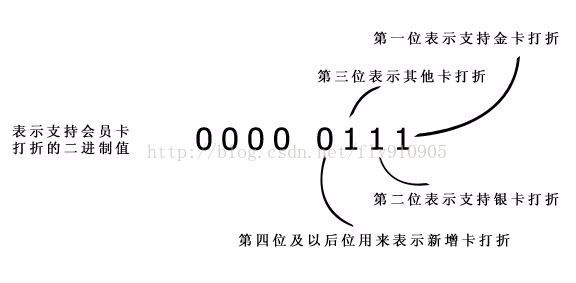
二进制的“位”本来就有表示状态的作用。可以用各个位来分别表示不同种类的会员卡打折支持:
如何使用位运算的数据字典
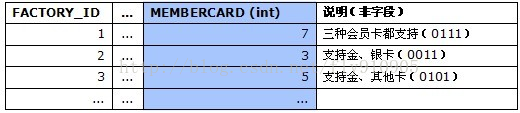
这样,“MEMBERCARD”字段仍采用整型。当某个商家支持金卡打折时,则保存“1(0001)”,支持银卡时,则保存“2(0010)”,两种都支持,则保存“3(0011)”。其他类似。表结构如图:
如何使用位运算的数据字典

我们在编写SQL语句时,只需要通过“位”的与运算,就能简单的查询出想要数据。通过这样的处理方式既节省存储空间,查询时又简单方便。

//查询支持金卡打折的商家信息:  
select * from factory where MEMBERCARD & b'0001';
// 或者:  
select * from factory where MEMBERCARD & 1;
  
// 查询支持银卡打折的商家信息:  
select * from factory where MEMBERCARD & b'0010';
// 或者:  
select * from factory where MEMBERCARD & 2;

二进制( 位运算)枚举

可以通过@Dict注解设置数据字典的bit属性或者实现BitEnum接口来标识该枚举值为2的次幂。二进制枚举最大的区别在于值的序列化和反序列化方式是不一样的。

位运算的枚举定义示例

import pro.shushi.pamirs.meta.annotation.Dict;
import pro.shushi.pamirs.meta.common.enmu.BitEnum;

@Dict(dictionary = ClientTypeEnum.DICTIONARY, displayName = "客户端类型枚举", summary = "客户端类型枚举")
public enum ClientTypeEnum implements BitEnum {

    PC(1L, "PC端", "PC端"),
    MOBILE(1L << 1, "移动端", "移动端"),
    ;

    public static final String DICTIONARY = "base.ClientTypeEnum";

    private final Long value;
    private final String displayName;
    private final String help;

    ClientTypeEnum(Long value, String displayName, String help) {
        this.value = value;
        this.displayName = displayName;
        this.help = help;
    }

    @Override
    public Long value() {
        return value;
    }

    @Override
    public String displayName() {
        return displayName;
    }

    @Override
    public String help() {
        return help;
    }
}

使用方法示例

  • API: addTo 和 removeFrom

    List<ClientTypeEnum> clientTypes = module.getClientTypes();
    // addTo
    ClientTypeEnum.PC.addTo(clientTypes);
    // removeFrom
    ClientTypeEnum.PC.removeFrom(clientTypes);
  • 在查询条件中的使用

    List<Menu> moduleMenus = new Menu().queryListByWrapper(menuPage, LoaderUtils.authQuery(wrapper).eq(Menu::getClientTypes, ClientTypeEnum.PC));

Oinone社区 作者:nation原创文章,如若转载,请注明出处:https://doc.oinone.top/backend/4757.html

访问Oinone官网:https://www.oinone.top获取数式Oinone低代码应用平台体验

(0)
nation的头像nation数式员工
上一篇 2023年11月24日 pm3:45
下一篇 2023年11月27日 am11:14

相关推荐

  • 工作流:通过业务数据操作工作流程(催办、撤销等)

    一、抽象模型,需要操作流程的模型继承此模型 定义流程相关的一些信息在模型中;如果直接定义在存储模型中,下面这些字段都是显示的指定为非存储字段。更好的建议:1、如果有多个业务模型有这类需要,则可以把这些字段抽取到抽象模型中2、如果仅有一个业务模型需要,则可以放到代理模型中 /** * 定义流程相关的一些信息在模型中 */ @Model.model(DemoBaseAbstractModel.MODEL_MODEL) @Model(displayName = "抽象模型") @Model.Advanced(type= ModelTypeEnum.ABSTRACT) public abstract class DemoBaseAbstractModel extends IdModel { public static final String MODEL_MODEL = "hr.simple.DemoBaseAbstractModel"; // 流程相关 @Field.Integer @Field(displayName = "工作流用户任务ID", summary = "业务数据列表中审核流程使用", invisible = true, store = NullableBoolEnum.FALSE) private Long workflowUserTaskId; @Field.Integer @Field(displayName = "流程实例ID", summary = "业务数据列表中催办使用", invisible = true, store = NullableBoolEnum.FALSE) private Long instanceId; @Field.String @UxForm.FieldWidget(@UxWidget(invisible = "true")) @UxDetail.FieldWidget(@UxWidget(invisible = "true")) @Field(displayName = "当前流程节点", store = NullableBoolEnum.FALSE) private String currentFlowNode; @Field.Boolean @Field(displayName = "能否催办", invisible = true, defaultValue = "false", store = NullableBoolEnum.FALSE) private Boolean canUrge; // 审批状态控制申请单是否可以被发起流程、能否编辑等控制 @Field.Enum @Field(displayName = "审批状态", defaultValue = "NC") @UxForm.FieldWidget(@UxWidget(invisible = "true")) private ApprovalStatusEnum approvalStatus; } @Dict(dictionary = ApprovalStatusEnum.dictionary, displayName = "审批状态") public enum ApprovalStatusEnum implements IEnum<String> { NC("NC", "待提交", "待提交"), PENDING("PENDING", "已提交", "已提交,待审批"), APPROVED("APPROVED", "已批准", "已批准"), REJECTED("REJECTED", "已拒绝", "已拒绝"); public static final String dictionary = "land.enums.LandApprovalStatusEnum"; private final String value; private final String displayName; private final String help; ApprovalStatusEnum(String value, String displayName, String help) { this.value = value; this.displayName = displayName; this.help = help; } public String getValue() { return value; } public String getDisplayName() { return…

    2025年6月26日
    48500
  • 左树右表,支撑不同场景的树表结构

    左树右表俩种情况 假设存在 A模型 B模型 1: 左树为A模型,右表为B模型 举例 A模型为类目 B模型为类目属性模型代码实例: @Model.model(AriesPlatformCategory.MODEL_MODEL) @Model(displayName = "平台后台类目", labelFields = "name") @Model.Advanced(type = ModelTypeEnum.PROXY) public class AriesPlatformCategory extends AriesCategory { public static final String MODEL_MODEL = "aries.item.AriesPlatformCategory"; @Field.many2one @Field.Relation(relationFields = {"parentCateCode"}, referenceFields = {"code"},store = true) @Field(displayName = "平台父类目") private AriesPlatformCategory platformCategory; @Field.one2many @Field(displayName = "类目属性") @Field.Relation(relationFields = "code", referenceFields = "categoryCode", store = true) private List<AriesPlatformCategoryAttr> platformCategoryAttrs; } @Model.model(AriesPlatformCategoryAttr.MODEL_MODEL) @Model(displayName = "Aries_平台类目属性", labelFields = "name") @Model.Advanced(type = ModelTypeEnum.PROXY) public class AriesPlatformCategoryAttr extends CategoryAttr { public static final String MODEL_MODEL = "aries.item.AriesPlatformCategoryAttr"; @Field.many2one @Field(displayName = "平台后台类目") @Field.Relation(relationFields = "categoryCode", referenceFields = "code", store = true) private AriesPlatformCategory platformCategory; } 在设计器设计左树右表之前,需要在模型 中配置好关联关系 。如下部分代码 配置好类目与父类目的关联关系。 @Field.many2one @Field.Relation(relationFields = {"parentCateCode"}, referenceFields = {"code"},store = true) @Field(displayName = "平台父类目") private AriesPlatformCategory platformCategory; 配置好 类目与类目属性的关联关系。一个类目可以有多个类目属性,一对多one2many @Field.one2many @Field(displayName = "类目属性") @Field.Relation(relationFields = "code", referenceFields = "categoryCode", store = true) private List<AriesPlatformCategoryAttr> platformCategoryAttrs; 在类目属性模型中,配置好属性与类目的关联关系,一个类目属性只属于一个类目,一个类目可以有多个类目属性。类目属性对类目多对一many2one @Field.many2one @Field(displayName = "平台后台类目") @Field.Relation(relationFields = "categoryCode", referenceFields = "code", store = true) private AriesPlatformCategory platformCategory; 设计器实例:1.需要选择 平台类目属性 做为主模型创建树表页面2.构建关联关系 选择平台后台类目 第一级的筛选条件 上级编码为空 表格关联关系字段 选择 平台类目属性。 3.表格拖拽好需要的属性字段 2: 左树为A模型,右表也为A模型 举例 左A模型 组织结构管理 右A模型 组织结构管理模型代码实例: @Model.model(BasicOrg.MODEL_MODEL) @Model(displayName = "组织结构管理", summary…

    2024年2月20日
    1.9K00
  • 框架之MessageHub(信息提示)

    框架之信息概述 后端除了可以返回错误信息以外,还可以返回调试、告警、成功、信息等级别的信息给前端。但是默认情况下前端只提示错误信息,可以通过前端的统一配置放开提示级别,有点类似后端的日志级别。 框架之MessageHub 在oinone平台中,我们怎么做到友好的错误提示呢?接下来介绍我们的MessageHub,它为自定义错误提示提供无限的可能。 何时使用 错误提示是用户体验中特别重要的组成部分,大部分的错误体现在整页级别,字段级别,按钮级别。友好的错误提示应该是怎么样的呢?我们假设他是这样的 与用户操作精密契合 当字段输入异常时,错误展示在错误框底部 按钮触发服务时异常,错误展示在按钮底部 区分不同的类型 错误 成功 警告 提示 调试 简洁易懂的错误信息 不同信息类型的举例 package pro.shushi.pamirs.demo.core.action; import org.springframework.stereotype.Component; import pro.shushi.pamirs.demo.api.model.PetCatItem; import pro.shushi.pamirs.demo.api.model.PetType; import pro.shushi.pamirs.meta.annotation.Action; import pro.shushi.pamirs.meta.annotation.Model; import pro.shushi.pamirs.meta.api.dto.common.Message; import pro.shushi.pamirs.meta.api.session.PamirsSession; import pro.shushi.pamirs.meta.enmu.ActionContextTypeEnum; import pro.shushi.pamirs.meta.enmu.InformationLevelEnum; import pro.shushi.pamirs.meta.enmu.ViewTypeEnum; @Model.model(PetType.MODEL_MODEL) @Component public class PetTypeAction { @Action(displayName = "消息",bindingType = ViewTypeEnum.TABLE,contextType = ActionContextTypeEnum.CONTEXT_FREE) public PetType message(PetType data){ PamirsSession.getMessageHub().info("info1"); PamirsSession.getMessageHub().info("info2"); PamirsSession.getMessageHub().error("error1"); PamirsSession.getMessageHub().error("error2"); PamirsSession.getMessageHub().msg(new Message().msg("success1").setLevel(InformationLevelEnum.SUCCESS)); PamirsSession.getMessageHub().msg(new Message().msg("success2").setLevel(InformationLevelEnum.SUCCESS)); PamirsSession.getMessageHub().msg(new Message().msg("debug1").setLevel(InformationLevelEnum.DEBUG)); PamirsSession.getMessageHub().msg(new Message().msg("debug2").setLevel(InformationLevelEnum.DEBUG)); PamirsSession.getMessageHub().msg(new Message().msg("warn1").setLevel(InformationLevelEnum.WARN)); PamirsSession.getMessageHub().msg(new Message().msg("warn2").setLevel(InformationLevelEnum.WARN)); return data; } } 查询运行返回和效果 1)系统提示的返回结果 2)系统提示示例效果

    2024年5月14日
    1.3K00
  • 复杂Excel模版定义

    模版示例: Demo Excel样例 代码示例: @Model.model(TestApply.MODEL_MODEL) @Model(displayName = "测试申请") public class TestApply extends IdModel { public static final String MODEL_MODEL = "top.TestApply"; @Field.String @Field(displayName = "发件人") private String addresser; @Field.String @Field(displayName = "委托单位") private String entrustedUnit; @Field.String @Field(displayName = "付款单位") private String payer; @Field.String @Field(displayName = "付款单位地址") private String paymentUnitAdd; } 模版: package pro.shushi.pamirs.top.core.temp; import org.springframework.stereotype.Component; import pro.shushi.pamirs.file.api.builder.SheetDefinitionBuilder; import pro.shushi.pamirs.file.api.builder.WorkbookDefinitionBuilder; import pro.shushi.pamirs.file.api.enmu.ExcelAnalysisTypeEnum; import pro.shushi.pamirs.file.api.enmu.ExcelDirectionEnum; import pro.shushi.pamirs.file.api.enmu.ExcelHorizontalAlignmentEnum; import pro.shushi.pamirs.file.api.model.ExcelWorkbookDefinition; import pro.shushi.pamirs.file.api.util.ExcelHelper; import pro.shushi.pamirs.file.api.util.ExcelTemplateInit; import pro.shushi.pamirs.top.api.model.TestApply; import java.util.Collections; import java.util.List; @Component public class DemoTemplate implements ExcelTemplateInit { public static final String TEMPLATE_NAME = "DemoTemplate"; @Override public List<ExcelWorkbookDefinition> generator() { WorkbookDefinitionBuilder builder = WorkbookDefinitionBuilder.newInstance(TestApply.MODEL_MODEL, TEMPLATE_NAME) .setDisplayName("测试Demo"); DemoTemplate.createSheet(builder); return Collections.singletonList(builder.build()); } private static void createSheet(WorkbookDefinitionBuilder builder) { SheetDefinitionBuilder sheetBuilder = builder.createSheet().setName("测试Demo"); buildBasicInfo(sheetBuilder); } private static void buildBasicInfo(SheetDefinitionBuilder builder) { //A1:D8:表示表头占的单元格数,范围必须大于实际表头行 BlockDefinitionBuilder mergeRange = builder.createBlock(TestApply.MODEL_MODEL, ExcelAnalysisTypeEnum.FIXED_HEADER, ExcelDirectionEnum.HORIZONTAL, "A1:D8") //预设行 .setPresetNumber(10) //合并哪几个单元格 .createMergeRange("A1:D1") .createMergeRange("A2:D2") .createMergeRange("A3:D3") .createMergeRange("A4:A6") .createMergeRange("B4:B6") .createMergeRange("C4:C6") .createMergeRange("D4:D5"); //createHeader创建行,createCell创建单元格,setField指定解析字段,setIsConfig指定为true标记该行是需要解析的值 mergeRange.createHeader().setStyleBuilder(ExcelHelper.createDefaultStyle()).setIsConfig(Boolean.TRUE) .createCell().setField("addresser").setStyleBuilder(ExcelHelper.createDefaultStyle().setWidth(6000)).and() .createCell().setField("entrustedUnit").and() .createCell().setField("payer").and() .createCell().setField("paymentUnitAdd").and() .and() .createHeader().setStyleBuilder(ExcelHelper.createDefaultStyle(typeface -> typeface.setBold(Boolean.TRUE)).setHorizontalAlignment(ExcelHorizontalAlignmentEnum.CENTER)) .createCell().setValue("Demo").and() .createCell().and() .createCell().and() .createCell().and() .and() //由于该行合并为一个单元格,所以其他可以不设置value .createHeader().setStyleBuilder(ExcelHelper.createDefaultStyle(typeface -> typeface.setBold(Boolean.TRUE)).setHorizontalAlignment(ExcelHorizontalAlignmentEnum.CENTER)) .createCell().setValue("生效金额").and() .createCell().and() .createCell().and() .createCell().and() .and() .createHeader().setStyleBuilder(ExcelHelper.createDefaultStyle(typeface -> typeface.setBold(Boolean.TRUE)).setHorizontalAlignment(ExcelHorizontalAlignmentEnum.RIGHT)) .createCell().setValue("金额单位:元").and() .createCell().and() .createCell().and() .createCell().and() .and() //easyExcel解析不了空行,所以这里写上值。由于上面使用createMergeRange把单元格合并了,并且D列有分割,这里填上每个单元格的值,把合并的单元格填为一样的。 .createHeader().setStyleBuilder(ExcelHelper.createDefaultStyle(typeface -> typeface.setBold(Boolean.TRUE)).setHorizontalAlignment(ExcelHorizontalAlignmentEnum.CENTER)) .createCell().setValue("发件人").and() .createCell().setValue("委托单位").and()…

    2024年11月18日
    2.0K00
  • 字段类型之关系描述的特殊场景(常量关联)

    场景概述 【字段类型之关系与引用】一文中已经描述了各种关系字段的常规写法,还有一些特殊场景如:关系映射中存在常量,或者M2M中间表是大于两个字段构成。 场景描述 1、PetTalent模型增加talentType字段2、PetItem与PetTalent的多对多关系增加talentType(达人类型),3、PetItemRelPetTalent中间表维护petItemId、petTalentId以及talentType,PetDogItem和PetCatItem分别重写petTalents字段,关系中增加常量描述。示意图如下: 实际操作步骤 Step1 新增 TalentTypeEnum package pro.shushi.pamirs.demo.api.enumeration; import pro.shushi.pamirs.meta.annotation.Dict; import pro.shushi.pamirs.meta.common.enmu.BaseEnum; @Dict(dictionary = TalentTypeEnum.DICTIONARY,displayName = "达人类型") public class TalentTypeEnum extends BaseEnum<TalentTypeEnum,Integer> { public static final String DICTIONARY ="demo.TalentTypeEnum"; public final static TalentTypeEnum DOG =create("DOG",1,"狗达人","狗达人"); public final static TalentTypeEnum CAT =create("CAT",2,"猫达人","猫达人"); } Step2 PetTalent模型增加talentType字段 package pro.shushi.pamirs.demo.api.model; import pro.shushi.pamirs.demo.api.enumeration.TalentTypeEnum; import pro.shushi.pamirs.meta.annotation.Field; import pro.shushi.pamirs.meta.annotation.Model; @Model.model(PetTalent.MODEL_MODEL) @Model(displayName = "宠物达人",summary="宠物达人",labelFields ={"name"}) public class PetTalent extends AbstractDemoIdModel{ public static final String MODEL_MODEL="demo.PetTalent"; @Field(displayName = "达人") private String name; @Field(displayName = "达人类型") private TalentTypeEnum talentType; } Step3 修改PetItem的petTalents字段,在关系描述中增加talentType(达人类型) @Field.many2many(relationFields = {"petItemId"},referenceFields = {"petTalentId","talentType"},through = PetItemRelPetTalent.MODEL_MODEL ) @Field.Relation(relationFields = {"id"}, referenceFields = {"id","talentType"}) @Field(displayName = "推荐达人",summary = "推荐该商品的达人们") private List<PetTalent> petTalents; Step4 PetDogItem增加petTalents字段,重写父类PetItem的关系描述 talentType配置为常量,填入枚举的值 增加domain描述用户页面选择的时候自动过滤出特定类型的达人,RSQL用枚举的name @Field(displayName = "推荐达人") @Field.many2many( through = "PetItemRelPetTalent", relationFields = {"petItemId"}, referenceFields = {"petTalentId","talentType"} ) @Field.Relation(relationFields = {"id"}, referenceFields = {"id", "#1#"}, domain = " talentType == DOG") private List<PetTalent> petTalents; Step5 PetCatItem增加petTalents字段,重写父类PetItem的关系描述 talentType配置为常量,填入枚举的值 增加domain描述用户页面选择的时候自动过滤出特定类型的达人,RSQL用枚举的name @Field(displayName = "推荐达人") @Field.many2many( through = "PetItemRelPetTalent", relationFields = {"petItemId"}, referenceFields = {"petTalentId","talentType"} ) @Field.Relation(relationFields = {"id"}, referenceFields = {"id", "#2#"}, domain = " talentType == CAT") private List<PetTalent> petTalents; Step6 PetCatItem增加petTalents字段,many2one关系示例 talentType配置为常量,填入枚举的值 增加domain描述用户页面选择的时候自动过滤出特定类型的达人,RSQL用枚举的name @Model.model(PetPet.MODEL_MODEL) @Model(displayName…

    2024年5月25日
    1.6K00

Leave a Reply

登录后才能评论