
分库分表与自定义分表规则

总体介绍

  • Oinone的分库分表方案是基于Sharding-JDBC的整合方案,要先具备一些Sharding-JDBC的知识。[Sharding-JDBC]https://shardingsphere.apache.org/document/current/cn/overview/

  • 做分库分表前,大家要有一个明确注意的点就是分表字段(也叫均衡字段)的选择,它是非常重要的,与业务场景非常相关。在明确了分库分表字段以后,甚至在功能上都要做一些妥协。比如分库分表字段在查询管理中做为查询条件是必须带上的,不然效率只会更低。

  • 分表字段不允许更新,所以代码里更新策略设置类永不更新,并在设置了在页面修改的时候为readonly

配置分表策略

  1. 配置ShardingModel模型走分库分表的数据源pamirsSharding
  2. 为pamirsSharding配置数据源以及sharding规则
    a. pamirs.sharding.define用于oinone的数据库表创建用
    b. pamirs.sharding.rule用于分表规则配置
  3. 为pamirsSharding配置数据源以及sharding规则

    1)指定模型对应数据源

pamirs:
  framework:
    system:
      system-ds-key: base
      system-models:
        - base.WorkerNode
    data:
      default-ds-key: pamirs
      ds-map:
        base: base
      modelDsMap:
        "[demo.ShardingModel]": pamirsSharding  #配置模型对应的库

2)分库分表规则配置

pamirs: 
  sharding:
    define:
      data-sources:
        ds: pamirs
        pamirsSharding: pamirs #申明pamirsSharding库对应的pamirs数据源
      models:
        "[trigger.PamirsSchedule]":
          tables: 0..13
        "[demo.ShardingModel]":
          tables: 0..7
          table-separator: _
    rule:
      pamirsSharding: #配置pamirsSharding库的分库分表规则
        actual-ds:
          - pamirs  #申明pamirsSharding库对应的pamirs数据源
        sharding-rules:
          # Configure sharding rule ,以下配置跟sharding-jdbc配置一致
          - tables:
              demo_core_sharding_model: #demo_core_sharding_model表规则配置
                actualDataNodes: pamirs.demo_core_sharding_model_${0..7}
                tableStrategy:
                  standard:
                    shardingColumn: user_id
                    shardingAlgorithmName: table_inline
            shardingAlgorithms:
              table_inline:
                type: INLINE
                props:
                  algorithm-expression: demo_core_sharding_model_${(Long.valueOf(user_id) % 8)}
        props:
          sql.show: true

自定义规则

  • 默认规则即通用的分库分表策略,如按照数据量、哈希等方式进行分库分表;通常默认规则是可以的。
  • 但在一些复杂的业务场景下,使用默认规则可能无法满足需求,需要根据实际情况进行自定义。例如,某些业务可能有特定的数据分布模式或者查询特点,需要定制化的分库分表规则来优化数据访问性能或者满足业务需求。在这种情况下,使用自定义规则可以更好地适应业务的需求。

自定义分表规则示例

示例1:按月份分表(DATE_MONTH )

package pro.shushi.pamirs.demo.core.sharding;

import cn.hutool.core.date.DateUtil;
import com.google.common.collect.Range;
import org.apache.shardingsphere.sharding.api.sharding.standard.PreciseShardingValue;
import org.apache.shardingsphere.sharding.api.sharding.standard.RangeShardingValue;
import org.apache.shardingsphere.sharding.api.sharding.standard.StandardShardingAlgorithm;
import org.springframework.stereotype.Component;
import pro.shushi.pamirs.meta.annotation.fun.extern.Slf4j;

import java.util.*;

/**
 * @author wangxian
 * @version 1.0
 * @description
 */
@Component
@Slf4j
public class DateMonthShardingAlgorithm implements StandardShardingAlgorithm<Date> {

    private Properties props;

    @Override
    public String doSharding(Collection<String> availableTargetNames, PreciseShardingValue<Date> preciseShardingValue) {
        Date date = preciseShardingValue.getValue();
        String suffix = "_" + (DateUtil.month(date) + 1);
        for (String tableName : availableTargetNames) {
            if (tableName.endsWith(suffix)) {
                return tableName;
            }
        }
        throw new IllegalArgumentException("未找到匹配的数据表");
    }

    @Override
    public Collection<String> doSharding(Collection<String> availableTargetNames, RangeShardingValue<Date> rangeShardingValue) {
        List<String> list = new ArrayList<>();
        log.info(rangeShardingValue.toString());
        Range<Date> valueRange = rangeShardingValue.getValueRange();
        Date lowerDate = valueRange.lowerEndpoint();
        Date upperDate = valueRange.upperEndpoint();
        Integer begin = DateUtil.month(lowerDate) + 1;
        Integer end = DateUtil.month(upperDate) + 1;
        TreeSet<String> suffixList = ShardingUtils.getSuffixListForRange(begin, end);
        for (String tableName : availableTargetNames) {
            if (containTableName(suffixList, tableName)) {
                list.add(tableName);
            }
        }
        return list;
    }

    private boolean containTableName(Set<String> suffixList, String tableName) {
        boolean flag = false;
        for (String s : suffixList) {
            if (tableName.endsWith(s)) {
                flag = true;
                break;
            }
        }
        return flag;
    }

    @Override
    public void init() {

    }

    @Override
    public String getType() {
        return "DATE_MONTH";
    }

    @Override
    public Properties getProps() {
        return this.props;
    }

    @Override
    public void setProps(Properties properties) {
        this.props = props;
    }
}

示例2:按特定字段截取去取模分表

package pro.shushi.pamirs.demo.core.sharding;

import org.apache.shardingsphere.sharding.api.sharding.standard.PreciseShardingValue;
import org.apache.shardingsphere.sharding.api.sharding.standard.RangeShardingValue;
import org.apache.shardingsphere.sharding.api.sharding.standard.StandardShardingAlgorithm;
import org.springframework.stereotype.Component;
import pro.shushi.pamirs.meta.annotation.fun.extern.Slf4j;

import java.util.Collection;
import java.util.Properties;

/**
 * @author wangxian
 * @version 1.0
 * @description
 */
@Component
@Slf4j
public class AppUserCodeShardingAlgorithm implements StandardShardingAlgorithm<String> {

    private Properties props;

    @Override
    public String doSharding(Collection<String> availableTargetNames, PreciseShardingValue<String> preciseShardingValue) {
        String appUserCode = preciseShardingValue.getValue();
        String suffix = "_" + Long.parseLong(appUserCode.substring(1)) % 21;
        for (String tableName : availableTargetNames) {
            if (tableName.endsWith(suffix)) {
                return tableName;
            }
        }
        throw new IllegalArgumentException("未找到匹配的数据表");
    }

    @Override
    public Collection<String> doSharding(final Collection<String> availableTargetNames, final RangeShardingValue<String> shardingValue) {
        return availableTargetNames;
    }

    @Override
    public String getType() {
        return "APP_USER_CODE_TYPE";
    }

    @Override
    public Properties getProps() {
        return this.props;
    }

    @Override
    public void setProps(Properties properties) {
        this.props = props;
    }

    @Override
    public void init() {

    }
}

使用自定义分表策略

1)指定模型对应数据源

pamirs:
  framework:
    system:
      system-ds-key: base
      system-models:
        - base.WorkerNode
    data:
      default-ds-key: pamirs_biz
      ds-map:
        base: base
        demo_core: pamirs
      modelDsMap:
        "[demo.record.MsgRecode]": pamirsSharding

2)分库分表规则配置

pamirs:
  sharding:
    define:
      data-sources:
        ds: pamirs
        pamirsSharding: pamirs
      models:
        "[trigger.PamirsSchedule]":
          tables: 0..13
        "[demo.record.MsgRecode]":
          tables: 0..20
          table-separator: _
    rule:
      pamirsSharding:
        actual-ds:
          - pamirs
        sharding-rules:
          - tables:
              demo_core_record_msg_recode:
                actualDataNodes: pamirs.demo_core_record_msg_recode_${0..20}
                tableStrategy:
                  standard:
                    shardingColumn: app_user_code
                    shardingAlgorithmName: app_user_code_table_algorithm
            shardingAlgorithms:
              app_user_code_table_algorithm:
                type: APP_USER_CODE_TYPE
                props:
                  strategy: STANDARD
                  algorithmClassName:
                    pro.shushi.pamirs.demo.core.sharding.AppUserCodeShardingAlgorithm

配置自定义规则SPI
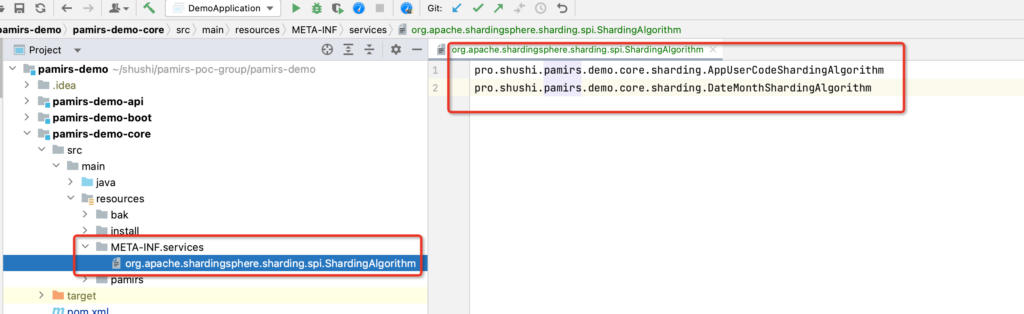
分库分表规则SPI

在resources/META-INF/services 配置 org.apache.shardingsphere.sharding.spi.ShardingAlgorithm

pro.shushi.pamirs.demo.core.sharding.AppUserCodeShardingAlgorithm
pro.shushi.pamirs.demo.core.sharding.DateMonthShardingAlgorithm

Oinone社区 作者:望闲原创文章,如若转载,请注明出处:https://doc.oinone.top/backend/7155.html

访问Oinone官网:https://www.oinone.top获取数式Oinone低代码应用平台体验

(0)
望闲的头像望闲数式管理员
上一篇 2024年5月9日 pm3:56
下一篇 2024年5月13日 pm7:06

相关推荐

  • 【PostgreSQL】后端部署使用PostgreSQL数据库

    PostgreSQL数据库配置 驱动配置 Maven配置(14.3版本可用) <postgresql.version>42.6.0</postgresql.version> <dependency> <groupId>org.postgresql</groupId> <artifactId>postgresql</artifactId> <version>${postgresql.version}</version> </dependency> 离线驱动下载 postgresql-42.2.18.jarpostgresql-42.6.0.jarpostgresql-42.7.3.jar JDBC连接配置 pamirs: datasource: base: type: com.alibaba.druid.pool.DruidDataSource driverClassName: org.postgresql.Driver url: jdbc:postgresql://127.0.0.1:5432/pamirs?currentSchema=base username: xxxxxx password: xxxxxx 连接url配置 暂无官方资料 url格式 jdbc:postgresql://${host}:${port}/${database}?currentSchema=${schema} 在jdbc连接配置时,${database}和${schema}必须完整配置,不可缺省。 其他连接参数如需配置,可自行查阅相关资料进行调优。 方言配置 pamirs方言配置 pamirs: dialect: ds: base: type: PostgreSQL version: 14 major-version: 14.3 pamirs: type: PostgreSQL version: 14 major-version: 14.3 数据库版本 type version majorVersion 14.x PostgreSQL 14 14.3 PS:由于方言开发环境为14.3版本,其他类似版本(14.x)原则上不会出现太大差异,如出现其他版本无法正常支持的,可在文档下方留言。 schedule方言配置 pamirs: event: enabled: true schedule: enabled: true dialect: type: PostgreSQL version: 14 major-version: 14.3 type version majorVersion PostgreSQL 14 14.3 PS:由于schedule的方言在多个版本中并无明显差异,目前仅提供一种方言配置。 其他配置 逻辑删除的值配置 pamirs: mapper: global: table-info: logic-delete-value: (EXTRACT(epoch FROM CURRENT_TIMESTAMP) * 1000000 + EXTRACT(MICROSECONDS FROM CURRENT_TIMESTAMP))::bigint PostgreSQL数据库用户初始化及授权 — init root user (user name can be modified by oneself) CREATE USER root WITH PASSWORD 'password'; — if using automatic database and schema creation, this is very important. ALTER USER root CREATEDB; SELECT * FROM pg_roles; — if using postgres database, this authorization is required. GRANT CREATE ON DATABASE postgres TO root;

    2023年11月1日
    1.2K00
  • 【HighGo】后端部署使用HighGo数据库

    HighGo数据库配置 驱动配置 jdbc仓库 https://mvnrepository.com/artifact/com.highgo/HgdbJdbc Maven配置(6.0.1版本可用) <highgo.version>6.0.1.jre8</highgo.version> <dependency> <groupId>com.highgo</groupId> <artifactId>HgdbJdbc</artifactId> <version>${highgo.version}</version> </dependency> JDBC连接配置 pamirs: datasource: base: type: com.alibaba.druid.pool.DruidDataSource driverClassName: com.highgo.jdbc.Driver url: jdbc:highgo://127.0.0.1:5866/oio_base?currentSchema=base,utl_file username: xxxxxx password: xxxxxx initialSize: 5 maxActive: 200 minIdle: 5 maxWait: 60000 timeBetweenEvictionRunsMillis: 60000 testWhileIdle: true testOnBorrow: false testOnReturn: false poolPreparedStatements: true asyncInit: true 连接url配置 官方文档 https://www.highgo.com/document/zh-cn/application/jdbc.html url格式 jdbc:highgo://ip:端口号/数据库名?currentSchema=schema1,schema2 在jdbc连接配置时,${database}和${schema}必须完整配置,不可缺省。 jdbc指定schema时可以在currentSchema后指定多个schema,中间用,分隔,第一个schema为业务库表存放的主schema。 highgo数据库6.0版本里每个数据库默认会带一个utl_file的schema,该模式与文件访问功能有关,需要带在jdbc的schema中,但不能放在第一个。 其他连接参数如需配置,可自行查阅相关资料进行调优。 方言配置 pamirs方言配置 pamirs: dialect: ds: base: type: HighGoDB version: 6 major-version: 6.0.1 biz_data: type: HighGoDB version: 6 major-version: 6.0.1 数据库版本 type version majorVersion 6.0.x HighGo 6 6.0.1 PS:由于方言开发环境为6.0.1版本,其他类似版本(6.0.x)原则上不会出现太大差异,如出现其他版本无法正常支持的,可在文档下方留言。 schedule方言配置 pamirs: event: enabled: true schedule: enabled: true dialect: type: HighGoDB version: 6 major-version: 6.0.1 其他配置 逻辑删除的值配置 pamirs: mapper: global: table-info: logic-delete-value: (EXTRACT(epoch FROM CURRENT_TIMESTAMP) * 1000000 + EXTRACT(MICROSECONDS FROM CURRENT_TIMESTAMP))::bigint Highgo数据库用户初始化及授权 — init oio_base user (user name can be modified by oneself) CREATE USER oio_base WITH PASSWORD 'Test@12345678'; — if using automatic database and schema creation, this is very important. ALTER USER oio_base CREATEDB; SELECT * FROM pg_roles; — if using highgo database, this authorization is required. GRANT CREATE ON DATABASE highgo TO oio_base;

    2025年7月10日
    40700
  • 后端:如何自定义表达式实现特殊需求?扩展内置函数表达式

    平台提供了很多的表达式,如果这些表达式不满足场景?那我们应该如何新增表达式去满足项目的需求?目前平台支持的表达式内置函数,参考 1. 扩展表达式的场景 注解@Validation的rule字段支持配置表达式校验如果需要判断入参List类型字段中的某一个参数进行NULL校验,发现平台的内置函数不支持该场景的配置,这里就可以通过平台的机制,对内置函数进行扩展。 常见的一些代码场景,如下: package pro.shushi.pamirs.demo.core.action; ……引用类 @Model.model(PetShopProxy.MODEL_MODEL) @Component public class PetShopProxyAction extends DataStatusBehavior<PetShopProxy> { @Override protected PetShopProxy fetchData(PetShopProxy data) { return data.queryById(); } @Validation(ruleWithTips = { @Validation.Rule(value = "!IS_BLANK(data.code)", error = "编码为必填项"), @Validation.Rule(value = "LEN(data.name) < 128", error = "名称过长,不能超过128位"), }) @Action(displayName = "启用") @Action.Advanced(invisible="!(activeRecord.code !== undefined && !IS_BLANK(activeRecord.code))") public PetShopProxy dataStatusEnable(PetShopProxy data){ data = super.dataStatusEnable(data); data.updateById(); return data; } ……其他代码 } 2. 新建一个自定义表达式的函数 校验入参如果是个集合对象的情况下,单个对象的某个字段如果为空,返回false的函数。 例子:新建一个CustomCollectionFunctions类 package xxx.xxx.xxx; import org.apache.commons.collections4.CollectionUtils; import org.springframework.stereotype.Component; import pro.shushi.pamirs.meta.annotation.Fun; import pro.shushi.pamirs.meta.annotation.Function; import pro.shushi.pamirs.meta.common.constants.NamespaceConstants; import pro.shushi.pamirs.meta.util.FieldUtils; import java.util.List; import static pro.shushi.pamirs.meta.enmu.FunctionCategoryEnum.COLLECTION; import static pro.shushi.pamirs.meta.enmu.FunctionLanguageEnum.JAVA; import static pro.shushi.pamirs.meta.enmu.FunctionOpenEnum.LOCAL; import static pro.shushi.pamirs.meta.enmu.FunctionSceneEnum.EXPRESSION; /** * 自定义内置函数 */ @Fun(NamespaceConstants.expression) @Component public class CustomCollectionFunctions { /** * LIST_FIELD_NULL 就是我们自定义的表达式,不能与已经存在的表达式重复!!! * * @param list * @param field * @return */ @Function.Advanced( displayName = "校验集成的参数是否为null", language = JAVA, builtin = true, category = COLLECTION ) @Function.fun("LIST_FIELD_NULL") @Function(name = "LIST_FIELD_NULL", scene = {EXPRESSION}, openLevel = LOCAL, summary = "函数示例: LIST_FIELD_NULL(list,field),函数说明: 传入一个对象集合,校验集合的字段是否为空" ) public Boolean listFieldNull(List list, String field) { if (null == list) { return false; } if (CollectionUtils.isEmpty(list)) { return false; } for (Object data : list) { Object value =…

    2024年5月30日
    2.4K00
  • Excel导入扩展点-整体导入(批量导入)

    1、【导入】在有些场景,需要获取Excel导入的整体数据,进行批量的操作或者校验 可以通过实现导入扩展点的方式实现,入参data是导入Excel的数据列表;业务可以根据实际情况进行数据校验 1)Excel模板定义,需要设置setEachImport(false) 2)导入扩展点API定义 pro.shushi.pamirs.file.api.extpoint.ExcelImportDataExtPoint#importData 3)示例代码参考: pro.shushi.pamirs.translate.extpoint.ResourceTranslationImportExtPoint#importData @Slf4j @Component @Ext(ExcelImportTask.class) public class ResourceTranslationImportExtPoint extends AbstractExcelImportDataExtPointImpl<List<ResourceTranslationItem>> { @Override //TODO 表达式,可以自定义,比如可以支持1个模型的多个【导入名称】的不同模板 @ExtPoint.Implement(expression = "importContext.definitionContext.model==\"" + ResourceTranslation.MODEL_MODEL + "\"") public Boolean importData(ExcelImportContext importContext, List<ResourceTranslationItem> dataList) { //TODO dataList就是excel导入那个sheet的所有内容 return true; } } 2、【导入】逐行导入的时候做事务控制 在模板中定义中增加事务的定义,并设置异常后回滚。参加示例代码: excel模板定义 @Component public class DemoItemImportTemplate implements ExcelTemplateInit { public static final String TEMPLATE_NAME = "商品导入模板"; @Override public List<ExcelWorkbookDefinition> generator() { //定义事务(导入处理中,只操作单个表的不需要事务定义。) //是否定义事务根据实际业务逻辑确定。比如:有些场景在导入前需要删除数据后在进行导入就需要定义事务 InitializationUtil.addTxConfig(DemoItem.MODEL_MODEL, ExcelDefinitionContext.EXCEL_TX_CONFIG_PREFIX + TEMPLATE_NAME); return Collections.singletonList( ExcelHelper.fixedHeader(DemoItem.MODEL_MODEL, TEMPLATE_NAME) .setType(ExcelTemplateTypeEnum.IMPORT) .createSheet("商品导入-sheet1") .createBlock(DemoItem.MODEL_MODEL) .addUnique(DemoItem.MODEL_MODEL,"name") .addColumn("name","名称") .addColumn("description","描述") .addColumn("itemPrice","单价") .addColumn("inventoryQuantity","库存") .build().setEachImport(true) //TODO 设置异常后回滚的标识,这个地方会回滚事务 .setHasErrorRollback(true) .setExcelImportMode(ExcelImportModeEnum.SINGLE_MODEL) ); } } 导入逻辑处理 @Slf4j @Component @Ext(ExcelImportTask.class) public class DemoItemImportExtPoint extends AbstractExcelImportDataExtPointImpl<DemoItem> implements ExcelImportDataExtPoint<DemoItem> { @Autowired private DemoItemService demoItemService; @Override @ExtPoint.Implement(expression = "importContext.definitionContext.model == \"" + DemoItem.MODEL_MODEL + "\"") public Boolean importData(ExcelImportContext importContext, DemoItem data) { ExcelImportTask importTask = importContext.getImportTask(); try { DemoItemImportTask hrExcelImportTask = new DemoItemImportTask().queryById(importTask.getId()); String publishUserName = Optional.ofNullable(hrExcelImportTask).map(DemoItemImportTask::getPublishUserName).orElse(null); data.setPublishUserName(publishUserName); demoItemService.create(data); } catch(PamirsException e) { log.error("导入异常", e); } catch (Exception e) { log.error("导入异常", e); } return Boolean.TRUE; } }

    2023年12月7日
    1.5K00
  • 自定义createorupdate方法时,关联模型数据怎么保存?

    需要自己手动增加保存关联模型数据的逻辑。 多对一、一对一以及一对多 可直接用fieldSave进行保存即可 //如 data.fieldSave(PamirsEmployee::getPositions); 多对多 需要对数据进行处理,前端提交过来的数据,进行判断,是新增还是修改,或者删除

    2023年11月1日
    1.4K00

Leave a Reply

登录后才能评论