
系统图标使用自定义CDN地址(内网部署)

在实际项目中,客户网络环境不能访问外网即纯内网部署。此时需要将所有的静态资源都放在客户内部的CDN上,该篇详细说明实现步骤。

实现步骤

1、把图片等静态资源上传到本地CDN上(如MINIO、Nginx等),图片等静态资源找 数式支持人员 提供;

  • 【注意】:MINIO情况,放置图片等静态资源的桶权限需设置为公共读

2、项目中YAML的OSS配置,使用本地CDN、并指定使用的本地CDN图标的标识appLogoUseCdn: true, OSS配置参考如下:

  • 本地CDN使用MINIO(仅示例需根据实际情况修改)

    cdn:
    oss:
    name: MINIO
    type: MINIO
    # MINIO的配置根据实际情况修改
    bucket: pamirs(您的bucket)
    # 上传和下载地址根据实际情况修改
    uploadUrl: http://39.103.145.77:9000
    downloadUrl: http://39.103.145.77:9000
    accessKeyId: 您的accessKeyId
    accessKeySecret: 您的accessKeySecret
    # mainDir对用CDN的图片目录,根据项目情况自行修改
    mainDir: upload/demo/
    validTime: 3600000
    timeout: 600000
    active: true
    referer:
    # 使用客户自己的CDN的图片,否则系统默认的从数式的CDN中获取
    appLogoUseCdn: true
  • 或本地CDN使用Nginx(仅示例需根据实际情况修改)

    cdn:
    oss:
    name: 本地文件NG系统
    type: LOCAL
    bucket:
    # uploadUrl 这个是Oinone后端服务地址和端口
    uploadUrl: http://192.168.0.129:8099
    # downloadUrl前端地址,即直接映射在nginx的静态资源的路径和端口
    downloadUrl: http://192.168.0.129:9999
    validTime: 3600000
    timeout: 600000
    active: true
    referer:
    # 本地Nginx静态资源目录
    localFolderUrl: /opt/pamirs/static
    # 使用客户自己的CDN的图片,否则系统默认的从数式的CDN中获取
    appLogoUseCdn: true

3、前端工程
3.1 前端源码工程,在.evn中把 STATIC_IMG地址进行修改;http(https)、IP和端口改成与CDN对应的配置,URL中/oinone/static/images是固定的;例如:

系统图标使用自定义CDN地址(内网部署)

  • 本地CDN使用MINIO(仅示例需根据实际情况修改)
    STATIC_IMG: 'http://39.103.145.77:9000/pamirs(这里替换为OSS中的bucket)/oinone/static/images'
  • 或本地CDN使用Nginx(仅示例需根据实际情况修改)
    STATIC_IMG: 'http://192.168.0.129:9999/static/oinone/static/images'

3.2 对于已经打包好的前端资源
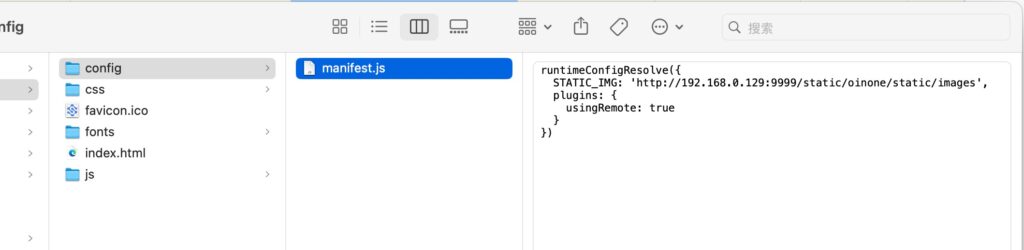
对于已打包好的前端资源即无法修改.evn的情况;需在前端资源的根目录,新建config/manifest.js. 如果已存在则不需要新建,同时原来的内容也不需要删除(追加即可),需增加的配置:
系统图标使用自定义CDN地址(内网部署)

  • 本地CDN使用MINIO(仅示例需根据实际情况修改)
    runtimeConfigResolve({
    STATIC_IMG: 'http://39.103.145.77:9000/pamirs(这里替换为OSS中的bucket)/oinone/static/images',
    plugins: {
    usingRemote: true
    }
    })
  • 或本地CDN使用Nginx(仅示例需根据实际情况修改)
    runtimeConfigResolve({
    STATIC_IMG: 'http://192.168.0.129:9999/static/oinone/static/images',
    plugins: {
    usingRemote: true
    }
    })

Oinone社区 作者:望闲原创文章,如若转载,请注明出处:https://doc.oinone.top/dai-ma-shi-jian/20385.html

访问Oinone官网:https://www.oinone.top获取数式Oinone低代码应用平台体验

(0)
望闲的头像望闲数式管理员
上一篇 2025年2月7日 pm4:19
下一篇 2025年2月12日 pm5:25

相关推荐

  • 蓝绿发布

    背景 应用程序升级面临最大挑战是新旧业务切换,将软件从测试的最后阶段带到生产环境,同时要保证系统不间断提供服务。长期以来,业务升级渐渐形成了几个发布策略:蓝绿发布、灰度发布和滚动发布,目的是尽可能避免因发布导致的流量丢失或服务不可用问题。 本文主要介绍Oinone平台如何实现蓝绿发布。蓝绿发布:项目逻辑上分为AB组,在项目系统时,首先把A组从负载均衡中摘除,进行新版本的部署。B组仍然继续提供服务。 需求 统一权限统一登录信息不同业务数据 实现方案 首先需要两个环境并统一流量入口,这里使用Nginx配置负载均衡:nginx如何配置后端服务的负载均衡 统一权限配置 在蓝绿环境添加不同的redis前缀 spring: redis: prefix: xxx 在蓝绿环境的修改AuthRedisTemplate Bean,利用setKeySerializer去掉redis前缀。 可以使用@Profile注解指定仅线上环境生效。 @Configuration // @Profile("prod") public class AuthRedisTemplateConfig { @Bean(AuthConstants.REDIS_TEMPLATE_BEAN_NAME) public AuthRedisTemplate<?> authRedisTemplate( RedisConnectionFactory redisConnectionFactory, PamirsStringRedisSerializer pamirsStringRedisSerializer ) { AuthRedisTemplate<Object> template = new AuthRedisTemplate<Object>(redisConnectionFactory, pamirsStringRedisSerializer) { @Override public void afterPropertiesSet() { // 重写 key serializer,去掉前缀隔离 this.setKeySerializer(new PamirsStringRedisSerializer(null)); super.afterPropertiesSet(); } }; return template; } } 统一登录 在蓝绿环境自定义实现pro.shushi.pamirs.user.api.spi.UserCacheApi SPI,去除redis前缀 package pro.shushi.pamirs.top.core.spi; import com.alibaba.fastjson.JSON; import com.google.common.collect.Sets; import org.apache.commons.lang3.StringUtils; import org.springframework.beans.factory.annotation.Autowired; import org.springframework.core.annotation.Order; import org.springframework.dao.DataAccessException; import org.springframework.data.redis.core.RedisOperations; import org.springframework.data.redis.core.SessionCallback; import org.springframework.stereotype.Component; import org.springframework.web.context.request.RequestContextHolder; import pro.shushi.pamirs.auth.api.cache.redis.AuthRedisTemplate; import pro.shushi.pamirs.meta.api.dto.model.PamirsUserDTO; import pro.shushi.pamirs.meta.api.dto.protocol.PamirsRequestVariables; import pro.shushi.pamirs.meta.api.session.PamirsSession; import pro.shushi.pamirs.meta.common.spi.SPI; import pro.shushi.pamirs.user.api.cache.UserCache; import pro.shushi.pamirs.user.api.configure.UserConfigure; import pro.shushi.pamirs.user.api.spi.UserCacheApi; import java.net.URI; import java.util.Collections; import java.util.List; import java.util.Optional; import java.util.Set; import java.util.concurrent.TimeUnit; @Order(1) @Component @SPI.Service("MyUserCache") public class MyUserCache implements UserCacheApi { private static final Set<String> DEFAULT_FILTER_URIS = Collections.singleton("/pamirs/message"); @Autowired private AuthRedisTemplate redisTemplate; @Override public PamirsUserDTO getSessionUser(String key) { String objectValue = getUserCacheAndRenewed(key); if (StringUtils.isNotBlank(objectValue)) { return JSON.parseObject(objectValue, PamirsUserDTO.class); } return null; } @Override public void setSessionUser(String key, PamirsUserDTO user, Integer expire) { user.setPassword(null); expire = getExpire(expire); redisTemplate.opsForValue().set(key.replace("'", " "), JSON.toJSONString(user), expire, TimeUnit.SECONDS); // 当前的实现是一个user可以在多个客户端登录,需要在管理端修改user权限后强制清除掉该用户已登录的session,所以需要记录uid对应所有已登录的sessionId String userRelSessionKey = UserCache.createUserRelSessionKey(user.getUserId()); redisTemplate.opsForSet().add(userRelSessionKey, key); redisTemplate.expire(userRelSessionKey,…

    2025年9月18日
    54100
  • 如何把平台功能菜单加到项目中?

    概述 在使用Oinone低代码平台进行项目开发的过程中,会存在把平台默认提供的菜单加到自己的项目中。这篇文章介绍实现方式,以角色管理为例。 1. 低代码情况 即项目是通过后端代码初始化菜单的方式。 通常在 XXXMenu.java类通过@UxMenu注解的方式,代码片段如下: 此种情况与添加项目本地的菜单无区别,具体代码: @UxMenu(value = "账号管理", icon = "icon-yonghuguanli") class AccountManage { @UxMenu("用户管理") @UxRoute(value = CustomerCompanyUserProxy.MODEL_MODEL, title = "用户管理") class CompanyUserManage { } @UxMenu("角色管理") @UxRoute(value = AuthRole.MODEL_MODEL, module = AdminModule.MODULE_MODULE, title = "角色管理") class RoleManage { } @UxMenu("操作日志") @UxRoute(value = OperationLog.MODEL_MODEL, module = AdminModule.MODULE_MODULE/***菜单所挂载的模块**/) class OperateLog { } } 2. 无代码情况 在界面设计器中,新建菜单–>选择绑定已有页面,进行发布即可。

    2024年4月19日
    1.6K00
  • 代码示例:快速找到示例代码

    1、图表设计器 数据可视化能加载到的接口,方法上需要加 category = FunctionCategoryEnum.QUERY_PAGE @Model.model(ExpensesIncome.MODEL_MODEL) @Component @Slf4j public class ExpensesIncomeAction { @Function.Advanced(type = FunctionTypeEnum.QUERY,category = FunctionCategoryEnum.QUERY_PAGE) @Function.fun(FunctionConstants.queryPage) @Function(openLevel = {FunctionOpenEnum.API}) public Pagination<ExpensesIncome> queryPage(Pagination<ExpensesIncome> page, IWrapper<ExpensesIncome> queryWrapper) { page = new ExpensesIncome().queryPage(page, queryWrapper); if (page!=null && CollectionUtils.isNotEmpty(page.getContent())) { page.getContent().forEach(a->{ if (a.getBudgetInCome()!=null && a.getBudgetInCome().compareTo(new BigDecimal("0.0"))!=0) { if (a.getRetailAmount()!=null) { a.setInComeRate(a.getRetailAmount().divide(a.getBudgetInCome(),2)); } } }); } return page; } } 2、事务支持 1)对于单个系统(InJvm)/模型内部采用强事务的方式。比如:在库存转移时,库存日志和库存数量的变化在一个事务中,保证两个表的数据同时成功或者失败。2)强事务管理采用编码式,Oinone事务管理兼容Spring的事务管理方式;有注解的方式和代码块的方式。a) 使用注解的方式: @Override @Transactional public void awardOut(AwardBookOutEmpRecordDetail detail) { List<OutEmpRecordSubjectDetail> subjectDetails = detail.getSubjectDetails(); …… } 重要说明基于注解的事务,Bean和加注解的方法必须能被Spring切面到。 b) 使用编码方式: //组装数据/获取数据/校验 Tx.build(new TxConfig()).executeWithoutResult(status -> { // 1、保存部门数据 deliDepartmentService.createOrUpdateBatch(departments); //2、如果父进行了下级关联设置,处理下级关联设置的逻辑 for (DeliDepartment department : departments) { doDepartSubLink(department); } }); ………… 3)对于分布式事务采用最终数据一致性,借助【可靠消息】或者【Job】的方式来实现。 3、平台工具类使用 3.1 FetchUtil pro.shushi.pamirs.core.common.FetchUtil,重点关注 # 根据Id查询列表 pro.shushi.pamirs.core.common.FetchUtil#fetchMapByIds # 根据Id查询,返回Map pro.shushi.pamirs.core.common.FetchUtil#fetchListByIds # 根据Codes查询列表 pro.shushi.pamirs.core.common.FetchUtil#fetchMapByCodes # 根据Code查询,返回Map pro.shushi.pamirs.core.common.FetchUtil#fetchListByCodes # 根据Entity查询 pro.shushi.pamirs.core.common.FetchUtil#fetchOne 其他更多方法参考这个类的源代码 3.2 ListUtils pro.shushi.pamirs.meta.common.util.ListUtils # 把输入的List,按给定的长度进行分组 pro.shushi.pamirs.meta.common.util.ListUtils#fixedGrouping # 从给定的List中返回特定字段的数组,忽略Null并去重 pro.shushi.pamirs.meta.common.util.ListUtils#transform 4、枚举获取 根据枚举的name获取valueInteger value = ArchivesConfigTypeEnum.getValueByName(ArchivesConfigTypeEnum.class,“status1”);根据枚举的name获取枚举项ArchivesConfigTypeEnum typeEnum = TtypeEnum.getEnum(ArchivesConfigTypeEnum.class, “status1”); 5、Map类型的数据怎么定义,即ttype 为map的字段写法 @Field(displayName = "上下文", store = NullableBoolEnum.TRUE, serialize = JSON) @Field.Advanced(columnDefinition = "TEXT") private Map<String, Object> context; 6、后端获取前端请求中的variables PamirsRequestVariables requestVariables = PamirsSession.getRequestVariables(); 7、为什么有时候调用服务走远程了 1、假设: A模型(modelA)所在的模块(ModuleA) B模型(modelB)所在的模块(ModuleB) 部署方式决定调用方式: 1)部署方式1: ModuleA 和 ModuleB 部署在一个jvm中,此时: modelA的服务/页面去调用 modelB,因为部署在一起,直接走inJvm 2、部署方式2: ModuleA 和 ModuleB 部署在不同的jvm中; modelA的服务/页面去调用 modelB,则会走远程(RPC);此时需要: a)ModuleB 需要开启dubbo服务,且ModuleA 和 ModuleB注册中心相同…

    2024年2月20日
    1.3K00
  • IWrapper、QueryWrapper和LambdaQueryWrapper使用

    条件更新updateByWrapper 通常我们在更新的时候new一个对象出来在去更新,减少更新的字段 Integer update = new DemoUser().updateByWrapper(new DemoUser().setFirstLogin(Boolean.FALSE), Pops.<DemoUser>lambdaUpdate().from(DemoUser.MODEL_MODEL).eq(IdModel::getId, userId) 使用基础模型的updateById方法更新指定字段的方法: new 一下update对象出来,更新这个对象。 WorkflowUserTask userTaskUp = new WorkflowUserTask(); userTaskUp.setId(userTask.getId()); userTaskUp.setNodeContext(json); userTaskUp.updateById(); 条件删除updateByWrapper public List<T> delete(List<T> data) { List<Long> petTypeIdList = new ArrayList(); for(T item:data){ petTypeIdList.add(item.getId()); } Models.data().deleteByWrapper(Pops.<PetType>lambdaQuery().from(PetType.MODEL_MODEL).in(PetType::getId,petTypeIdList)); return data; } 构造条件查询数据 示例1: LambdaQueryWrapper拼接查询条件 private void queryPetShops() { LambdaQueryWrapper<PetShop> query = Pops.<PetShop>lambdaQuery(); query.from(PetShop.MODEL_MODEL); query.setSortable(Boolean.FALSE); query.orderBy(true, true, PetShop::getId); List<PetShop> petShops2 = new PetShop().queryList(query); System.out.printf(petShops2.size() + ""); } 示例2: IWrapper拼接查询条件 private void queryPetShops() { IWrapper<PetShop> wrapper = Pops.<PetShop>lambdaQuery() .from(PetShop.MODEL_MODEL).eq(PetShop::getId,1L); List<PetShop> petShops4 = new PetShop().queryList(wrapper); System.out.printf(petShops4.size() + ""); } 示例3: QueryWrapper拼接查询条件 private void queryPetShops() { //使用Lambda获取字段名,防止后面改字段名漏改 String nameField = LambdaUtil.fetchFieldName(PetTalent::getName); //使用Lambda获取Clumon名,防止后面改字段名漏改 String nameColumn = PStringUtils.fieldName2Column(nameField); QueryWrapper<PetShop> wrapper2 = new QueryWrapper<PetShop>().from(PetShop.MODEL_MODEL) .eq(nameColumn, "test"); List<PetShop> petShops5 = new PetShop().queryList(wrapper2); System.out.printf(petShops5.size() + ""); } IWrapper转为LambdaQueryWrapper @Function.Advanced(type= FunctionTypeEnum.QUERY) @Function.fun(FunctionConstants.queryPage) @Function(openLevel = {FunctionOpenEnum.API}) public Pagination<PetShopProxy> queryPage(Pagination<PetShopProxy> page, IWrapper<PetShopProxy> queryWrapper) { LambdaQueryWrapper<PetShopProxy> wrapper = ((QueryWrapper<PetShopProxy>) queryWrapper).lambda(); // 非存储字段从QueryData中获取 Map<String, Object> queryData = queryWrapper.getQueryData(); if (null != queryData && !queryData.isEmpty()) { String codes = (String) queryData.get("codes"); if (org.apache.commons.lang3.StringUtils.isNotBlank(codes)) { wrapper.in(PetShopProxy::getCode, codes.split(",")); } } return new PetShopProxy().queryPage(page, wrapper); }

    2024年5月25日
    1.8K00
  • 后端:如何自定义表达式实现特殊需求?扩展内置函数表达式

    平台提供了很多的表达式,如果这些表达式不满足场景?那我们应该如何新增表达式去满足项目的需求?目前平台支持的表达式内置函数,参考 1. 扩展表达式的场景 注解@Validation的rule字段支持配置表达式校验如果需要判断入参List类型字段中的某一个参数进行NULL校验,发现平台的内置函数不支持该场景的配置,这里就可以通过平台的机制,对内置函数进行扩展。 常见的一些代码场景,如下: package pro.shushi.pamirs.demo.core.action; ……引用类 @Model.model(PetShopProxy.MODEL_MODEL) @Component public class PetShopProxyAction extends DataStatusBehavior<PetShopProxy> { @Override protected PetShopProxy fetchData(PetShopProxy data) { return data.queryById(); } @Validation(ruleWithTips = { @Validation.Rule(value = "!IS_BLANK(data.code)", error = "编码为必填项"), @Validation.Rule(value = "LEN(data.name) < 128", error = "名称过长,不能超过128位"), }) @Action(displayName = "启用") @Action.Advanced(invisible="!(activeRecord.code !== undefined && !IS_BLANK(activeRecord.code))") public PetShopProxy dataStatusEnable(PetShopProxy data){ data = super.dataStatusEnable(data); data.updateById(); return data; } ……其他代码 } 2. 新建一个自定义表达式的函数 校验入参如果是个集合对象的情况下,单个对象的某个字段如果为空,返回false的函数。 例子:新建一个CustomCollectionFunctions类 package xxx.xxx.xxx; import org.apache.commons.collections4.CollectionUtils; import org.springframework.stereotype.Component; import pro.shushi.pamirs.meta.annotation.Fun; import pro.shushi.pamirs.meta.annotation.Function; import pro.shushi.pamirs.meta.common.constants.NamespaceConstants; import pro.shushi.pamirs.meta.util.FieldUtils; import java.util.List; import static pro.shushi.pamirs.meta.enmu.FunctionCategoryEnum.COLLECTION; import static pro.shushi.pamirs.meta.enmu.FunctionLanguageEnum.JAVA; import static pro.shushi.pamirs.meta.enmu.FunctionOpenEnum.LOCAL; import static pro.shushi.pamirs.meta.enmu.FunctionSceneEnum.EXPRESSION; /** * 自定义内置函数 */ @Fun(NamespaceConstants.expression) @Component public class CustomCollectionFunctions { /** * LIST_FIELD_NULL 就是我们自定义的表达式,不能与已经存在的表达式重复!!! * * @param list * @param field * @return */ @Function.Advanced( displayName = "校验集成的参数是否为null", language = JAVA, builtin = true, category = COLLECTION ) @Function.fun("LIST_FIELD_NULL") @Function(name = "LIST_FIELD_NULL", scene = {EXPRESSION}, openLevel = LOCAL, summary = "函数示例: LIST_FIELD_NULL(list,field),函数说明: 传入一个对象集合,校验集合的字段是否为空" ) public Boolean listFieldNull(List list, String field) { if (null == list) { return false; } if (CollectionUtils.isEmpty(list)) { return false; } for (Object data : list) { Object value =…

    2024年5月30日
    2.2K00

Leave a Reply

登录后才能评论