
Oinone项目引入Nacos作为注册中心

Oinone项目引入Nacos作为注册中心

  • Oinone项目的默认dubbo注册中心为zk, 实际项目中有可能要求用Nacos作注册中心。
  • Oinone默认引入的nacos-client-1.4.1,低版本不支持认证配置;该客户端版本支持Nacos服务1.x的和2.x的版本

一、项目中增加依赖

项目主pom引入依赖。

<dependency>
    <groupId>org.apache.dubbo</groupId>
    <artifactId>dubbo-registry-nacos</artifactId>
    <version>2.7.22</version>
</dependency>

项目的boot工程的pom引入依赖

<dependency>
    <groupId>org.apache.dubbo</groupId>
    <artifactId>dubbo-registry-nacos</artifactId>
</dependency>
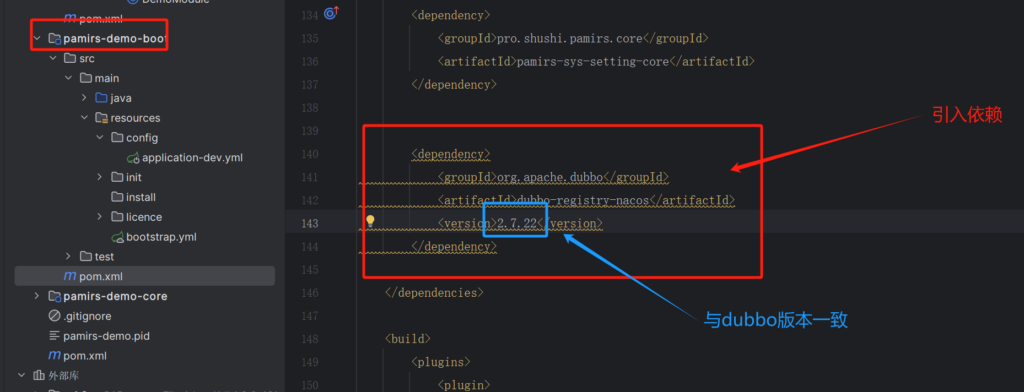
Oinone项目引入Nacos作为注册中心

二、配置修改

修改dubbo服务注册到nacos

bootstrap.yml文件的配置,或者application.yml文件中修改dubbo的配置

dubbo:
  application:
    name: pamirs-demo
    version: 1.0.0
  registry:
    id: pamirs-demo-registry
    address: nacos://192.168.0.118:8848
    username: nacos # 认证的用户名(根据情况自行修改),未开启认证可以不需要配置username和password
    password: nacos # 认证的密码(根据情况自行修改),未开启认证可以不需要配置username和password
    # dubbo使用nacos的注册中心往配置中心写入配置关闭配置
    use-as-metadata-center: false
    use-as-config-center: false
  config-center:
    address: nacos://192.168.0.118:8848
    username: nacos # 认证的用户名(根据情况自行修改),未开启认证可以不需要配置username和password
    password: nacos # 认证的密码(根据情况自行修改),未开启认证可以不需要配置username和password
  metadata-report:
    failfast: false # 关闭错误上报的功能
    address: nacos://192.168.0.118:8848
    username: nacos # 认证的用户名(根据情况自行修改),未开启认证可以不需要配置username和password
    password: nacos # 认证的密码(根据情况自行修改),未开启认证可以不需要配置username和password
  protocol:
    name: dubbo
    port: -1
    serialization: pamirs
  scan:
    base-packages: pro.shushi
  cloud:
    subscribed-services:

其他

Oinone社区 作者:望闲原创文章,如若转载,请注明出处:https://doc.oinone.top/kai-fa-shi-jian/5835.html

访问Oinone官网:https://www.oinone.top获取数式Oinone低代码应用平台体验

(0)
望闲的头像望闲数式管理员
上一篇 2024年2月28日 pm10:15
下一篇 2024年3月6日 pm8:27

相关推荐

  • 集成开放-开放接口如何鉴权加密

    使用前提 已经阅读过文档【oinone 7天从入门到精通】的6.2章节-集成平台 已经依赖了内置模块集成平台eip boot启动工程pom.xml新增jar依赖 <dependency> <groupId>pro.shushi.pamirs.core</groupId> <artifactId>pamirs-eip2-core</artifactId> </dependency> <dependency> <groupId>pro.shushi.pamirs.core</groupId> <artifactId>pamirs-eip2-view</artifactId> </dependency> 配置文件application.yml新增启动依赖模块 pamirs: boot: modules: – eip eip: open-api: enabled: true route: # 开放接口访问IP,开放外网可以配置为0.0.0.0 host: 127.0.0.1 # 开放接口访问端口 port: 8094 # 认证Token加密的AES密钥 aes-key: NxDZUddmvdu3QQpd5jIww2skNx6U0w0uOAXj3NUCLu8= 一、新增开放接口示例代码 开放接口类定义 package pro.shushi.pamirs.demo.api.open; import pro.shushi.pamirs.meta.annotation.Fun; import pro.shushi.pamirs.meta.annotation.Function; @Fun(TestOpenApiModelService.FUN_NAMESPACE) public interface TestOpenApiModelService { String FUN_NAMESPACE = "demo.open.TestOpenApiModelService"; @Function TestOpenApiModel queryById(Long id); } 开放接口实现类 package pro.shushi.pamirs.demo.core.open; import org.apache.camel.ExtendedExchange; import org.springframework.stereotype.Component; import pro.shushi.pamirs.core.common.SuperMap; import pro.shushi.pamirs.demo.api.open.TestEipConfig; import pro.shushi.pamirs.demo.api.open.TestOpenApiModel; import pro.shushi.pamirs.demo.api.open.TestOpenApiModelService; import pro.shushi.pamirs.demo.api.open.TestOpenApiResponse; import pro.shushi.pamirs.eip.api.IEipContext; import pro.shushi.pamirs.eip.api.annotation.Open; import pro.shushi.pamirs.eip.api.constant.EipFunctionConstant; import pro.shushi.pamirs.eip.api.enmu.EipExpEnumerate; import pro.shushi.pamirs.eip.api.entity.openapi.OpenEipResult; import pro.shushi.pamirs.meta.annotation.Fun; import pro.shushi.pamirs.meta.annotation.Function; import pro.shushi.pamirs.meta.common.exception.PamirsException; import java.util.Optional; @Fun(TestOpenApiModelService.FUN_NAMESPACE) @Component public class TestOpenApiModelServiceImpl implements TestOpenApiModelService { @Override @Function public TestOpenApiModel queryById(Long id) { return new TestOpenApiModel().queryById(id); } @Function @Open @Open.Advanced( authenticationProcessorFun = EipFunctionConstant.DEFAULT_AUTHENTICATION_PROCESSOR_FUN, authenticationProcessorNamespace = EipFunctionConstant.FUNCTION_NAMESPACE ) public OpenEipResult<TestOpenApiResponse> queryById4Open(IEipContext<SuperMap> context , ExtendedExchange exchange) { String id = Optional.ofNullable(String.valueOf(context.getInterfaceContext().getIteration("id"))).orElse(""); TestOpenApiModel temp = queryById(Long.valueOf(id)); TestOpenApiResponse response = new TestOpenApiResponse(); if(temp != null ) { response.setAge(temp.getAge()); response.setId(temp.getId()); response.setName(temp.getName()); }else{ response.setAge(1); response.setId(1L); response.setName("oinone eip test"); } OpenEipResult<TestOpenApiResponse> result = new OpenEipResult<TestOpenApiResponse>(response); return result; } @Function @Open(config = TestEipConfig.class,path = "error") @Open.Advanced( httpMethod = "post", authenticationProcessorFun = EipFunctionConstant.DEFAULT_AUTHENTICATION_PROCESSOR_FUN, authenticationProcessorNamespace…

    2024年7月25日
    1.2K00
  • 灵活敏捷开发,高效交付项目的6个关键

    项目工程管理 项目工程顶层分层 项目分层设计,划分出 CDM层、 标准业务层 、定制业务层; 沉淀领域业务模型至CDM层; 沉底业内通用功能至标准业务层; 客户定制化功能在定制业务层; 项目内部的层级划分 项目包结构管理及规范 pamirs-demo-api constant【常量的包路径】 enums【枚举类的包路径】 model【该领域核⼼模型的包路径】 pmodel【该领域代理模型的包路径】 tmodel【该领域传输模型的包路径】 service【存放该领域的⾮存储模型如:⽤于传输的临时模型】 utils【工具类】 XXModule【该类是Demo模块的定义】 pamirs-demo-core service【接口实现类】 init【模块初始化⼯作的包路径】 manager 【manager是 service的⼀些公共逻辑,不会定义为独⽴的function的类】 pamirs-demo-view(可选) action【模型对外交互的⾏为的包路径】 项目中模块间依赖 禁止出现api模块依赖core模块的情况,api模块只允许依赖api模块; 根据当前项目结构进行模块划分,避免循环依赖; 规划项目模块 项目阶段,代码开发前,业务架构师需充分的理解需求和蓝图,对系统进行业务域, 功能域的划分;例如:对一个电商系统: 提高系统的可维护性:通过将系统拆分为不同的业务域,每个业务域都有清晰的边界和职责,可以独立开发、测试和维护; 提升开发效率:业务域划分可以使开发团队更加专注于自己负责的业务,减少不必要的沟通和协调,提升开发效率; 促进团队合作:通过业务域划分,每个团队可以负责一个或多个业务域,团队成员之间可以有更高效的合作和协同。 支持系统的扩展和演化:业务域划分可以使系统更加灵活和可扩展。当需要新增一个新的业务功能或调整现有的业务逻辑时,只需要修改对应的业务域,而不需要对整个系统进行改动。 项目文档管理 项目文档管理对于项目的实施,项目进度管理,项目后期维护等都是至关重要的。系统详细的产品文档,测试文档,运维文档,开发文档,项目管理文档等。 协同合作:团队成员可以共享和访问项目文档,促进协同合作和信息共享,避免信息孤岛和重复工作。 知识管理:项目中所获得的知识,对项目的成功和后续的知识积累至关重要。通过良好的文档管理,可以确保项目知识的保存和传承,提高组织的知识管理能力。 问题解决:项目文档中记录了项目的需求、决策、问题和解决方案等信息。当出现问题或需要做决策时,可以通过查阅文档来获取相关信息,加快问题解决的速度,并减少错误和重复。 项目追踪:通过文档管理,可以跟踪项目的进展和状态。可以记录项目的里程碑、任务分配、进度更新等信息,帮助团队了解项目的整体情况,及时发现和解决问题。 知识共享:好的文档管理可以促进知识共享和传播。通过将项目文档进行分类、索引和存档,可以使团队成员更容易找到所需的信息,并从中学习和借鉴经验,提高工作效率和质量。 数据库和事务 多表联合查询 减少需要join的操作出现 用多次查询替代 索引相关 核心业务访问DB的Sql 要命中或者覆盖索引,保存核心业务的响应时间; 控制单表的索引数量,注意联合索引 数据一致性:乐观锁控制,unique�等 事务代码示例 事务相关注意点参考【Oinone如何支持构建分布式项目】:https://doc.oinone.top/kai-fa-shi-jian/5572.html

    2024年2月20日
    1.1K00
  • 函数之异步执行

    总体介绍 异步任务是非常常见的一种开发模式,它在分布式的开发模式中有很多应用场景如: 高并发场景中,我们一般采用把长流程切短,用异步方式去掉可以异步的非关键功能,缩小主流程响应时间,提升用户体验 异构系统的集成调用,通过异步任务完成解耦与自动重试 分布式系统最终一致性的可选方案 本文将介绍oinone是如何结合Spring+TbSchedule来完成异步任务 构建第一个异步任务 新建PetShopService和PetShopServiceImpl 1、 新建PetShopService定义updatePetShops方法 package pro.shushi.pamirs.demo.api.service; import pro.shushi.pamirs.demo.api.model.PetShop; import pro.shushi.pamirs.meta.annotation.Fun; import pro.shushi.pamirs.meta.annotation.Function; import java.util.List; @Fun(PetShopService.FUN_NAMESPACE) public interface PetShopService { String FUN_NAMESPACE = "demo.PetShop.PetShopService"; @Function void updatePetShops(List<PetShop> petShops); } 2、PetShopServiceImpl实现PetShopService接口并在updatePetShops增加@XAsync注解 package pro.shushi.pamirs.demo.core.service; import org.springframework.stereotype.Component; import pro.shushi.pamirs.demo.api.model.PetShop; import pro.shushi.pamirs.demo.api.service.PetShopService; import pro.shushi.pamirs.meta.annotation.Fun; import pro.shushi.pamirs.meta.annotation.Function; import pro.shushi.pamirs.trigger.annotation.XAsync; import java.util.List; @Fun(PetShopService.FUN_NAMESPACE) @Component public class PetShopServiceImpl implements PetShopService { @Override @Function @XAsync(displayName = "异步批量更新宠物商店",limitRetryNumber = 3,nextRetryTimeValue = 60) public void updatePetShops(List<PetShop> petShops) { new PetShop().updateBatch(petShops); } } a. displayName = "异步批量更新宠物商店",定义异步任务展示名称b. limitRetryNumber = 3,定义任务失败重试次数,,默认:-1不断重试c. nextRetryTimeValue = 60,定义任务失败重试的时间数,默认:3d. nextRetryTimeUnit,定义任务失败重试的时间单位,默认:TimeUnitEnum.SECONDe. delayTime,定义任务延迟执行的时间数,默认:0f. delayTimeUnit,定义任务延迟执行的时间单位,默认:TimeUnitEnum.SECOND 修改PetShopBatchUpdateAction调用异步任务 引入PetShopService 修改conform方法,调用petShopService.updatePetShops方法 package pro.shushi.pamirs.demo.core.action; @Model.model(PetShopBatchUpdate.MODEL_MODEL) @Component public class PetShopBatchUpdateAction { @Autowired private PetShopService petShopService; @Action(displayName = "确定",bindingType = ViewTypeEnum.FORM,contextType = ActionContextTypeEnum.SINGLE) public PetShopBatchUpdate conform(PetShopBatchUpdate data){ List<PetShop> shops = ArgUtils.convert(PetShopProxy.MODEL_MODEL, PetShop.MODEL_MODEL,proxyList); // 调用异步任务 petShopService.updatePetShops(shops); }); return data; } } 不同应用如何隔离执行单元 在schedule跟模块部署一起的时候,多模块独立boot的情况下,需要做必要的配置。如果schedule独立部署则没有必要,因为全部走远程,不存在类找不到的问题 通过配置pamirs.zookeeper.rootPath,确保两组机器都能覆盖所有任务分片,这样不会漏数据 通过pamirs.event.schedule.ownSign来隔离。确保两组机器只取各自产生的数据,这样不会重复执行数据 pamirs: zookeeper: zkConnectString: 127.0.0.1:2181 zkSessionTimeout: 60000 rootPath: /demo event: enabled: true schedule: enabled: true ownSign: demo rocket-mq: namesrv-addr: 127.0.0.1:9876

    2024年5月25日
    1.3K00
  • 如何通过 Oineone 平台自定义视图

    在 Oineone 平台上,自定义视图允许用户替换默认提供的页面布局,以使用自定义页面。本文将指导您如何利用 Oineone 提供的 API 来实现这一点。 默认视图介绍 Oineone 平台提供了多种默认视图,包括: 表单视图 表格视图 表格视图 (左树右表) 详情视图 画廊视图 树视图 每种视图都有其标准的 layout。自定义视图实际上是替换这些默认 layout 的过程。 默认的表单视图 layout <view type="FORM"> <element widget="actionBar" slot="actionBar" slotSupport="action"> <xslot name="actions" slotSupport="action" /> </element> <element widget="form" slot="form"> <xslot name="fields" slotSupport="pack,field" /> </element> </view> 内嵌的的表单视图 layout <view type="FORM"> <element widget="form" slot="form"> <xslot name="fields" slotSupport="pack,field" /> </element> </view> 默认的表格 <view type="TABLE"> <pack widget="group"> <view type="SEARCH"> <element widget="search" slot="search" slotSupport="field" /> </view> </pack> <pack widget="group" slot="tableGroup"> <element widget="actionBar" slot="actionBar" slotSupport="action"> <xslot name="actions" slotSupport="action" /> </element> <element widget="table" slot="table" slotSupport="field"> <element widget="expandColumn" slot="expandRow" /> <xslot name="fields" slotSupport="field" /> <element widget="rowActions" slot="rowActions" slotSupport="action" /> </element> </pack> </view> 内嵌的的表格 <view type="TABLE"> <view type="SEARCH"> <element widget="search" slot="search" slotSupport="field" /> </view> <element widget="actionBar" slot="actionBar" slotSupport="action"> <xslot name="actions" slotSupport="action" /> </element> <element widget="table" slot="table"> <element widget="expandColumn" slot="expandRow" /> <xslot name="fields" slotSupport="field" /> <element widget="rowActions" slot="rowActions" /> </element> </view> 左树右表 <view type="table"> <pack title="" widget="group"> <view type="search"> <element slot="search" widget="search"/> </view> </pack> <pack title="" widget="group"> <pack widget="row" wrap="false"> <pack widget="col" width="257"> <pack title="" widget="group"> <pack widget="col"> <element slot="tree" widget="tree"/> </pack> </pack> </pack> <pack mode="full" widget="col"> <pack widget="row"> <element justify="START" slot="actionBar"…

    2024年4月3日
    1.2K00
  • Maven Setting 配置详解

    常用标签概览 servers/server:配置私有仓库用户名和密码进行认证,以 id 进行关联。 mirrors/mirror:配置镜像仓库拉取时的地址源和额外配置。 profiles/profile:配置多个可能使用的镜像仓库。 activeProfiles/activeProfile:配置默认激活的 profile,以 id 进行关联。 Oinone 私有仓库配置 以下配置可以在使用 Oinone 私有仓库的同时,也可以正常使用 aliyun 镜像源。 <servers> <server> <id>shushi</id> <username>${username}</username> <password>${password}</password> </server> </servers> <mirrors> <mirror> <id>shushi</id> <mirrorOf>shushi</mirrorOf> <url>http://ss.nexus.ixtx.fun/repository/public</url> <!– 忽略 https 认证,maven 版本过高时需要配置 –> <blocked>false</blocked> </mirror> </mirrors> <profiles> <profile> <id>shushi</id> <repositories> <repository> <!– 对应 server.id –> <id>shushi</id> <url>http://ss.nexus.ixtx.fun/repository/public</url> <releases> <enabled>true</enabled> </releases> <snapshots> <enabled>true</enabled> </snapshots> </repository> </repositories> <pluginRepositories> <pluginRepository> <!– 对应 server.id –> <id>shushi</id> <url>http://ss.nexus.ixtx.fun/repository/snapshots</url> <releases> <enabled>false</enabled> </releases> <snapshots> <enabled>true</enabled> </snapshots> </pluginRepository> </pluginRepositories> </profile> <profile> <id>aliyun</id> <repositories> <repository> <id>aliyun</id> <url>https://maven.aliyun.com/repository/public</url> <releases> <enabled>true</enabled> </releases> <snapshots> <enabled>false</enabled> </snapshots> </repository> </repositories> <pluginRepositories> <pluginRepository> <id>aliyun</id> <url>https://maven.aliyun.com/repository/public</url> <releases> <enabled>true</enabled> </releases> <snapshots> <enabled>false</enabled> </snapshots> </pluginRepository> </pluginRepositories> </profile> </profiles> <activeProfiles> <!– 使用 shushi 私有仓库 –> <activeProfile>shushi</activeProfile> <!– 使用 aliyun 镜像仓库 –> <activeProfile>aliyun</activeProfile> </activeProfiles> 常见问题 使用 mvn 时无法拉取 Oinone 最新版镜像,提示找不到对应的包 原因:在 Oinone 开源后,oinone-pamirs 内核相关包都被部署到 maven 中央仓库,但由于其他镜像仓库的同步存在延时,在未正确同步的其他镜像源拉取时会出现找不到对应的包相关异常。 解决方案:检查 mirrors 中是否配置了 aliyun 镜像源,如果配置了,使用上述 Oinone 私有仓库配置重新配置后,再进行拉取。这一问题是由于 mirrors 配置不当,拦截了所有从 maven 中央仓库拉取的地址替换为了 aliyun 镜像源导致的。

    2025年11月10日
    49400

Leave a Reply

登录后才能评论