
Oinone项目引入Nacos作为配置中心

Oinone项目引入nacos作为配置中心

  • Oinone项目配置默认读取的项目中yml文件(application-xxx.yml), 实际项目中有可能要求项目的配置放到Nacos配置中心中;
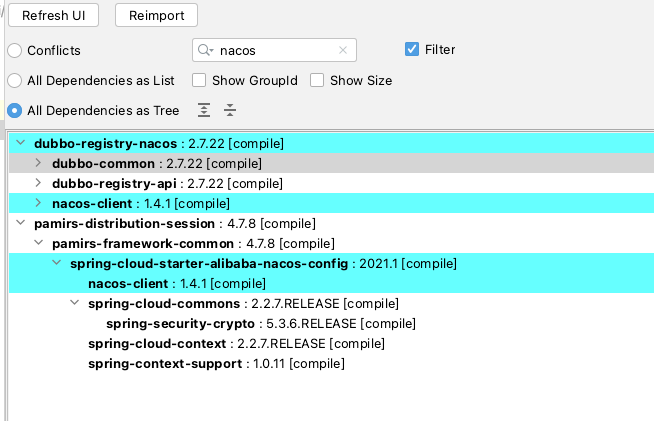
  • Oinone默认引入的nacos-client-1.4.1,低于1.4.1的版本不支持认证配置;1.4.1的客户端版本支持Nacos服务端1.x的和2.x的版本;

一、项目中增加依赖

项目主pom引入依赖(最新版平台已默认引入), Nacos版本要求1.4.1以上,低版本不支持认证配置

<dependency>
    <groupId>com.alibaba.cloud</groupId>
    <artifactId>spring-cloud-starter-alibaba-nacos-config</artifactId>
    <version>2021.1</version>
</dependency>
<dependency>
    <groupId>com.alibaba.nacos</groupId>
    <artifactId>nacos-client</artifactId>
    <version>1.4.1</version>
</dependency>

项目的boot工程的pom引入依赖(最新版平台已默认引入)

<dependency>
    <groupId>com.alibaba.cloud</groupId>
    <artifactId>spring-cloud-starter-alibaba-nacos-config</artifactId>
</dependency>
<dependency>
    <groupId>com.alibaba.nacos</groupId>
    <artifactId>nacos-client</artifactId>
</dependency>
Oinone项目引入Nacos作为配置中心

二、项目工程bootstrap配置

bootstrap.yml文件的配置修改为:

spring:
  application:
    name: hr-simple # 替换为实际服务名
  profiles:
    active: wx # 指定 profile
  cloud:
    config:
      enabled: false
    nacos:
      discovery:
        enabled: false
      config:
        server-addr: 127.0.0.1:8848
        enabled: true
        # namespace: # 如果使用 public 命名空间,建议省略此行
        # namespace: your-custom-namespace-id # 如果使用自定义命名空间,填写其 ID
        group: DEFAULT_GROUP
        # prefix: # 通常省略,使用默认的 spring.application.name
        file-extension: yaml # 推荐使用 yaml,而不是 yml (虽然通常兼容)
        timeout: 5000
        #【可选】修改为和nacos一致即可(如果服务端未开启可以不用配置)
        # username: wangxian
        # password: wangxian

三、Naocs服务端配置

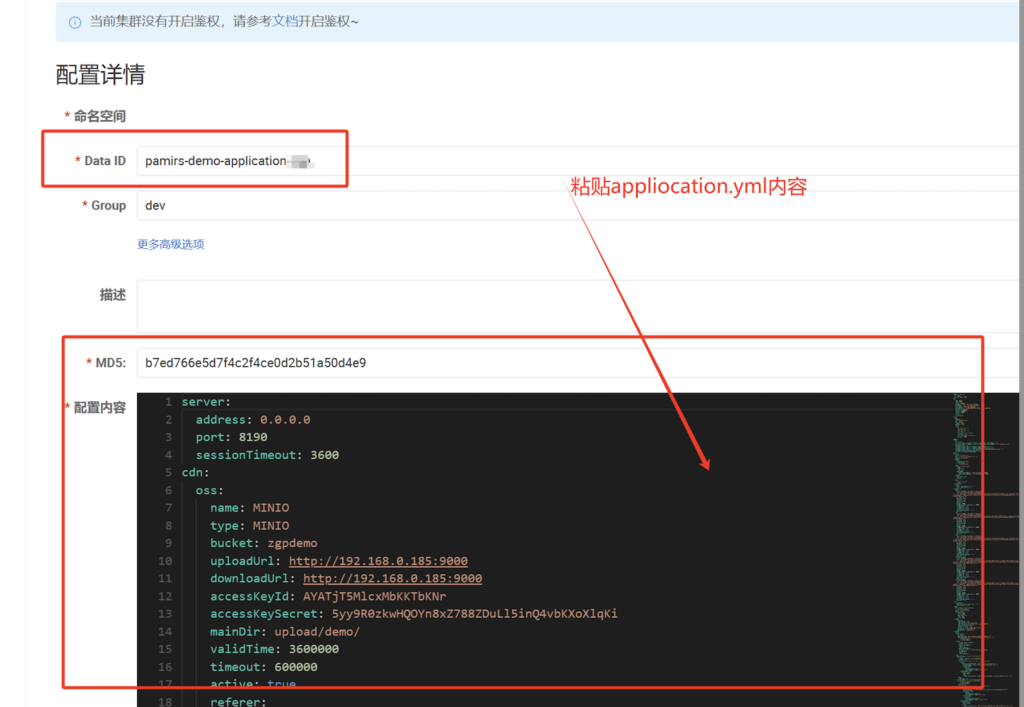
在Nacos服务端的对应的namespace(5a8b3710-a9a2-4f7c-932f-50f326cb1ccf)下增加配置,把原本配置在代码中的(application-xxx.yml)配置到Nacos中
Oinone项目引入Nacos作为配置中心

Oinone社区 作者:望闲原创文章,如若转载,请注明出处:https://doc.oinone.top/kai-fa-shi-jian/5828.html

访问Oinone官网:https://www.oinone.top获取数式Oinone低代码应用平台体验

Like (0)
望闲's avatar望闲数式管理员
Previous 2024年2月28日 pm3:11
Next 2024年2月28日 pm10:21

相关推荐

  • Oinone项目引入Nacos作为注册中心

    Oinone项目引入Nacos作为注册中心 Oinone项目的默认dubbo注册中心为zk, 实际项目中有可能要求用Nacos作注册中心。 Oinone默认引入的nacos-client-1.4.1,低版本不支持认证配置;该客户端版本支持Nacos服务1.x的和2.x的版本 一、项目中增加依赖 项目主pom引入依赖。 <dependency> <groupId>org.apache.dubbo</groupId> <artifactId>dubbo-registry-nacos</artifactId> <version>2.7.22</version> </dependency> 项目的boot工程的pom引入依赖 <dependency> <groupId>org.apache.dubbo</groupId> <artifactId>dubbo-registry-nacos</artifactId> </dependency> 二、配置修改 修改dubbo服务注册到nacos bootstrap.yml文件的配置,或者application.yml文件中修改dubbo的配置 dubbo: application: name: pamirs-demo version: 1.0.0 registry: id: pamirs-demo-registry address: nacos://192.168.0.118:8848 username: nacos # 认证的用户名(根据情况自行修改),未开启认证可以不需要配置username和password password: nacos # 认证的密码(根据情况自行修改),未开启认证可以不需要配置username和password # dubbo使用nacos的注册中心往配置中心写入配置关闭配置 use-as-metadata-center: false use-as-config-center: false config-center: address: nacos://192.168.0.118:8848 username: nacos # 认证的用户名(根据情况自行修改),未开启认证可以不需要配置username和password password: nacos # 认证的密码(根据情况自行修改),未开启认证可以不需要配置username和password metadata-report: failfast: false # 关闭错误上报的功能 address: nacos://192.168.0.118:8848 username: nacos # 认证的用户名(根据情况自行修改),未开启认证可以不需要配置username和password password: nacos # 认证的密码(根据情况自行修改),未开启认证可以不需要配置username和password protocol: name: dubbo port: -1 serialization: pamirs scan: base-packages: pro.shushi cloud: subscribed-services: 其他 Oinone构建分布式项目一些注意点,包括服务远程发布范围、关闭Dubbo元数据上报日志、Nacos作为注册中的配置 Nacos做为注册中心:如何调用其他系统的SpringCloud服务?

    2024年2月28日
    2.0K00
  • 如何使用GQL工具正确发起请求

    简介 本文将讲解一下如何正确发起GQL请求和GQL工具使用过程中的常见问题。 参数介绍 请求url和请求方法在浏览器的请求标头里面可以查到,保持一致就可以向服务正常发送请求,但还缺少请求体确定请求哪个接口。 每个请求都包括两部分内容:1. Query 2. Variables右键Query和Variables复制值直接拷贝到工具中就可以正常请求了。 注意:如果使用admin账号登录,请求的时候可以不携带Variables参数,因为admin没有权限控制,如果使用其他用户,就必须携带Variables参数,否则会被权限拦截。

    2024年10月25日
    2.0K00
  • 树形下拉组件数据查询覆写

    一、背景与问题 Oinone 的树形下拉组件(TreeSelect)和树视图(Tree)在查询数据时,最终调用的是树节点所配置模型的数据管理器函数: 树接口 调用的数据管理器函数 场景 fetchAll queryListByWrapper 一次性全量加载 fetchChildren queryPage 按层级懒加载(默认) queryKeywords4Tree queryListByWrapper 关键字搜索 reverselyQuery queryListByWrapper 已选数据回填 官方文档原文:「所有树查询接口都会调用模型对应的数据管理器函数,可以通过重写的方式修改其查询结果。」 直接覆写的风险 如果直接在原模型(如 business.PamirsDepartment)上覆写 queryPage: // ⚠️ 危险写法:会影响所有使用 PamirsDepartment.queryPage 的场景 @Component @Model.model(PamirsDepartment.MODEL_MODEL) public class DeptQueryAction { @Function.Advanced(type = FunctionTypeEnum.QUERY, category = FunctionCategoryEnum.QUERY_PAGE) @Function.fun(FunctionConstants.queryPage) @Function(openLevel = {FunctionOpenEnum.LOCAL, FunctionOpenEnum.REMOTE, FunctionOpenEnum.API}) public Pagination<PamirsDepartment> queryPage(Pagination<PamirsDepartment> page, IWrapper<PamirsDepartment> queryWrapper) { // 追加过滤条件… return new PamirsDepartment().queryPage(page, queryWrapper); } } 该覆写会全局生效——不仅是树形下拉,所有调用 PamirsDepartment 的 queryPage 的地方(组织架构页面、人员管理列表、权限分配、框架内部关联查询等)都会受到影响,容易引发难以排查的副作用。 二、推荐方案:代理模型(PROXY)隔离 核心思路 创建一个继承原模型的代理模型(ModelTypeEnum.PROXY),拥有独立的模型命名空间 在代理模型中重新声明自关联字段(如 parent),将关联目标指向代理模型自身 在代理模型的 Action 中覆写数据管理器函数,追加树形场景专属的过滤逻辑 树形下拉的视图 DSL 中,<node> 的 model 指向代理模型 代理模型与原模型共享同一张数据表,但函数注册在各自独立的命名空间下,互不干扰。 框架官方示例 Oinone 框架自身就采用了这一模式:ResourceRegionProxyModel 继承 ResourceRegion,用于地区页面的代理展示,其扩展点 ResourceRegionProxyModelExtPoint 中的 queryPageAfter 只影响代理模型自身的查询。 三、完整实现步骤(以 PamirsDepartment 为例) 场景假设 业务需求:某个表单页面的「部门」树形下拉只需要展示当前公司(companyCode == 当前用户公司)且启用状态(dataStatus == ENABLED)的部门,而系统中其他使用 PamirsDepartment 的地方(组织架构、权限管理等)不受影响。 步骤 1:定义代理模型 package com.example.demo.model; import pro.shushi.pamirs.meta.annotation.Field; import pro.shushi.pamirs.meta.annotation.Model; import pro.shushi.pamirs.meta.enmu.ModelTypeEnum; import pro.shushi.pamirs.business.api.model.PamirsDepartment; import java.util.List; /** * 部门树形下拉专用代理模型 * <p> * 继承 PamirsDepartment,共享同一张数据表, * 但拥有独立的函数命名空间,覆写 queryPage 不影响原模型。 */ @Model.model(DeptTreeProxy.MODEL_MODEL) @Model.Advanced(type = ModelTypeEnum.PROXY) @Model(displayName = "部门(树选择)", labelFields = "name") public class DeptTreeProxy extends PamirsDepartment { public static final String MODEL_MODEL = "demo.DeptTreeProxy"; /** * 【必须重新声明】上级部门(自关联字段) * <p> * 基类 PamirsDepartment 中 parent 的类型是 PamirsDepartment, * 代理模型必须将其覆盖为指向自身(DeptTreeProxy), * 否则设计器/树组件无法在代理模型命名空间内构成完整的自关联关系, * 导致树形下拉无法正确展开层级。 */ @Field.many2one @Field.Relation(relationFields = {"parentCode"}, referenceFields = {"code"}) @Field(displayName = "上级部门")…

    后端 2026年7月27日
    11200
  • 首次登录修改密码和自定义密码规则等

    场景描述 在某些场景下,可能需要实现 用户首次登录强制修改密码的功能,或者存在修改平台默认密码等校验规则等需求;本文将讲解不改变平台代码的情况下,如何实现这些功能需求。 首次登录修改密码 方案概述 自定义User增加是否是第一次登录的属性,登录后执行一个扩展点。 判断是否是一次登录,如果是则返回对应的状态码,前端根据状态码重定向到修改密码的页面。修改完成则充值第一次登录的标识。 PS:首次登录的标识平台前端已默认实现 扩展PamirsUser(例如:DemoUser) /** * @author wangxian */ @Model.model(DemoUser.MODEL_MODEL) @Model(displayName = "用户", labelFields = {"nickname"}) @Model.Advanced(index = {"companyId"}) public class DemoUser extends PamirsUser { public static final String MODEL_MODEL = "demo.DemoUser"; @Field.Integer @Field.Advanced(columnDefinition = "bigint DEFAULT '0'") @Field(displayName = "公司ID", invisible = true) private Long companyId; /** * 默认true->1 */ @Field.Boolean @Field.Advanced(columnDefinition = "tinyint(1) DEFAULT '1'") @Field(displayName = "是否首次登录") private Boolean firstLogin; } 定义扩展点接口(实际项目按需要增加和删减接口的定义) import pro.shushi.pamirs.meta.annotation.Ext; import pro.shushi.pamirs.meta.annotation.ExtPoint; import pro.shushi.pamirs.user.api.model.tmodel.PamirsUserTransient; @Ext(PamirsUserTransient.class) public interface PamirsUserTransientExtPoint { @ExtPoint PamirsUserTransient loginAfter(PamirsUserTransient user); @ExtPoint PamirsUserTransient loginCustomAfter(PamirsUserTransient user); @ExtPoint PamirsUserTransient firstResetPasswordAfter(PamirsUserTransient user); @ExtPoint PamirsUserTransient firstResetPasswordBefore(PamirsUserTransient user); @ExtPoint PamirsUserTransient modifyCurrentUserPasswordAfter(PamirsUserTransient user); @ExtPoint PamirsUserTransient modifyCurrentUserPasswordBefore(PamirsUserTransient user); } 编写扩展点实现(例如:DemoUserLoginExtPoint) @Order(0) @Component @Ext(PamirsUserTransient.class) @Slf4j public class DemoUserLoginExtPoint implements PamirsUserTransientExtPoint { @Override @ExtPoint.Implement public PamirsUserTransient loginAfter(PamirsUserTransient user) { return checkFirstLogin(user); } private PamirsUserTransient checkFirstLogin(PamirsUserTransient user) { //首次登录需要修改密码 Long userId = PamirsSession.getUserId(); if (userId == null) { return user; } DemoUser companyUser = new DemoUser().queryById(userId); // 判断用户是否是第一次登录,如果是第一次登录,需要返回错误码,页面重新向登录 Boolean isFirst = companyUser.getFirstLogin(); if (isFirst) { //如果是第一次登录,返回一个标识给前端。 // 首次登录的标识平台已默认实现 user.setBroken(Boolean.TRUE); user.setErrorCode(UserExpEnumerate.USER_FIRST_LOGIN_ERROR.code()); return user; } return user; } @Override public PamirsUserTransient loginCustomAfter(PamirsUserTransient user) { return checkFirstLogin(user); } @Override…

    2024年5月25日
    5.9K00
  • Oinone如何支持构建分布式项目

    分布式调用下的[强制]约束 1、[强制]分布式调用情况下base库和redis需共用;2、[强制]如果环境有设计器,设计器的base库和redis保持一致也需与项目中的保持一致;3、[强制]相同base库下,不同应用的相同模块的数据源需保持一致;4、[强制]项目中需引入分布式缓存包。参考下文的分布式包依赖 分布式支持 1、分布式包依赖 1) 父pom的依赖管理中先加入pamirs-distribution的依赖 <dependency> <groupId>pro.shushi.pamirs</groupId> <artifactId>pamirs-distribution</artifactId> <version>${pamirs.distribution.version}</version> <type>pom</type> <scope>import</scope> </dependency> 2) 启动的boot工程中增加pamirs-distribution相关包 <!– 分布式服务发布 –> <dependency> <groupId>pro.shushi.pamirs.distribution</groupId> <artifactId>pamirs-distribution-faas</artifactId> </dependency> <!– 分布式元数据缓存 –> <dependency> <groupId>pro.shushi.pamirs.distribution</groupId> <artifactId>pamirs-distribution-session</artifactId> </dependency> <dependency> <groupId>pro.shushi.pamirs.distribution</groupId> <artifactId>pamirs-distribution-gateway</artifactId> </dependency> 3)启动工程的Application中增加类注解@EnableDubbo @EnableDubbo public class XXXStdApplication { public static void main(String[] args) throws IOException { StopWatch stopWatch = new StopWatch(); stopWatch.start(); // ……………………………… log.info("XXXX Application loading…"); } } 2、修改bootstrap.yml文件 注意序列化方式:serialization: pamirs 以下只是一个示例(zk为注册中心),注册中心支持zk和Nacos;Nacos作为注册中心参考:https://doc.oinone.top/kai-fa-shi-jian/5835.html spring: profiles: active: dev application: name: pamirs-demo cloud: service-registry: auto-registration: enabled: false pamirs: default: environment-check: true tenant-check: true — spring: profiles: dev cloud: service-registry: auto-registration: enabled: false config: enabled: false uri: http://127.0.0.1:7001 label: master profile: dev nacos: server-addr: http://127.0.0.1:8848 discovery: enabled: false namespace: prefix: application file-extension: yml config: enabled: false namespace: prefix: application file-extension: yml dubbo: application: name: pamirs-demo version: 1.0.0 registry: address: zookeeper://127.0.0.1:2181 protocol: name: dubbo port: -1 serialization: pamirs scan: base-packages: pro.shushi cloud: subscribed-services: metadata-report: disabled: true 3、模块启动的最⼩集 pamirs: boot: init: true sync: true modules: – base – sequence – 业务工程的Module 4、业务模型间的依赖关系 服务调用方(即Client端),在启动yml中modules不安装服务提供方的Module 服务调用方(即Client端),项目的pom中只依赖服务提供方的API(即模型和API的定义) 服务调用方(即Client端),项目模块定义(即模型Module定义),dependencies中增加服务提供方的Modeule. 如下面示例代码中的FileModule @Module( name = DemoModule.MODULE_NAME, displayName = "oinoneDemo工程", version = "1.0.0", dependencies = {ModuleConstants.MODULE_BASE, CommonModule.MODULE_MODULE, FileModule.MODULE_MODULE, SecondModule.MODULE_MODULE/**服务提供方的模块定义*/ } )…

    2024年2月20日
    1.4K00

Leave a Reply

Please Login to Comment