
如何自定义覆盖内置模块的页面

1.首先通过sql查询找到我们需要的页面,从其中的template字段复制出原视图的配置

通过模型编码modelbase_view查找需要修改的视图

select * from base_view where model='workflow.WorkflowUserTask' and is_deleted = 0;
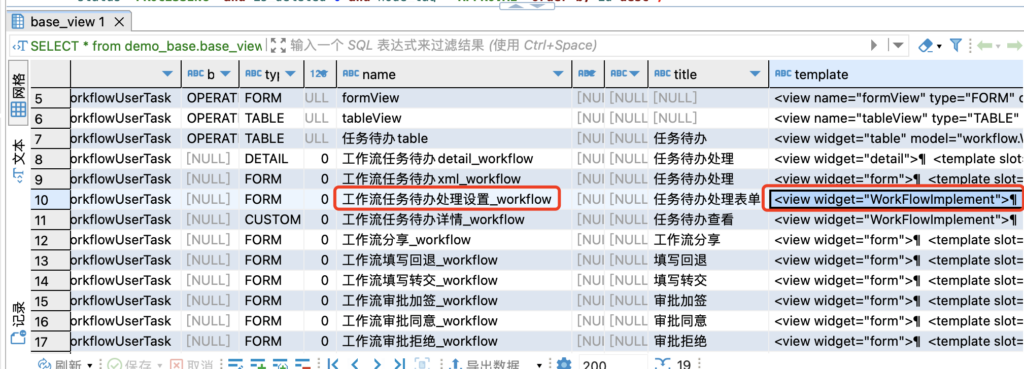
如何自定义覆盖内置模块的页面

2.将base_view的template内容复制到java的core工程的resources目录下新建一个xml文件,修改里面的动作名称

<view widget="WorkFlowImplement">
  <template slot="actions">
    <action name="$$internal_GotoListTableRouter" priority="1" model="workflow.WorkflowUserTask" tag="contextFreeAction"/>
    <action name="approveStaging" widget="FlowTaskCommonAction" invisible="!(activeRecord.allowStaging)" priority="2" label="新暂存" model="workflow.WorkflowUserTask" displayName="新暂存"/>
    <action name="workflow_agree" invisible="!(activeRecord.allowAgree && activeRecord.status == &apos;ACTIVE&apos;)" priority="3" label="新同意" model="workflow.WorkflowUserTask" load="fetchDetailReadOnly" displayName="新同意" goBack="true" validateForm="true" loadRootData="true"/>
    <action name="workflow_rejust" invisible="!(activeRecord.allowReject && activeRecord.status == &apos;ACTIVE&apos;)" priority="4" label="新拒绝" model="workflow.WorkflowUserTask" displayName="新拒绝" goBack="true" loadRootData="true" tag="contextFreeAction"/>
    <action name="workflow_turnon" invisible="!(activeRecord.taskType == &apos;APPROVE&apos; && activeRecord.allowTransfer && activeRecord.status == &apos;ACTIVE&apos;)" priority="5" label="新转交" model="workflow.WorkflowUserTask" load="fetchDetailReadOnly" displayName="新转交" goBack="true" loadRootData="true" tag="contextFreeAction"/>
    <action name="workflow_addsign" invisible="!(activeRecord.taskType == &apos;APPROVE&apos; && activeRecord.allowAddSign && activeRecord.status == &apos;ACTIVE&apos;)" priority="6" label="新加签" model="workflow.WorkflowUserTask" load="fetchDetailReadOnly" displayName="新加签" goBack="true" loadRootData="true" tag="contextFreeAction"/>
    <action name="workflow_write_fallback" invisible="!(activeRecord.taskType == &apos;WRITE&apos; && activeRecord.allowFallback && activeRecord.status == &apos;ACTIVE&apos;)" priority="7" label="新回退" model="workflow.WorkflowUserTask" displayName="新回退" goBack="true" loadRootData="true" tag="contextFreeAction"/>
    <action name="workflow_sharing" priority="8" label="新分享" model="workflow.WorkflowUserTask" displayName="新分享" goBack="true" loadRootData="true" tag="contextFreeAction"/>
  </template>
  <template slot="fields">
    <field name="remark" widget="TextArea" invisible="activeRecord.taskType != &apos;APPROVE&apos;" priority="8" model="workflow.WorkflowUserTask" data="remark" displayName="意见备注"/>
  </template>
</view>

3.在生命周期的元数据编辑方法内覆盖视图

package pro.shushi.pamirs.demo.core.init;

import org.springframework.core.Ordered;
import org.springframework.core.annotation.Order;
import org.springframework.stereotype.Component;
import pro.shushi.pamirs.boot.common.api.command.AppLifecycleCommand;
import pro.shushi.pamirs.boot.common.extend.MetaDataEditor;
import pro.shushi.pamirs.core.common.InitializationUtil;
import pro.shushi.pamirs.demo.api.DemoModule;
import pro.shushi.pamirs.meta.annotation.fun.extern.Slf4j;
import pro.shushi.pamirs.meta.api.dto.meta.Meta;
import pro.shushi.pamirs.meta.enmu.ViewTypeEnum;
import pro.shushi.pamirs.workflow.app.api.model.WorkflowUserTask;

import java.util.Map;

@Slf4j
@Component
@Order(Ordered.LOWEST_PRECEDENCE)
public class DemoModuleMetaInstall implements MetaDataEditor {

    @Override
    public void edit(AppLifecycleCommand command, Map<String, Meta> metaMap) {
        InitializationUtil util = InitializationUtil.get(metaMap, DemoModule.MODULE_MODULE, DemoModule.MODULE_NAME);
        if (util != null) {
            // 参数按base_view内的数据填写
            util.createView(WorkflowUserTask.MODEL_MODEL, "任务待办处理表单", "工作流任务待办处理设置_workflow", "file:pamirs/workflow_task_todo_form.xml", ViewTypeEnum.FORM, 10, false);
        }
    }
}

Oinone社区 作者:nation原创文章,如若转载,请注明出处:https://doc.oinone.top/backend/14331.html

访问Oinone官网:https://www.oinone.top获取数式Oinone低代码应用平台体验

(0)
nation的头像nation数式员工
上一篇 2024年7月1日 pm7:53
下一篇 2024年7月2日 pm7:42

相关推荐

  • 字段类型之关系描述的特殊场景(常量关联)

    场景概述 【字段类型之关系与引用】一文中已经描述了各种关系字段的常规写法,还有一些特殊场景如:关系映射中存在常量,或者M2M中间表是大于两个字段构成。 场景描述 1、PetTalent模型增加talentType字段2、PetItem与PetTalent的多对多关系增加talentType(达人类型),3、PetItemRelPetTalent中间表维护petItemId、petTalentId以及talentType,PetDogItem和PetCatItem分别重写petTalents字段,关系中增加常量描述。示意图如下: 实际操作步骤 Step1 新增 TalentTypeEnum package pro.shushi.pamirs.demo.api.enumeration; import pro.shushi.pamirs.meta.annotation.Dict; import pro.shushi.pamirs.meta.common.enmu.BaseEnum; @Dict(dictionary = TalentTypeEnum.DICTIONARY,displayName = "达人类型") public class TalentTypeEnum extends BaseEnum<TalentTypeEnum,Integer> { public static final String DICTIONARY ="demo.TalentTypeEnum"; public final static TalentTypeEnum DOG =create("DOG",1,"狗达人","狗达人"); public final static TalentTypeEnum CAT =create("CAT",2,"猫达人","猫达人"); } Step2 PetTalent模型增加talentType字段 package pro.shushi.pamirs.demo.api.model; import pro.shushi.pamirs.demo.api.enumeration.TalentTypeEnum; import pro.shushi.pamirs.meta.annotation.Field; import pro.shushi.pamirs.meta.annotation.Model; @Model.model(PetTalent.MODEL_MODEL) @Model(displayName = "宠物达人",summary="宠物达人",labelFields ={"name"}) public class PetTalent extends AbstractDemoIdModel{ public static final String MODEL_MODEL="demo.PetTalent"; @Field(displayName = "达人") private String name; @Field(displayName = "达人类型") private TalentTypeEnum talentType; } Step3 修改PetItem的petTalents字段,在关系描述中增加talentType(达人类型) @Field.many2many(relationFields = {"petItemId"},referenceFields = {"petTalentId","talentType"},through = PetItemRelPetTalent.MODEL_MODEL ) @Field.Relation(relationFields = {"id"}, referenceFields = {"id","talentType"}) @Field(displayName = "推荐达人",summary = "推荐该商品的达人们") private List<PetTalent> petTalents; Step4 PetDogItem增加petTalents字段,重写父类PetItem的关系描述 talentType配置为常量,填入枚举的值 增加domain描述用户页面选择的时候自动过滤出特定类型的达人,RSQL用枚举的name @Field(displayName = "推荐达人") @Field.many2many( through = "PetItemRelPetTalent", relationFields = {"petItemId"}, referenceFields = {"petTalentId","talentType"} ) @Field.Relation(relationFields = {"id"}, referenceFields = {"id", "#1#"}, domain = " talentType == DOG") private List<PetTalent> petTalents; Step5 PetCatItem增加petTalents字段,重写父类PetItem的关系描述 talentType配置为常量,填入枚举的值 增加domain描述用户页面选择的时候自动过滤出特定类型的达人,RSQL用枚举的name @Field(displayName = "推荐达人") @Field.many2many( through = "PetItemRelPetTalent", relationFields = {"petItemId"}, referenceFields = {"petTalentId","talentType"} ) @Field.Relation(relationFields = {"id"}, referenceFields = {"id", "#2#"}, domain = " talentType == CAT") private List<PetTalent> petTalents; Step6 PetCatItem增加petTalents字段,many2one关系示例 talentType配置为常量,填入枚举的值 增加domain描述用户页面选择的时候自动过滤出特定类型的达人,RSQL用枚举的name @Model.model(PetPet.MODEL_MODEL) @Model(displayName…

    2024年5月25日
    1.8K00
  • Oinone环境保护(v5.2.3以上)

    概述 Oinone平台为合作伙伴提供了环境保护功能,以确保在一套环境可以在较为安全前提下修改配置文件,启动多个JVM等部署操作。 本章内容主要介绍与环境保护功能相关的启动参数。 名词解释 本地开发环境:开发人员在本地启动业务工程的环境 公共环境:包含设计器镜像和业务工程的环境 环境保护参数介绍 【注意】参数是加在程序实参 (Program arguments)上,通常可能错误的加在Active Profiles上了 -PenvProtected=${value} 是否启用环境保护,默认为true。 环境保护是通过与最近一次保存在数据库的base_platform_environment表中数据进行比对,并根据每个参数的配置特性进行判断,在启动时将有错误的内容打印在启动日志中,以便于开发者进行问题排查。 除此之外,环境保护功能还提供了一些生产配置的优化建议,开发者可以在启动时关注这些日志,从而对生产环境的配置进行调优。 -PsaveEnvironments=${value} 是否将此次启动的环境参数保存到数据库,默认为true。 在某些特殊情况下,为了避免公共环境中的保护参数发生不必要的变化,我们可以选择不保存此次启动时的配置参数到数据库中,这样就不会影响其他JVM启动时发生校验失败而无法启动的问题。 -PstrictProtected=${value} 是否使用严格校验模式,默认为false 通常我们建议在公共环境启用严格校验模式,这样可以最大程度的保护公共环境的元数据不受其他环境干扰。 PS:在启用严格校验模式时,需避免内外网使用不同连接地址的场景。如无法避免,则无法启用严格校验模式。 常见问题 需要迁移数据库,并更换了数据库连接地址该如何操作? 将原有数据库迁移到新数据库。 修改配置文件中数据库的连接地址。 在启动脚本中增加-PenvProtected=false关闭环境保护。 启动JVM服务可以看到有错误的日志提示,但不会中断本次启动。 移除启动脚本中的-PenvProtected=false或将值改为true,下次启动时将继续进行环境保护检查。 可查看数据库中base_platform_environment表中对应数据库连接配置已发生修改,此时若其他JVM在启动前未正确修改,则无法启动。 本地开发时需要修改Redis连接地址到本地,但希望不影响公共环境的使用该如何操作? PS:由于Redis中的元数据缓存是根据数据库差量进行同步的,此操作会导致公共环境在启动时无法正确刷新Redis中的元数据缓存,需要配合pamirs.distribution.session.allMetaRefresh参数进行操作。如无特殊必要,我们不建议使用该形式进行协同开发,多次修改配置会导致出错的概率增加。 本地环境首次启动时,除了修改Redis相关配置外,还需要配置pamirs.distribution.session.allMetaRefresh=true,将本地新连接的Redis进行初始化。 在本地启动时,增加-PenvProtected=false -PsaveEnvironments=false启动参数,以确保本地启动不会修改公共环境的配置,并且可以正常通过环境保护检测。 本地环境成功启动并正常开发功能后,需要发布到公共环境进行测试时,需要先修改公共环境中业务工程配置pamirs.distribution.session.allMetaRefresh=true后,再启动业务工程。 启动一次业务工程后,将配置还原为pamirs.distribution.session.allMetaRefresh=false。

    2024年10月21日
    1.4K00
  • 低无一体使用 (后端)

    低无一体使用 (后端) 低无一体应用 打开低无一体应用。 选择应用模块 在选择模块选择框中,下拉选择需要使用低无一体的应用模块。 生成SDK 点击生成SDK, 生成当前选择应用模块的低无一体SDK。 点击之后的系统消息 提示"生成SDK成功",表示操作完成。 生成扩展工程 点击下载扩展工程模板, 生成当前选择应用模块的低无一体SDK。 点击之后的系统消息 提示"下载扩展工程模板成功",表示操作完成。 之后刷新页面 下载扩展工程 使用系统消息中的链接或者详情页中的下载地址下载扩展工程 扩展工程结构概览 自定义Action示例 import org.springframework.stereotype.Component; import pro.shushi.oinone.stand.testExt.model.Model0000000001; import pro.shushi.pamirs.meta.annotation.Action; import pro.shushi.pamirs.meta.annotation.Function; import pro.shushi.pamirs.meta.annotation.Model; import pro.shushi.pamirs.meta.api.dto.condition.Pagination; import pro.shushi.pamirs.meta.api.dto.wrapper.IWrapper; import pro.shushi.pamirs.meta.constant.FunctionConstants; import pro.shushi.pamirs.meta.enmu.FunctionOpenEnum; import pro.shushi.pamirs.meta.enmu.FunctionTypeEnum; /** * Model0000000001Action * * @author yakir on 2025/01/20 14:59. */ @Component @Model.model(Model0000000001.MODEL_MODEL) public class Model0000000001Action { @Function.Advanced(type = FunctionTypeEnum.QUERY) @Function.fun(FunctionConstants.queryPage) @Function(openLevel = {FunctionOpenEnum.API}) public Pagination<Model0000000001> queryPage(Pagination<Model0000000001> page, IWrapper<Model0000000001> queryWrapper) { return new Model0000000001().queryPage(page, queryWrapper); } @Action(displayName = "sayHello") @Action.Advanced(type = FunctionTypeEnum.QUERY) public Model0000000001 sayHello(Model0000000001 query) { query.setName(query.getName() + System.currentTimeMillis()); return query; } } 注意事项 ⚠️⚠️⚠️ Oinone底层依赖版本与设计器和业务应用一致 (参考 版本更新日志 ) 扩展工程如需独立启动, 手动修改application.yml中安装模块和pom.xml中模块jar的依赖配置

    2025年2月17日
    1.0K00
  • 如何扩展自有的文件存储系统

    介绍 数式Oinone默认提供了阿里云、腾讯云、华为云、又拍云、Minio和本地文件存储这几种文件存储系统,如果我们有其他的文件存储系统需要对接,或者是扩展现有的文件系统,可以通过SPI继承AbstractFileClient注册新的文件存储系统。 代码示例 这里以扩展自有的本地文件系统为例 继承了内置的本地文件存储LocalFileClient,将其中上传文件的方法重写 package pro.shushi.pamirs.demo.core.file; import org.springframework.stereotype.Component; import org.springframework.web.bind.annotation.RequestMapping; import org.springframework.web.bind.annotation.RequestMethod; import org.springframework.web.bind.annotation.ResponseBody; import org.springframework.web.bind.annotation.RestController; import org.springframework.web.multipart.MultipartFile; import org.springframework.web.multipart.support.StandardMultipartHttpServletRequest; import pro.shushi.pamirs.framework.connectors.cdn.client.LocalFileClient; import pro.shushi.pamirs.meta.annotation.fun.extern.Slf4j; import pro.shushi.pamirs.meta.common.spi.SPI; import javax.servlet.http.HttpServletRequest; @Slf4j @Component // 注册新的文件存储系统类型 @SPI.Service(DemoLocalFileClient.TYPE) @RestController @RequestMapping("/demo_file") public class DemoLocalFileClient extends LocalFileClient { public static final String TYPE = "DEMO_LOCAL"; @Override public CdnFileForm getFormData(String fileName) { CdnConfig cdnConfig = getCdnConfig(); CdnFileForm fileForm = new CdnFileForm(); String uniqueFileName = Spider.getDefaultExtension(CdnFileNameApi.class).getNewFilename(fileName); String fileKey = getFileKey(cdnConfig.getMainDir(), uniqueFileName); //前端获取uploadUrl,上传文件到该地址 fileForm.setUploadUrl(cdnConfig.getUploadUrl() + "/demo_file/upload"); //上传后,前端将downloadUrl返回给后端 fileForm.setDownloadUrl(getDownloadUrl(fileKey)); fileForm.setFileName(uniqueFileName); Map<String, Object> formDataJson = new HashMap<>(); formDataJson.put("uniqueFileName", uniqueFileName); formDataJson.put("key", fileKey); fileForm.setFormDataJson(JSON.toJSONString(formDataJson)); return fileForm; } @ResponseBody @RequestMapping(value = "/upload", produces = "multipart/form-data;charset=UTF-8",method = RequestMethod.POST) public String uploadFileToLocal(HttpServletRequest request) { MultipartFile file = ((StandardMultipartHttpServletRequest) request).getFile("file"); // 例如可以根据file文件类型判断哪些文件是否可以上传 return super.uploadFileToLocal(request); } } 在application.yml内配置 cdn: oss: name: 本地文件系统 # 这里的type与代码中定义的文件存储系统类型对应 type: DEMO_LOCAL bucket: pamirs uploadUrl: http://127.0.0.1:8190 downloadUrl: http://127.0.0.1:6800 validTime: 3600000 timeout: 600000 active: true referer: localFolderUrl: /Users/demo/workspace/static

    2024年10月24日
    80800
  • Oinone远程调用链路源码分析

    前提 源码分析版本是 5.1.x版本 概要 在服务启动时,获取注解REMOTE的函数,通过dubbo的泛化调用发布。在调用函数时,通过dubbo泛化调用获取结果。 注册服务者 在spring 启动方法installOrLoad中初始化 寻找定义REMOTE的方法 组装dubbo的服务配置 组装服务对象实现引用,内容如下,用于注册 调用前置处理 放信息到SessionApi 函数调用链追踪,放到本地TransmittableThreadLocal 从redis中获取到的数据进行反序列化并存在到本地的线程里 Trace信息,放一份在sessionApi中 和ThreadLocal 调用函数执行 返回数据转成特定格式 通过线程组调用dubbo的ServiceConfig.export 服务发布 时序图 源码分析 根据条件判断,确定向dubbo进行服务发布RemoteServiceLoader public void publishService(List<FunctionDefinition> functionList,Map<String,Runnable> isPublished) { // 因为泛化接口只能控制到namespace,控制粒度不能到fun级别,这里进行去重处理 Map<String, Function> genericNamespaceMap = new HashMap<>(); for (FunctionDefinition functionDefinition : functionList) { Function function = new Function(functionDefinition) try { //定义REMOTE, 才给予远程调用 if (FunctionOpenEnum.REMOTE.in(function.getOpen()) && !ClassUtils.isInterface(function.getClazz())) { genericNamespaceMap.putIfAbsent(RegistryUtils.getRegistryInterface(function), function); } } catch (PamirsException e) { } } // 发布远程服务 for (String namespace : genericNamespaceMap.keySet()) { Function function = genericNamespaceMap.get(namespace); if(isPublished.get(RegistryUtils.getRegistryInterface(function)) == null){ // 发布,注册远程函数服务,底层使用dubbo的泛化调用 Runnable registryTask = () -> remoteRegistry.registryService(function); isPublished.put(RegistryUtils.getRegistryInterface(function),registryTask); }else{ } } } 构造ServiceConfig方法,设置成泛化调用,进行发布export()DefaultRemoteRegistryComponent public void registryGenericService(String interfaceName, List<MethodConfig> methods, String group, String version, Integer timeout, Integer retries) { …. try { ServiceConfig<GenericService> service = new ServiceConfig<>(); // 服务接口名 service.setInterface(interfaceName); // 服务对象实现引用 service.setRef(genericService(interfaceName)); if (null != methods) { service.setMethods(methods); } // 声明为泛化接口 service.setGeneric(Boolean.TRUE.toString()); // 基础元数据 constructService(group, version, timeout, retries, service); service.export(); } catch (Exception e) { ….. } } // 服务对象实现引用 private GenericService genericService(String interfaceName) { return (method, parameterTypes, args) -> { PamirsSession.clear(); Function function = Objects.requireNonNull(PamirsSession.getContext()).getFunction(RegistryUtils.getFunctionNamespace(method), RegistryUtils.getFunctionFun(method)); if (log.isDebugEnabled()) { log.debug("interfaceName: " + interfaceName + ",…

    2024年9月4日
    1.4K00

Leave a Reply

登录后才能评论