低无一体使用 (后端)

低无一体使用 (后端)

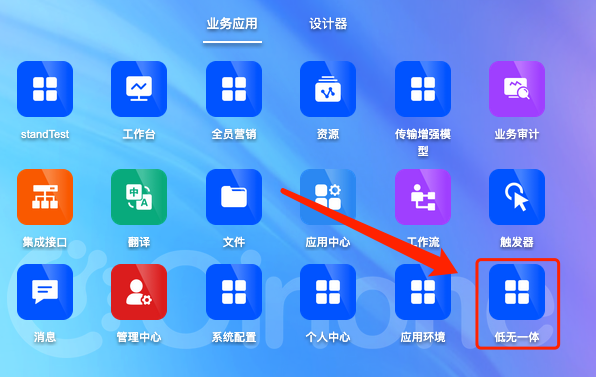
低无一体应用

打开低无一体应用。
低无一体使用 (后端)

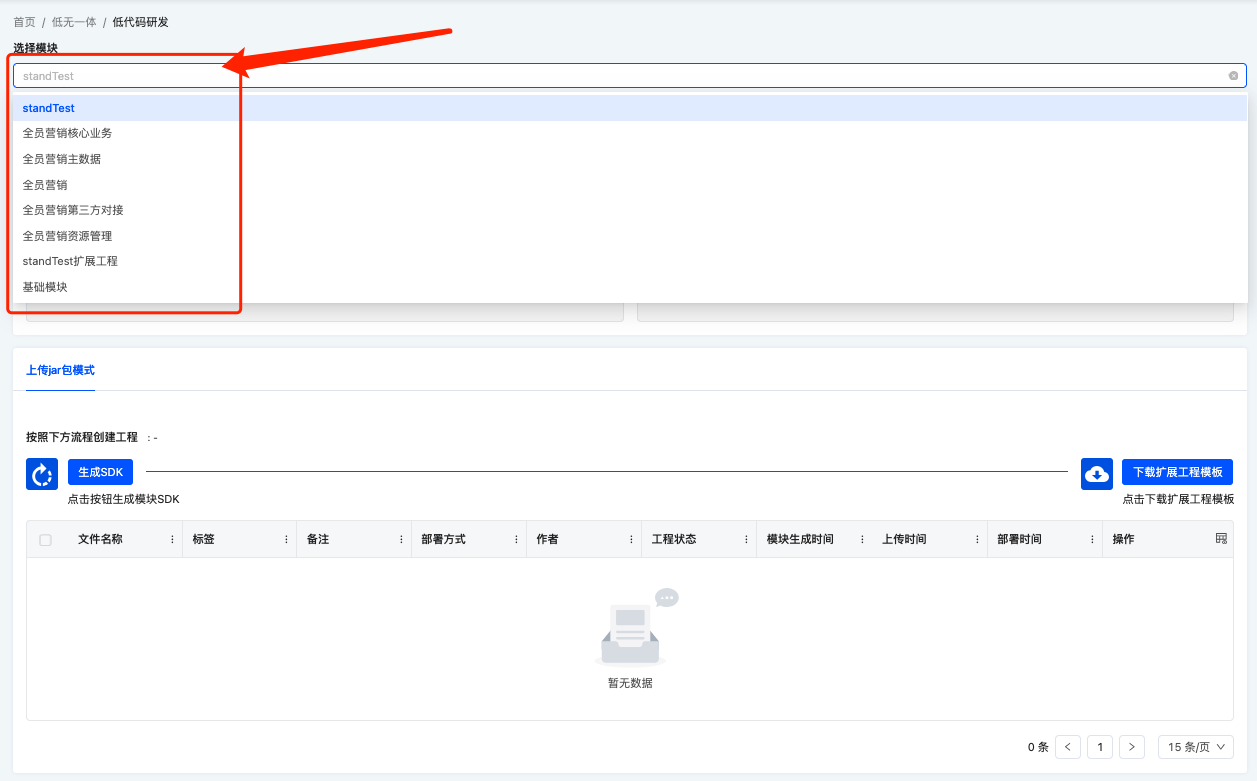
选择应用模块

选择模块选择框中,下拉选择需要使用低无一体的应用模块。

低无一体使用 (后端)

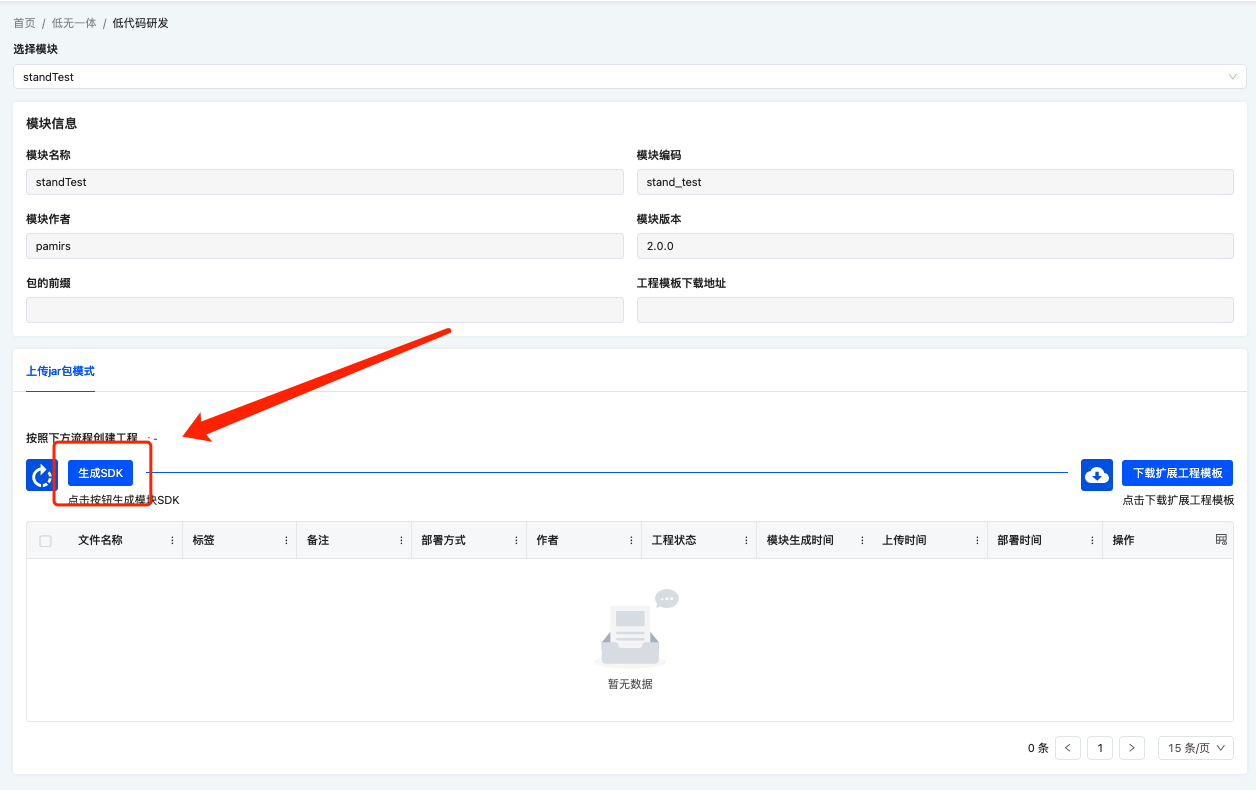
生成SDK

点击生成SDK, 生成当前选择应用模块的低无一体SDK。

低无一体使用 (后端)

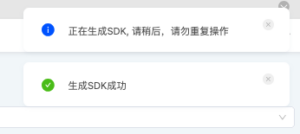
点击之后的系统消息
低无一体使用 (后端)

提示"生成SDK成功",表示操作完成。

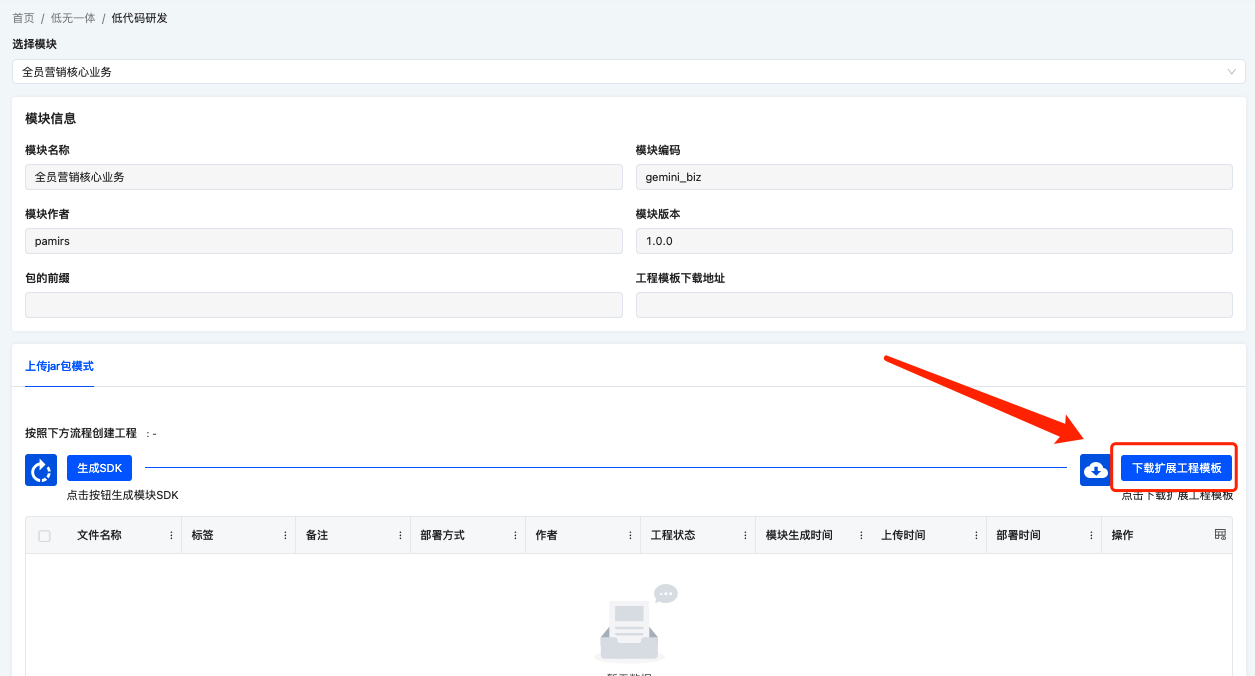
生成扩展工程

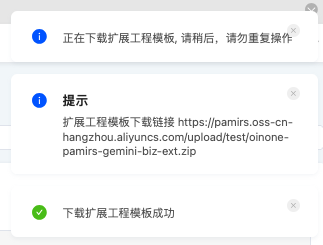
点击下载扩展工程模板, 生成当前选择应用模块的低无一体SDK。
低无一体使用 (后端)

点击之后的系统消息

低无一体使用 (后端)

提示"下载扩展工程模板成功",表示操作完成。

之后刷新页面

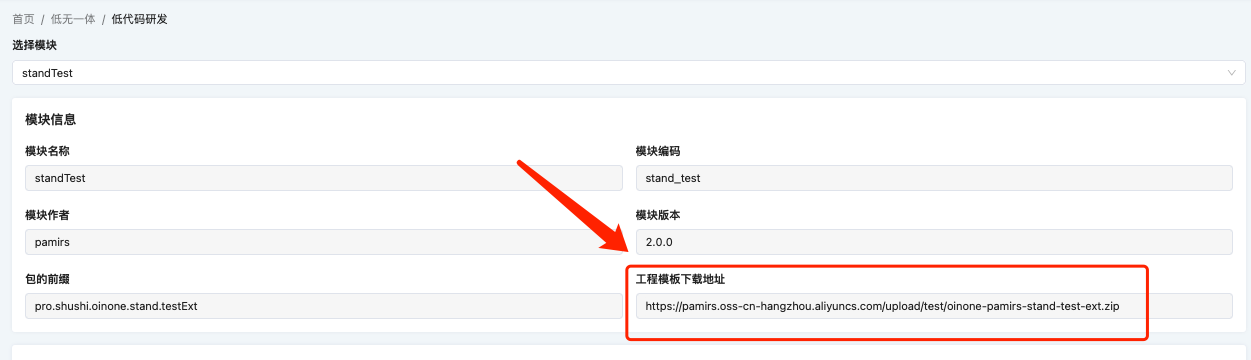
下载扩展工程

使用系统消息中的链接或者详情页中的下载地址下载扩展工程
低无一体使用 (后端)

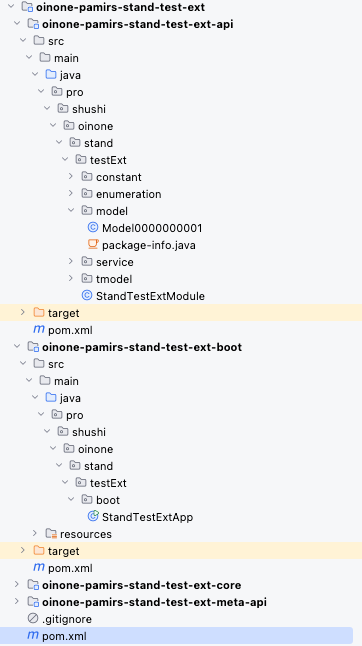
扩展工程结构概览

低无一体使用 (后端)

自定义Action示例

import org.springframework.stereotype.Component;
import pro.shushi.oinone.stand.testExt.model.Model0000000001;
import pro.shushi.pamirs.meta.annotation.Action;
import pro.shushi.pamirs.meta.annotation.Function;
import pro.shushi.pamirs.meta.annotation.Model;
import pro.shushi.pamirs.meta.api.dto.condition.Pagination;
import pro.shushi.pamirs.meta.api.dto.wrapper.IWrapper;
import pro.shushi.pamirs.meta.constant.FunctionConstants;
import pro.shushi.pamirs.meta.enmu.FunctionOpenEnum;
import pro.shushi.pamirs.meta.enmu.FunctionTypeEnum;

/**
 * Model0000000001Action
 *
 * @author yakir on 2025/01/20 14:59.
 */
@Component
@Model.model(Model0000000001.MODEL_MODEL)
public class Model0000000001Action {

    @Function.Advanced(type = FunctionTypeEnum.QUERY)
    @Function.fun(FunctionConstants.queryPage)
    @Function(openLevel = {FunctionOpenEnum.API})
    public Pagination<Model0000000001> queryPage(Pagination<Model0000000001> page, IWrapper<Model0000000001> queryWrapper) {

        return new Model0000000001().queryPage(page, queryWrapper);
    }

    @Action(displayName = "sayHello")
    @Action.Advanced(type = FunctionTypeEnum.QUERY)
    public Model0000000001 sayHello(Model0000000001 query) {
        query.setName(query.getName() + System.currentTimeMillis());
        return query;
    }
}

注意事项 ⚠️⚠️⚠️

  • Oinone底层依赖版本与设计器和业务应用一致 (参考 版本更新日志 )
  • 扩展工程如需独立启动, 手动修改application.yml中安装模块和pom.xml中模块jar的依赖配置

Oinone社区 作者:yakir原创文章,如若转载,请注明出处:https://doc.oinone.top/backend/20451.html

访问Oinone官网:https://www.oinone.top获取数式Oinone低代码应用平台体验

Like (0)
yakir's avataryakir数式员工
Previous 2025年2月13日 pm4:44
Next 2025年2月19日 pm3:35

相关推荐

  • 如何发送邮箱、手机短信以及设置

    1.邮件发送 1.1 邮件服务设置 1.1.1 方法一:通过yaml文件配置 pamirs: email: smtp: smtpHost: smtp.exmail.qq.com smtpUser: xxx@xxx.com smtpPassword: xxxxxx smtpPort: 465 smtpSecurity: SSL #邮件模块可后续后台自行添加 templates: – name: 邮箱注册邮件 title: '${code}是你此次注册的验证码' body: '<div>Hi ${realname},</div><div>你正在使用验证码注册。</div>' 1.1.2 方法二:工程启动加入初始化设置方法 /** * 初始化邮件模板 */ private void initEmailTemplate(){ EmailSenderSource emailSenderSource = new EmailSenderSource(); emailSenderSource.setName("邮件发送服务"); emailSenderSource.setType(MessageEngineTypeEnum.EMAIL_SEND); //优先级 emailSenderSource.setSequence(10); //发送账号 emailSenderSource.setSmtpUser("xxx@xxx.com"); //发送密码 emailSenderSource.setSmtpPassword("xxxxxx"); //发送服务器地址和端口 emailSenderSource.setSmtpHost("smtp.exmail.qq.com"); emailSenderSource.setSmtpPort(465); //" None: SMTP 对话用明文完成。" + //" TLS (STARTTLS): SMTP对话的开始时要求TLS 加密 (建议)" + //" SSL/TLS: SMTP对话通过专用端口用 SSL/TLS 加密 (默认是: 465)") emailSenderSource.setSmtpSecurity(EmailSendSecurityEnum.SSL); emailSenderSource.setActive(true); emailSenderSource.createOrUpdate(); List<EmailTemplate> templates = new ArrayList<>(); templates.add(new EmailTemplate().setName("重置密码邮件模板").setTitle("请确认你的密码修改请求").setBody("<div>Hi ${realname},</div><div>你正在使用验证码注册。</div>").setModel(PamirsUser.MODEL_MODEL).setEmailSenderSource(emailSenderSource)); new EmailTemplate().createOrUpdateBatch(templates); } 1.2 调用邮件发送组件发送邮件 /** * 代码中使用消息组件发送Email */ public void sendEmailByTemplate(){ try { EmailSender emailSender = (EmailSender) MessageEngine.get(MessageEngineTypeEnum.EMAIL_SEND).get(null);; EmailTemplate template = new EmailTemplate().setName("邮件模版名称").queryOne(); //标题:${name} //内容:${fieldInt}次数 String sendTo = "xxx@xxx.com"; String copyTo = "yyy@yyy.com"; Map<String, Object> objectData = new HashMap<>(); objectData.put("name","张三"); objectData.put("fieldInt",999); Boolean aBoolean = emailSender.send(template, objectData, sendTo, copyTo); if (null == aBoolean || !aBoolean) { log.error("发送邮件失败"); } } catch (Exception e) { log.error("发送确认邮件失败:,异常:{}", e); } } 2.发送短信 2.1 短信通道设置 2.1.1 方法一:通过yaml文件配置 pamirs: sms: aliyun: signatureMethod: HMAC-SHA1 endpoint: https://dysmsapi.aliyuncs.com version: '2017-05-25' accessKeyId: xxxxxxxxxxxxx signatureVersion: '1.0' accessKeySecret: xxxxxxxxxxxx regionId: cn-hangzhou timeZone: GMT signName: xxxxxx 2.1.2 方法二:工程启动加入初始化设置方法 private void…

    后端 2023年11月6日
    1.9K00
  • Maven Setting 配置详解

    常用标签概览 servers/server:配置私有仓库用户名和密码进行认证,以 id 进行关联。 mirrors/mirror:配置镜像仓库拉取时的地址源和额外配置。 profiles/profile:配置多个可能使用的镜像仓库。 activeProfiles/activeProfile:配置默认激活的 profile,以 id 进行关联。 Oinone 私有仓库配置 以下配置可以在使用 Oinone 私有仓库的同时,也可以正常使用 aliyun 镜像源。 <servers> <server> <id>shushi</id> <username>${username}</username> <password>${password}</password> </server> </servers> <mirrors> <mirror> <id>shushi</id> <mirrorOf>shushi</mirrorOf> <url>http://ss.nexus.ixtx.fun/repository/public</url> <!– 忽略 https 认证,maven 版本过高时需要配置 –> <blocked>false</blocked> </mirror> </mirrors> <profiles> <profile> <id>shushi</id> <repositories> <repository> <!– 对应 server.id –> <id>shushi</id> <url>http://ss.nexus.ixtx.fun/repository/public</url> <releases> <enabled>true</enabled> </releases> <snapshots> <enabled>true</enabled> </snapshots> </repository> </repositories> <pluginRepositories> <pluginRepository> <!– 对应 server.id –> <id>shushi</id> <url>http://ss.nexus.ixtx.fun/repository/snapshots</url> <releases> <enabled>false</enabled> </releases> <snapshots> <enabled>true</enabled> </snapshots> </pluginRepository> </pluginRepositories> </profile> <profile> <id>aliyun</id> <repositories> <repository> <id>aliyun</id> <url>https://maven.aliyun.com/repository/public</url> <releases> <enabled>true</enabled> </releases> <snapshots> <enabled>false</enabled> </snapshots> </repository> </repositories> <pluginRepositories> <pluginRepository> <id>aliyun</id> <url>https://maven.aliyun.com/repository/public</url> <releases> <enabled>true</enabled> </releases> <snapshots> <enabled>false</enabled> </snapshots> </pluginRepository> </pluginRepositories> </profile> </profiles> <activeProfiles> <!– 使用 shushi 私有仓库 –> <activeProfile>shushi</activeProfile> <!– 使用 aliyun 镜像仓库 –> <activeProfile>aliyun</activeProfile> </activeProfiles> 常见问题 使用 mvn 时无法拉取 Oinone 最新版镜像,提示找不到对应的包 原因:在 Oinone 开源后,oinone-pamirs 内核相关包都被部署到 maven 中央仓库,但由于其他镜像仓库的同步存在延时,在未正确同步的其他镜像源拉取时会出现找不到对应的包相关异常。 解决方案:检查 mirrors 中是否配置了 aliyun 镜像源,如果配置了,使用上述 Oinone 私有仓库配置重新配置后,再进行拉取。这一问题是由于 mirrors 配置不当,拦截了所有从 maven 中央仓库拉取的地址替换为了 aliyun 镜像源导致的。

    2025年11月10日
    73400
  • 【PostgreSQL】后端部署使用PostgreSQL数据库

    PostgreSQL数据库配置 驱动配置 Maven配置(14.3版本可用) <postgresql.version>42.6.0</postgresql.version> <dependency> <groupId>org.postgresql</groupId> <artifactId>postgresql</artifactId> <version>${postgresql.version}</version> </dependency> 离线驱动下载 postgresql-42.2.18.jarpostgresql-42.6.0.jarpostgresql-42.7.3.jar JDBC连接配置 pamirs: datasource: base: type: com.alibaba.druid.pool.DruidDataSource driverClassName: org.postgresql.Driver url: jdbc:postgresql://127.0.0.1:5432/pamirs?currentSchema=base username: xxxxxx password: xxxxxx 连接url配置 暂无官方资料 url格式 jdbc:postgresql://${host}:${port}/${database}?currentSchema=${schema} 在jdbc连接配置时,${database}和${schema}必须完整配置,不可缺省。 其他连接参数如需配置,可自行查阅相关资料进行调优。 方言配置 pamirs方言配置 pamirs: dialect: ds: base: type: PostgreSQL version: 14 major-version: 14.3 pamirs: type: PostgreSQL version: 14 major-version: 14.3 数据库版本 type version majorVersion 14.x PostgreSQL 14 14.3 PS:由于方言开发环境为14.3版本,其他类似版本(14.x)原则上不会出现太大差异,如出现其他版本无法正常支持的,可在文档下方留言。 schedule方言配置 pamirs: event: enabled: true schedule: enabled: true dialect: type: PostgreSQL version: 14 major-version: 14.3 type version majorVersion PostgreSQL 14 14.3 PS:由于schedule的方言在多个版本中并无明显差异,目前仅提供一种方言配置。 其他配置 逻辑删除的值配置 pamirs: mapper: global: table-info: logic-delete-value: (EXTRACT(epoch FROM CURRENT_TIMESTAMP) * 1000000 + EXTRACT(MICROSECONDS FROM CURRENT_TIMESTAMP))::bigint PostgreSQL数据库用户初始化及授权 — init root user (user name can be modified by oneself) CREATE USER root WITH PASSWORD 'password'; — if using automatic database and schema creation, this is very important. ALTER USER root CREATEDB; SELECT * FROM pg_roles; — if using postgres database, this authorization is required. GRANT CREATE ON DATABASE postgres TO root;

    2023年11月1日
    1.7K00
  • 工作流引入流程概览与流程监控

    流程概览依赖说明 使用 流程概览 功能前,需要在项目中引入 pamirs-workflow-datavi-core、 pamirs-data-visualization-core依赖,并启动datavi模块: <dependency> <groupId>pro.shushi.pamirs.workflow</groupId> <artifactId>pamirs-workflow-datavi-core</artifactId> </dependency> <dependency> <groupId>pro.shushi.pamirs.data.visualization</groupId> <artifactId>pamirs-data-visualization-core</artifactId> </dependency> 警告: 在 oinone 平台启用「流程概览」能力时,应用启动模块一旦引入 pamirs-workflow-api/core,必须同时引入 pamirs-workflow-datavi-api/core。在多启动模块架构下,严禁出现仅部分启动模块引入 pamirs-workflow-core 而未引入 pamirs-workflow-datavi-core 的情况,否则将导致流程概览相关元数据计算异常,出现删表等情况。 流程概览配置项 流程概览页面内置缓存机制,可通过配置项调整缓存刷新周期及图表展示的数据条数: pamirs: workflow: dashboard: cache-time: 10 # 流程概览缓存刷新时间(单位:分钟),默认 10 分钟 page-size: 10 # 流程运行分析中 4 个图表的展示数量,默认查询前 10 条数据 统计指标说明 引入 pamirs-workflow-datavi-core 依赖后,系统会按照以下规则进行数据同步: 当日数据同步:每小时同步一次当日数据; 昨日数据同步:次日凌晨同步前一日数据。 由于在引入依赖后才会开始执行数据同步,统计指标页提供了「同步」按钮,可用于对历史数据进行补采。即使不执行历史同步,也不会影响核心业务流程,仅会影响统计数据和图表的展示效果。 统计指标数据主要用于 支撑 流程概览 和 流程监控 中的统计图表展示; 为数据分析与可视化提供基础数据。 上述统计数据对工作流的审批、流转等核心业务无任何影响。如有需要,也可以基于流程监控的数据,配合数据可视化设计器,自定义构建符合业务需求的展示页面。

    2025年11月17日
    56100
  • 多模型联表查询

    多模型联表查询 多对一或者一对一关联关系,通过关联模型的字段查询数据 模型结构定义 模型A @Model(displayName = "A") @Model.model(A.MODEL_MODEL) public class A extends IdModel { public final static String MODEL_MODEL = "test.A"; @Field(displayName = "b") @Field.many2one @Field.Relation(relationFields = {"bId"}, referenceFields = {"id"}) private B b; @Field(displayName = "bId") @Field.Integer private Long bId; @Field(displayName = "B审批状态") @Field.Enum @Field.Related(related = {"b", "approvalEnum"}) private ApprovalEnum approvalEnum; } 模型B @Model(displayName = "B") @Model.model(B.MODEL_MODEL) public class B extends IdModel { public final static String MODEL_MODEL = "test.B"; @Field(displayName = "审批状态") @Field.Enum private ApprovalEnum approvalEnum; } 页面设计 在界面设计器中, 设计相对应的表格页面。 A模型related字段拖到搜索栏中。 发布页面 自定义Hook import cz.jirutka.rsql.parser.ast.RSQLOperators; import org.apache.commons.lang3.ArrayUtils; import org.springframework.stereotype.Component; import pro.shushi.pamirs.framework.connectors.data.sql.AbstractWrapper; import pro.shushi.pamirs.framework.connectors.data.sql.query.QueryWrapper; import pro.shushi.pamirs.meta.annotation.Hook; import pro.shushi.pamirs.meta.api.Models; import pro.shushi.pamirs.meta.api.core.faas.HookBefore; import pro.shushi.pamirs.meta.api.core.orm.convert.ClientDataConverter; import pro.shushi.pamirs.meta.api.core.orm.template.context.ModelComputeContext; import pro.shushi.pamirs.meta.api.dto.config.ModelConfig; import pro.shushi.pamirs.meta.api.dto.config.ModelFieldConfig; import pro.shushi.pamirs.meta.api.dto.fun.Function; import pro.shushi.pamirs.meta.api.session.PamirsSession; import pro.shushi.pamirs.meta.base.D; import pro.shushi.pamirs.meta.common.spi.Spider; import pro.shushi.pamirs.meta.domain.model.ModelField; import pro.shushi.pamirs.meta.enmu.TtypeEnum; import pro.shushi.pamirs.resource.api.constants.FieldConstants; import java.util.ArrayList; import java.util.HashMap; import java.util.List; import java.util.Map; import java.util.stream.Collectors; /** * 通用 queryData处理。 */ @Slf4j @Component public class QueryDataHook implements HookBefore { @Override @Hook(priority = 30) public Object run(Function function, Object… args) { getValueByType(args); return function; } private void getValueByType(Object… args) { if (ArrayUtils.isEmpty(args)) { return; } for (int index = 0; index < args.length &&…

    2025年1月9日
    1.9K00

Leave a Reply

Please Login to Comment