Oinone请求路由源码分析

通过源码分析,从页面发起请求,如果通过graphQL传输到具体action的链路,并且在这之间做了哪些隐式处理
分析源码版本5.1.x

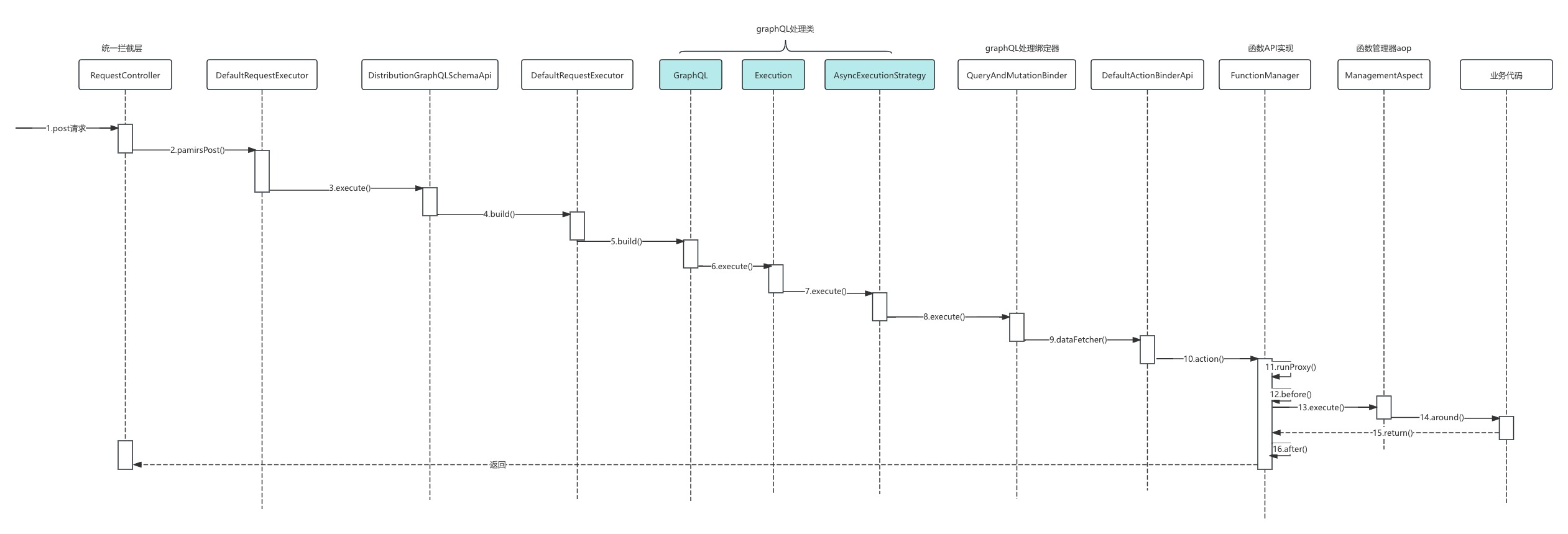
请求流程大致如下:

  1. 拦截所有指定的请求
  2. 组装成graphQL请求信息
  3. 调用graphQL执行
  4. 通过hook拦截先执行
    • RsqlDecodeHook:rsql解密
    • UserHook: 获取用户信息, 通过cookies获取用户ID,再查表获取用户信息,放到本地Local线程里
    • RoleHook: 角色Hook
    • FunctionPermissionHook: 函数权限Hook ,跳过权限拦截的实现放在这一层,对应的配置
    •  pamirs:
           auth:
              fun-filter:
                    - namespace: user.PamirsUserTransient
                      fun: login #登录
                    - namespace: top.PetShop
                      fun: action
                          
    • DataPermissionHook: 数据权限hook
    • PlaceHolderHook:占位符转化替换hook
    • RsqlParseHook: 解释Rsql hook
    • SingletonModelUpdateHookBefore
  5. 执行post具体内容
  6. 通过hook拦截后执行
    • QueryPageHook4TreeAfter: 树形Parent查询优化
    • FieldPermissionHook: 字段权限Hook
    • UserQueryPageHookAfter
    • UserQueryOneHookAfter
  7. 封装执行结果信息返回

时序图

Oinone请求路由源码分析
时序图

核心源码解析

拦截所有指定的请求 /pamirs/模块名
RequestController

    @RequestMapping(
            value = "/pamirs/{moduleName:^[a-zA-Z][a-zA-Z0-9_]+[a-zA-Z0-9]$}",
            method = RequestMethod.POST
    )
    public String pamirsPost(@PathVariable("moduleName") String moduleName,
                             @RequestBody PamirsClientRequestParam gql,
                             HttpServletRequest request,
                             HttpServletResponse response) {
                             }

DefaultRequestExecutor 构建graph请求信息,并调用graph请求


() -> execute(GraphQL::execute, param), param
private <T> T execute(BiFunction<GraphQL, ExecutionInput, T> executor, PamirsRequestParam param) {
    // 获取GraphQL请求信息,包含grapsh schema
    GraphQL graphQL = buildGraphQL(param);
...
    ExecutionInput executionInput = ExecutionInput.newExecutionInput()
                .query(param.getQuery())
                .variables(param.getVariables().getVariables())
                .dataLoaderRegistry(Spider.getDefaultExtension(DataLoaderRegistryApi.class).dataLoader())
                .build();
...
// 调用 GraphQL的方法execute 执行
    T result = executor.apply(graphQL, executionInput);
...
    return result;
    }

QueryAndMutationBinder 绑定graphQL读取写入操作

public static DataFetcher<?> dataFetcher(Function function, ModelConfig modelConfig) {
        if (isAsync()) {
            if (FunctionTypeEnum.QUERY.in(function.getType())) {
                return AsyncDataFetcher.async(dataFetchingEnvironment -> dataFetcherAction(function, modelConfig, dataFetchingEnvironment), ExecutorServiceApi.getExecutorService());
            } else {
                return dataFetchingEnvironment -> dataFetcherAction(function, modelConfig, dataFetchingEnvironment);
            }
        } else {
            return dataFetchingEnvironment -> dataFetcherAction(function, modelConfig, dataFetchingEnvironment);
        }
    }

    private static Object dataFetcherAction(Function function, ModelConfig modelConfig, DataFetchingEnvironment environment) {
        try {
            SessionExtendUtils.tagMainRequest();
            // 使用共享的请求和响应对象
            return Spider.getDefaultExtension(ActionBinderApi.class)
                    .action(modelConfig, function, FunctionTypeEnum.QUERY.in(function.getType()), environment);
        } finally {
            PamirsSession.clearMainSession();
        }
    }

FunctionManager 执行具体方法,会执行前后hook

public Object runProxy(java.util.function.Function<Object[], Object> consumer, Function function, Object... args) {
        SessionMetaBit directive = Objects.requireNonNull(PamirsSession.directive());
        if (directive.isFromClient() || directive.isBuiltAction()) {
            directive.disableFromClient();
            boolean isHook = directive.isHook();
            boolean isDoExtPoint = directive.isDoExtPoint();
            if (isHook) {
                // 执行权限,用户相关的hook
        hookApi.before(function.getNamespace(), function.getFun(), args);
            }
            // 执行业务方法
            Object result = Tx.build(function.getNamespace(), function.getFun()).execute((transactionStatus) -> {
                Object txResult;
                // 植入预制结果集
                String supplier = "ctxHack" + function.getNamespace() + function.getFun();
                Object supplierObj = Optional.ofNullable(PamirsSession.getRequestVariables())
                        .map(PamirsRequestVariables::getVariables)
                        .map(_variables -> _variables.get(supplier))
                        .orElse(null);
                if (null != supplierObj) {
                    try {
                        txResult = ((Supplier<?>) supplierObj).get();
                    } finally {
                        Optional.ofNullable(PamirsSession.getRequestVariables())
                                .map(PamirsRequestVariables::getVariables)
                                .ifPresent(_variables -> _variables.remove(supplier));
                    }
                } else if (isDoExtPoint) {
                    Object[] tArgs = ArrayUtils.toArray(builtinExtPointExecutor.before(function, args));
                    txResult = builtinExtPointExecutor.override(function, consumer, tArgs);
                    builtinExtPointExecutor.callback(function, args);
                    txResult = builtinExtPointExecutor.after(function, txResult);
                } else {
                    txResult = consumer.apply(args);
                }
                return txResult;
            });
            if (isHook) {
                // 执行
                hookApi.after(function.getNamespace(), function.getFun(), result);
            }
            return result;
        } else {
            return Tx.build(function.getNamespace(), function.getFun())
                    .execute((transactionStatus) -> consumer.apply(args));
        }
    }

默认hook 逻辑

  1. RsqlDecodeHook:rsql解密
  2. UserHook:获取用户信息, 通过cookies获取用户ID,再查表获取用户信息,放到本地Local线程里
  3. RoleHook: 角色Hook
  4. FunctionPermissionHook: 函数权限Hook,跳过权限拦截
  5. DataPermissionHook: 数据权限hook
  6. PlaceHolderHook:占位符转化替换hook
  7. RsqlParseHook: 解释Rsql hook
  8. SingletonModelUpdateHookBefore
  9. QueryPageHook4TreeAfter: 树形Parent查询优化
  10. FieldPermissionHook: 字段权限Hook
  11. UserQueryPageHookAfter
  12. UserQueryOneHookAfter

Oinone社区 作者:oinone原创文章,如若转载,请注明出处:https://doc.oinone.top/backend/16247.html

访问Oinone官网:https://www.oinone.top获取数式Oinone低代码应用平台体验

(1)
oinone的头像oinone
上一篇 2024年8月20日 pm9:09
下一篇 2024年8月21日 pm10:33

相关推荐

  • Oinone请求调用链路

    Oinone请求调用链路 请求格式与简单流程 在Oinone中请求数据存储在请求体中,以GQL的方式进行表示,也就是GQL格式的请求。 当我们发送一个GQL格式的请求,后端会对GQL进行解析,确定想要执行的方法,并对这个方法执行过程中所用到的模型进行构建,最后返回响应。 请求 # 请求路径 pamirs/base http://127.0.0.1:8090/pamirs/base # 请求体内容 query{ petShopProxyBQuery{ sayHello(shop:{shopName:"cpc"}){ shopName } } } 解析 # 简单理解 query 操作类型 petShopProxyBQuery 模块名称 + Query sayHello 方法 fun sayHello() 可以传入参数,参数名为 shop shopName 需要得到的值 响应 # data中的内容 "data": { "petShopQuery": { "hello": { "shopName": "cpc" } } } 具体流程 Oinone是基于SpringBoot的,在Controller中处理请求 会接收所有以 /pamirs 开始的POST请求,/pamirs/后携带的是模块名 @RequestMapping( value = "/pamirs/{moduleName:^[a-zA-Z][a-zA-Z0-9_]+[a-zA-Z0-9]$}", method = RequestMethod.POST ) public String pamirsPost(@PathVariable("moduleName") String moduleName, @RequestBody PamirsClientRequestParam gql, HttpServletRequest request, HttpServletResponse response) { …….. } 整体脉络 第四步执行中有两大重要的步骤,一步是动态构建GQL,一步是执行请求。 动态构建GQL 请求执行

    2024年12月1日
    1.2K00
  • JSON转换工具类

    JSON转换工具类 JSON转对象 pro.shushi.pamirs.meta.util.JsonUtils JSON转模型 pro.shushi.pamirs.framework.orm.json.PamirsDataUtils

    2023年11月1日
    1.8K00
  • Oinone连接外部数据源方案

    场景描述 在实际业务场景中,有是有这样的需求:链接外部数据进行数据的获取;通常的做法:1、【推荐】通过集成平台的数据连接器,链接外部数据源进行数据操作;2、项目代码中链接数据源,即通过程序代码操作外部数据源的数据; 本篇文章只介绍通过程序代码操作外部数据源的方式. 整体方案 Oinone管理外部数据源,即yml中配置外部数据源; 后端通过Mapper的方式进行数据操作(增/删/查/改); 调用Mapper接口的时候,指定到外部数据源; 详细步骤 1、数据源配置(application.yml), 与正常的数据源配置一样 out_ds_name(外部数据源别名): driverClassName: com.mysql.cj.jdbc.Driver type: com.alibaba.druid.pool.DruidDataSource # local环境配置调整 url: jdbc:mysql://ip(host):端口/数据库Schema?useSSL=false&allowPublicKeyRetrieval=true&useServerPrepStmts=true&cachePrepStmts=true&useUnicode=true&characterEncoding=utf8&serverTimezone=Asia/Shanghai&autoReconnect=true&allowMultiQueries=true username: 用户名 password: 命名 initialSize: 5 maxActive: 200 minIdle: 5 maxWait: 60000 timeBetweenEvictionRunsMillis: 60000 testWhileIdle: true testOnBorrow: false testOnReturn: false poolPreparedStatements: true asyncInit: true 2、外部数据源其他配置外部数据源限制创建表结构的执行,可以通过配置指定【不创建DB,不创建数据表】 persistence: global: auto-create-database: true auto-create-table: true ds: out_ds_name(外部数据源别名): # 不创建DB auto-create-database: false # 不创建数据表 auto-create-table: false 3、后端写Mapper SQL Mapper跟使用原生mybaits/mybaits-plus写法一样,无特殊限制; Mapper和SQL写到一起,或者分开两个文件都可以 4、Mapper被Service或者Action调用1)启动的Application中@MapperScan需要扫描到对应的包。2)调用是与普通bean一样(即调用方式跟传统的方式样),唯一的区别就是加上DsHintApi,即指定Mapper所使用的数据源。 @Autowired private ScheduleItemMapper scheduleItemMapper; public saveData(Object data) { ScheduleQuery scheduleQuery = new ScheduleQuery(); //scheduleQuery.setActionName(); try (DsHintApi dsHint = DsHintApi.use(“外部数据源名称”)) { List<ScheduleItem> scheduleItems = scheduleItemMapper.selectListForSerial(scheduleQuery); // 具体业务逻辑 } } 其他参考:如何自定义sql语句:https://doc.oinone.top/backend/4759.html

    2024年5月17日
    1.8K00
  • 【HighGo】后端部署使用HighGo数据库

    HighGo数据库配置 驱动配置 jdbc仓库 https://mvnrepository.com/artifact/com.highgo/HgdbJdbc Maven配置(6.0.1版本可用) <highgo.version>6.0.1.jre8</highgo.version> <dependency> <groupId>com.highgo</groupId> <artifactId>HgdbJdbc</artifactId> <version>${highgo.version}</version> </dependency> JDBC连接配置 pamirs: datasource: base: type: com.alibaba.druid.pool.DruidDataSource driverClassName: com.highgo.jdbc.Driver url: jdbc:highgo://127.0.0.1:5866/oio_base?currentSchema=base,utl_file username: xxxxxx password: xxxxxx initialSize: 5 maxActive: 200 minIdle: 5 maxWait: 60000 timeBetweenEvictionRunsMillis: 60000 testWhileIdle: true testOnBorrow: false testOnReturn: false poolPreparedStatements: true asyncInit: true 连接url配置 官方文档 https://www.highgo.com/document/zh-cn/application/jdbc.html url格式 jdbc:highgo://ip:端口号/数据库名?currentSchema=schema1,schema2 在jdbc连接配置时,${database}和${schema}必须完整配置,不可缺省。 jdbc指定schema时可以在currentSchema后指定多个schema,中间用,分隔,第一个schema为业务库表存放的主schema。 highgo数据库6.0版本里每个数据库默认会带一个utl_file的schema,该模式与文件访问功能有关,需要带在jdbc的schema中,但不能放在第一个。 其他连接参数如需配置,可自行查阅相关资料进行调优。 方言配置 pamirs方言配置 pamirs: dialect: ds: base: type: HighGoDB version: 6 major-version: 6.0.1 biz_data: type: HighGoDB version: 6 major-version: 6.0.1 数据库版本 type version majorVersion 6.0.x HighGo 6 6.0.1 PS:由于方言开发环境为6.0.1版本,其他类似版本(6.0.x)原则上不会出现太大差异,如出现其他版本无法正常支持的,可在文档下方留言。 schedule方言配置 pamirs: event: enabled: true schedule: enabled: true dialect: type: HighGoDB version: 6 major-version: 6.0.1 其他配置 逻辑删除的值配置 pamirs: mapper: global: table-info: logic-delete-value: (EXTRACT(epoch FROM CURRENT_TIMESTAMP) * 1000000 + EXTRACT(MICROSECONDS FROM CURRENT_TIMESTAMP))::bigint Highgo数据库用户初始化及授权 — init oio_base user (user name can be modified by oneself) CREATE USER oio_base WITH PASSWORD 'Test@12345678'; — if using automatic database and schema creation, this is very important. ALTER USER oio_base CREATEDB; SELECT * FROM pg_roles; — if using highgo database, this authorization is required. GRANT CREATE ON DATABASE highgo TO oio_base;

    2025年7月10日
    42700
  • 平台配置日志输出和推送到APM与LogStash

    场景描述 目前设计器镜像启动后日志文件为out.log,是启动脚本中定向输出了(>>)out.log文件。实际项目可能: 日志输出到特定目录的特定文件名中 指定以日志保留策略(单个文件大小和文件保留个数) 日志输出到APM工具中(如skywalking) 日志推送到LogStash 日志自定义输出 不定向输出,采用自己配置的方式,与标准的SpringBoot工程配置日志一样。两种方式(都是Spring提供的方式): 方式一 bootstrap.yml 里面可以按profiles指定logback的配置文件,具体文件名和文件输入在logback里面进行配置,跟通用的logback配置一致. 例如: logging: config: classpath:logback-pre.xml 方式二 resources的根目录,直接配置 logback-spring.xml, 启动会自动加载。 日志自定义场景 配置日志推送到LogStash <!–配置日志推送到LogStash–> <contextListener class="pro.shushi.pamirs.demo.core.config.DemoLogbackFiledConfig"/> <appender name="LogStash" class="net.logstash.logback.appender.LogstashTcpSocketAppender"> <destination>127.0.0.1:4560</destination> <!– encoder必须配置,有多种可选 –> <encoder charset="UTF-8" class="net.logstash.logback.encoder.LogstashEncoder"> <!– SkyWalking插件, log加tid–> <provider class="org.apache.skywalking.apm.toolkit.log.logback.v1.x.logstash.TraceIdJsonProvider" /> <!–在生成的json中会加这些字段–> <customFields> {"app.name":"pamirs-demo", "app.type":"Microservice", "platform":"pamirs", "env":"dev"} </customFields> <timeZone>Asia/Shanghai</timeZone> <writeVersionAsInteger>true</writeVersionAsInteger> <providers> <pattern> <pattern> <!–动态的变量–> { "ip": "%{ip}", "server.name": "%{server.name}", "logger_name": "%logger" } </pattern> </pattern> </providers> </encoder> </appender> skywalking的日志rpc上传 <!– skywalking的日志rpc上传 –> <appender name="SkyWalkingLogs" class="org.apache.skywalking.apm.toolkit.log.logback.v1.x.log.GRPCLogClientAppender"> <encoder class="ch.qos.logback.core.encoder.LayoutWrappingEncoder"> <layout class="org.apache.skywalking.apm.toolkit.log.logback.v1.x.mdc.TraceIdMDCPatternLogbackLayout"> <Pattern>${CONSOLE_LOG_PATTERN}</Pattern> </layout> </encoder> </appender> 完整的代码示例 Logback自定义字段 package pro.shushi.pamirs.demo.core.config; import ch.qos.logback.classic.Level; import ch.qos.logback.classic.Logger; import ch.qos.logback.classic.LoggerContext; import ch.qos.logback.classic.spi.LoggerContextListener; import ch.qos.logback.core.Context; import ch.qos.logback.core.spi.ContextAwareBase; import ch.qos.logback.core.spi.LifeCycle; import java.net.InetAddress; import java.net.UnknownHostException; /** * Logback自定义字段 * * @author wx@shushi.pro * @date 2024/4/17 */ public class DemoLogbackFiledConfig extends ContextAwareBase implements LoggerContextListener, LifeCycle { private boolean started = false; @Override public boolean isResetResistant() { return false; } @Override public void onStart(LoggerContext loggerContext) { } @Override public void onReset(LoggerContext loggerContext) { } @Override public void onStop(LoggerContext loggerContext) { } @Override public void onLevelChange(Logger logger, Level level) { } @Override public void start() { if (started) { return; } Context context = getContext();…

    2024年5月18日
    1.6K00

Leave a Reply

登录后才能评论