
3.2.3 应用中心

在App Finder 中点击应用中心可以进入oinone的应用中心,可以看到oinone平台所有应用列表、应用大屏、以及技术可视化。

一、应用列表

标准版本不支持在线安装,只能通过boot工程的yml文件来配置安装模块。在 www.oinone.top 官方SaaS平台客户可以在线管理应用生命周期如:安装、升级、卸载。同时针对已安装应用可以进行无代码设计(前提安装了设计器),针对应用类的模块则可进行收藏,收藏后会在App Finder中的我收藏的应用中出现。在应用列表中可以看到我们已经安装的应用以及模块,我们oinoneDemo工程也在其中。
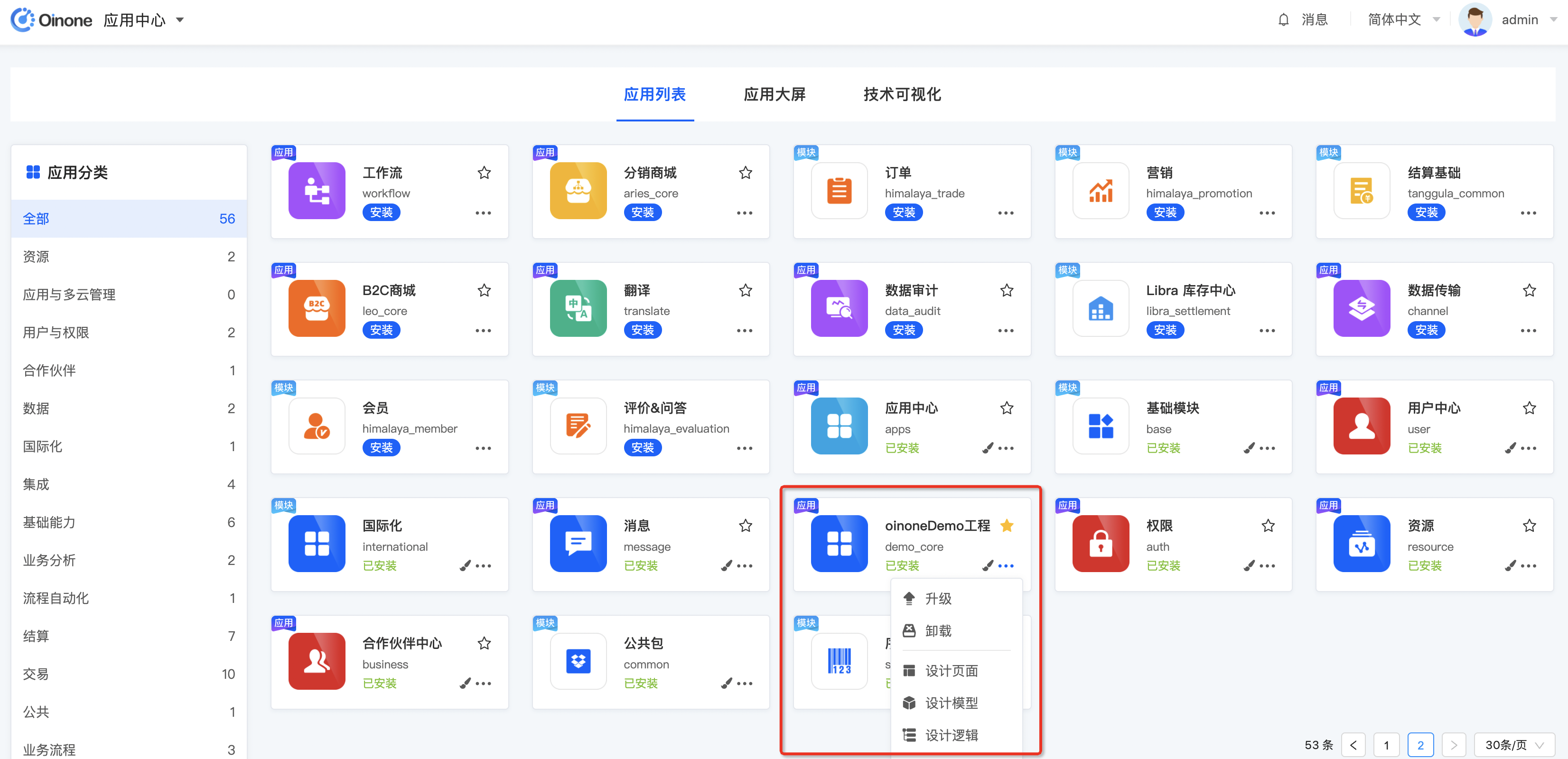
image.png

图3-2-35 Oinone的应用列表

image.png

图3-2-36 应用收藏后会在App Finder的【我收藏的应用】中出现

二、应用大屏

但我们的测试应用没有设置应用类目,则无法在应用大屏中呈现。
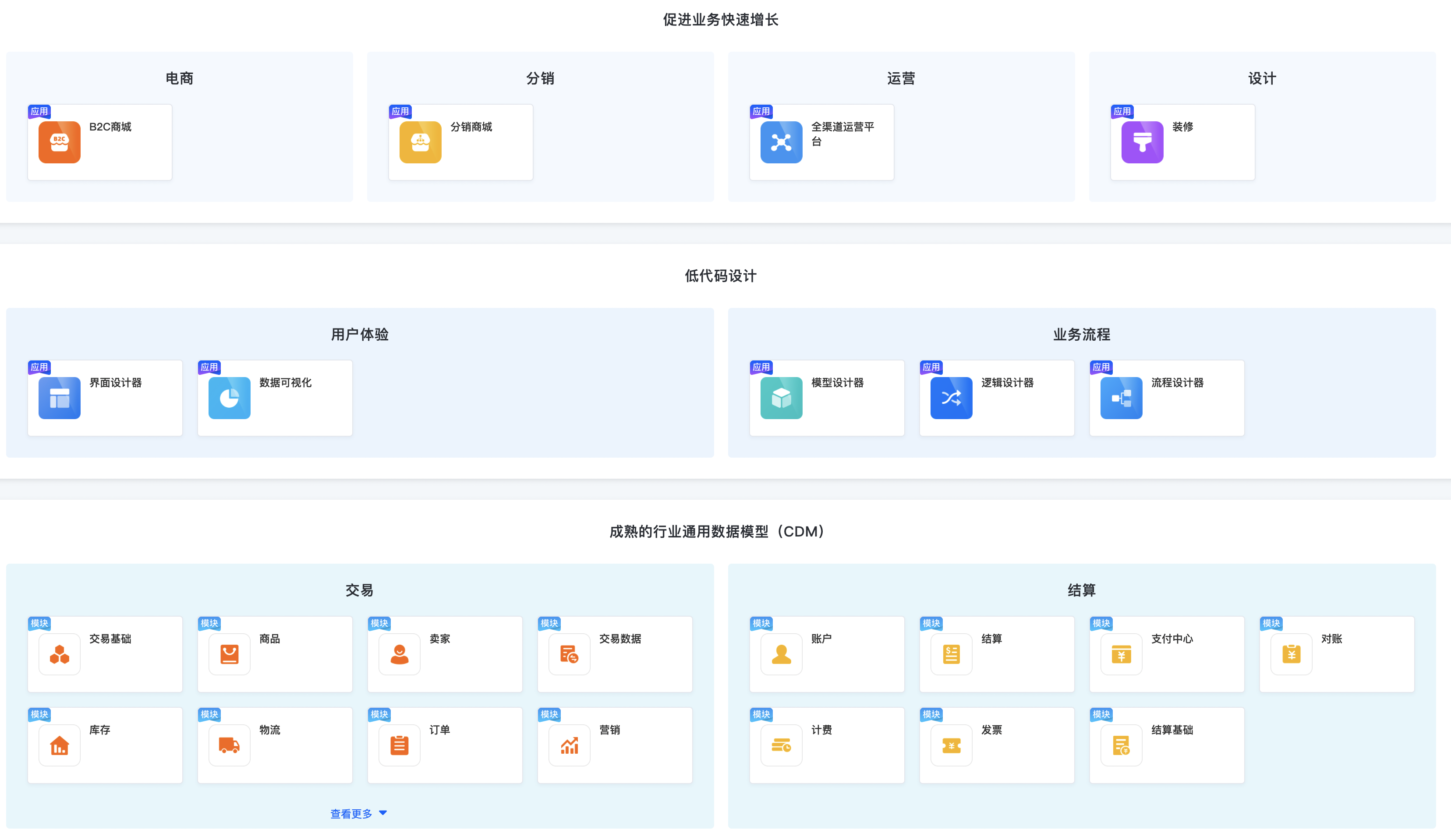
image.png

图3-2-37 未设置应用类目则无法在应用大屏中呈现

三、技术可视化

在技术可视化页面,出展示已经安装模块的元数据,并进行分类呈现
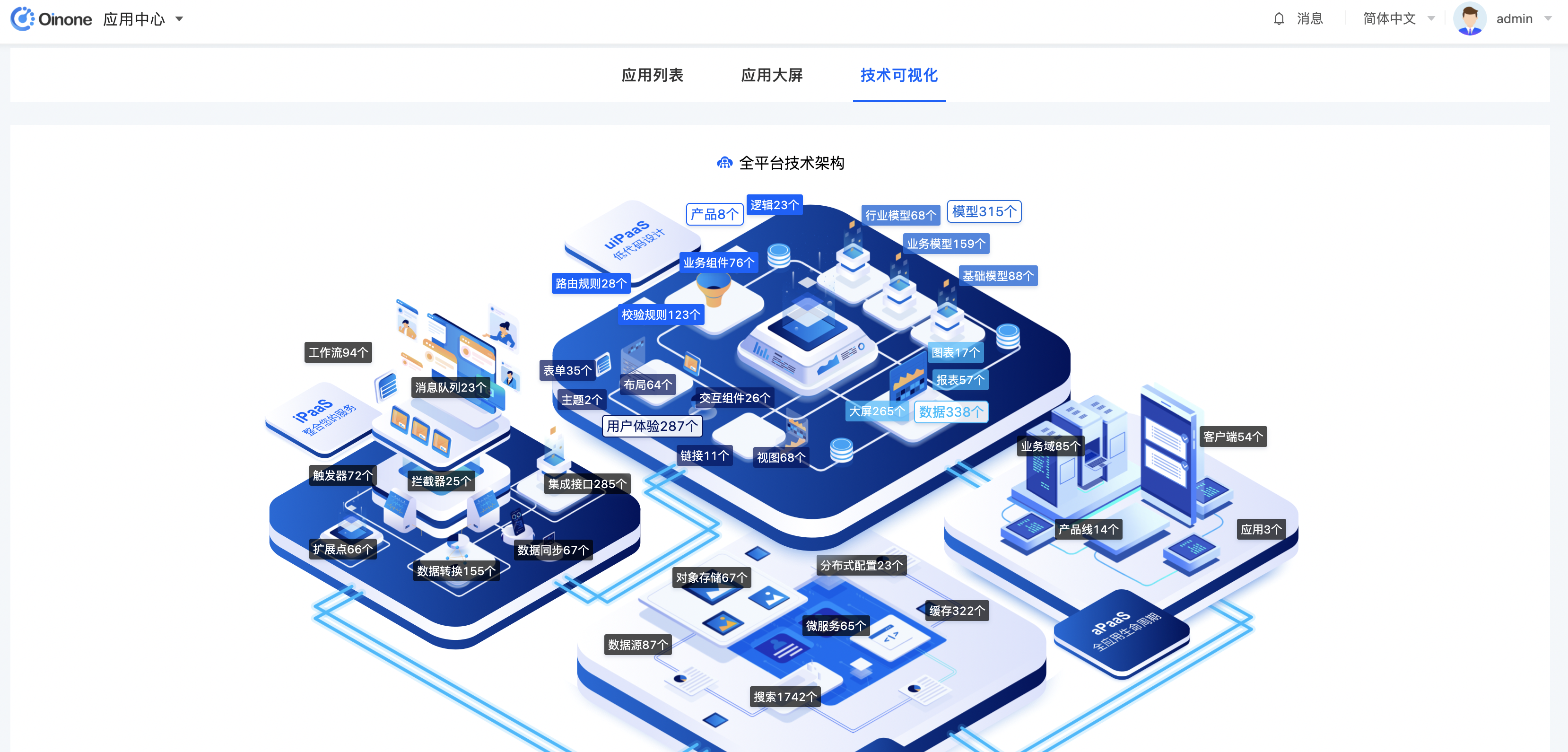
image.png

图3-2-38 云数据分类呈现

Oinone社区 作者:史, 昂原创文章,如若转载,请注明出处:https://doc.oinone.top/oio4/9230.html

访问Oinone官网:https://www.oinone.top获取数式Oinone低代码应用平台体验

Like (0)
史, 昂's avatar史, 昂数式管理员
Previous 2024年5月23日
Next 2024年5月23日

相关推荐

  • 3.5.7.8 自定义菜单栏

    在业务中,可能会遇到需要对菜单栏的交互或UI做全新设计的需求,这个时候可以自定义菜单栏组件支持。 首先继承平台的CustomMenuWidget 组件,将自己vue文件设置到component处 import { NavMenu, SPI, ViewWidget } from '@kunlun/dependencies'; import Component from './CustomMenu.vue'; @SPI.ClassFactory( ViewWidget.Token({ // 这里的widget跟平台的组件一样,这样才能覆盖平台的组件 widget: 'nav-menu' }) ) export class CustomMenuWidget extends NavMenu { public initialize(props) { super.initialize(props); this.setComponent(Component); return this; } } vue文件中继承平台的props,编写自定义页面代码 export const NavMenuProps = { /** * 当前模块 */ module: { type: Object as PropType<IModule | null> }, /** * 树结构的菜单 */ menus: { type: Array as PropType<IResolvedMenu[]>, default: () => [] }, /** * 菜单类型,现在支持垂直、水平、和内嵌模式三种 */ mode: { type: String as PropType<'vertical' | 'horizontal' | 'inline'>, default: 'inline' }, /** * 菜单栏是否折叠收起 */ collapsed: { type: Boolean, default: false }, /** * 当前展开的 SubMenu 菜单项 key 数组 */ openKeys: { type: Array as PropType<string[]>, default: () => [] }, /** * 当前选中的菜单项 key 数组 */ selectKeys: { type: Array as PropType<string[]>, default: () => [] }, /** * 菜单搜索下拉选中菜单项 */ selectMenuBySearch: { type: Function as PropType<(menuName: String) => void> }, /** * 选中菜单项 */ selectMenu: { type: Function as PropType<(menuName: String) => Promise<void>> }, /** * SubMenu 展开/关闭的回调 */ openChange: { type: Function as PropType<(openKeys: string[]) => void> }, /**…

    2024年5月23日
    2.1K00
  • 4.5.2 研发辅助之SQL优化

    Oinone体系中是不需要针对模型写SQL的,默认提供了通用的数据管理器。在带来便利的情况下,也导致传统的sql审查就没办法开展。但是我们可以以技术的手段收集慢SQL和限制问题SQL执行。 慢SQL搜集目的:去发现非原则性问题的慢SQL,并进行整改 限制问题SQL执行:对应一些不规范的SQL系统上直接做限制,如果有特殊情况手动放开 一、发现慢SQL 这个功能并没有直接加入到oinone的版本中,需要业务自行写插件,插件代码如下。大家可以根据实际情况进行改造比如: 堆栈入口,例子中只是放了pamirs,可以根据实际情况改成业务包路径 对慢SQL的定义是5s还是3s,根据实际情况变 package pro.shushi.pamirs.demo.core.plugin; import org.apache.ibatis.executor.Executor; import org.apache.ibatis.mapping.MappedStatement; import org.apache.ibatis.plugin.*; import org.apache.ibatis.session.ResultHandler; import org.apache.ibatis.session.RowBounds; import org.springframework.stereotype.Component; import pro.shushi.pamirs.meta.annotation.fun.extern.Slf4j; @Intercepts({ @Signature(type = Executor.class,method = "query",args = {MappedStatement.class,Object.class, RowBounds.class, ResultHandler.class}) }) @Component @Slf4j public class SlowSQLAnalysisInterceptor implements Interceptor { @Override public Object intercept(Invocation invocation) throws Throwable { long start = System.currentTimeMillis(); Object result = invocation.proceed(); long end = System.currentTimeMillis(); if (end – start > 10000) {//大于10秒 try { StackTraceElement[] stackTraceElements = Thread.currentThread().getStackTrace(); StringBuffer slowLog = new StringBuffer(); slowLog.append(System.lineSeparator()); for (StackTraceElement element : stackTraceElements) { if (element.getClassName().indexOf("pamirs") > 0) { slowLog.append(element.getClassName()).append(":").append(element.getMethodName()).append(":").append(element.getLineNumber()).append(System.lineSeparator()); } } Object parameter = null; if (invocation.getArgs().length > 1) { parameter = invocation.getArgs()[1]; } MappedStatement mappedStatement = (MappedStatement) invocation.getArgs()[0]; BoundSql boundSql = mappedStatement.getBoundSql(parameter); Configuration configuration = mappedStatement.getConfiguration(); String originalSql = showSql(configuration, boundSql); originalSql = originalSql.replaceAll("\'", "").replace("\"", ""); log.warn("检测到的慢SQL为:" + originalSql); log.warn("业务慢SQL入口为:" + slowLog.toString()); } catch (Throwable e1) { //忽略 } } return result; } public String showSql(Configuration configuration, BoundSql boundSql) { Object parameterObject = boundSql.getParameterObject(); List<ParameterMapping> parameterMappings = boundSql.getParameterMappings(); String sql = boundSql.getSql().replaceAll("[\\s]+", " "); if (parameterMappings.size() > 0 && parameterObject != null) { TypeHandlerRegistry typeHandlerRegistry…

    Oinone 7天入门到精通 2024年5月23日
    1.9K00
  • 4.2.5 框架之网络请求-Request

    在中后台业务场景中,大部分的请求时候是可以被枚举的,比如创建、删除、更新、查询。在上文中,我们讲了httpClient如何自定义请求,来实现自己的业务诉求。本文中讲到的Request是离业务更近一步的封装,他提供了开箱即用的API,比如insertOne、updateOne,它是基于HttpClient做的二次封装,当你熟悉Request时,在中后台的业务场景中,所有的业务接口自定义将事半功倍。 一、Request详细介绍 元数据-model 获取模型实例 import { getModel } from '@kunlun/dependencies' getModel('modelName'); 图4-2-5-1 获取模型实例 清除所有缓存的模型 import { cleanModelCache } from '@kunlun/dependencies' cleanModelCache(); 图4-2-5-2 清除所有缓存的模型 元数据-module 获取应用实例,包含应用入口和菜单 import { queryModuleByName } from '@kunlun/dependencies' queryModuleByName('moduleName') 图4-2-5-3 获取应用实例 查询当前用户所有的应用 import { loadModules } from '@kunlun/dependencies' loadModules() 图4-2-5-4 查询当前用户所有的应用 query 分页查询 import { queryPage } from '@kunlun/dependencies' queryPage(modelName, { pageSize: 15, // 一次查询几条 currentPage, 1, // 当前页码 condition?: '' // 查询条件 maxDepth?: 1, // 查几层模型出来,如果有2,会把所有查询字段的关系字段都查出来 sort?: []; // 排序规则 }, fields, variables, context) 图4-2-5-5 分页查询 自定义分页查询-可自定义后端接口查询数据 import { customQueryPage } from '@kunlun/dependencies' customQueryPage(modelName, methodName, { pageSize: 15, // 一次查询几条 currentPage, 1, // 当前页码 condition?: '' // 查询条件 maxDepth?: 1, // 查几层模型出来,如果有2,会把所有查询字段的关系字段都查出来 sort?: []; // 排序规则 }, fields, variables, context) 图4-2-5-6 自定义分页查询 查询一条-根据params匹配出一条数据 import { queryOne } from '@kunlun/dependencies' customQueryPage(modelName, params, fields, variables, context) 图4-2-5-7 根据params匹配出一条数据 自定义查询 import { customQuery } from '@kunlun/dependencies' customQuery(methodName, modelName, record, fields, variables, context) 图4-2-5-8 自定义查询 update import { updateOne } from '@kunlun/dependencies' updateOne(modelName, record, fields, variables, context) 图4-2-5-9 update insert import { insertOne } from '@kunlun/dependencies' insertOne(modelName, record, fields, variables, context) 图4-2-5-10 insert delete import { deleteOne } from '@kunlun/dependencies'…

    2024年5月23日
    1.9K00
  • 3.4.3.3 SPI机制-扩展点

    扩展点结合拦截器的设计,oinone可以点、线、面一体化管理Function 扩展点用于扩展函数逻辑。扩展点类似于SPI机制(Service Provider Interface),是一种服务发现机制。这一机制为函数逻辑的扩展提供了可能。 一、构建第一个扩展点 自定义扩展点(举例) 在我们日常开发中,随着对业务理解的深入,往往还在一些逻辑中会预留扩展点,以便日后应对不同需求时可以灵活替换某一小块逻辑。 在3.3.4【模型的继承】一文中的PetCatItemQueryService,是独立新增函数只作公共逻辑单元。现在我们给它的实现类增加一个扩展点。在PetCatItemQueryServiceImpl的queryPage方法中原本会先查询PetCatType列表,我们这里假设这个逻辑随着业务发展未来会发生变化,我们可以预先预留【查询萌猫类型扩展点】 Step1 新增扩展点定义PetCatItemQueryCatTypeExtpoint 扩展点命名空间:在接口上用@Ext声明扩展点命名空间。会优先在本类查找@Ext,若为空则往接口向上做遍历查找,返回第一个查找到的@Ext.value注解值,使用该值再获取函数的命名空间;如果未找到,则返回扩展点全限定类名。所以我们这里扩展点命名空间为:pro.shushi.pamirs.demo.api.extpoint.PetCatItemQueryCatTypeExtpoint 扩展点技术名称:先取@ExtPoint.name,若为空则取扩展点接口方法名。所以我们这里技术名为queryCatType package pro.shushi.pamirs.demo.api.extpoint; import pro.shushi.pamirs.demo.api.model.PetCatType; import pro.shushi.pamirs.meta.annotation.Ext; import pro.shushi.pamirs.meta.annotation.ExtPoint; import java.util.List; @Ext public interface PetCatItemQueryCatTypeExtpoint { @ExtPoint(displayName = "查询萌猫类型扩展点") List<PetCatType> queryCatType(); } 图3-4-3-11 新增扩展点定义PetCatItemQueryCatTypeExtpoint Step2 修改PetCatItemQueryServiceImpl(用Ext.run模式调用) 修改queryPage,增加扩展点的使用代码。扩展点的使用有两种方式 方法一,使用命名空间和扩展点名称调用Ext.run(namespace, fun, 参数); 方法二,使用函数式接口调用Ext.run(函数式接口, 参数); 我们这里用了第二种方式 用PetCatItemQueryCatTypeExtpoint的全限定类名作为扩展点的命名空间(namespace) 用queryCatType的方法名作为扩展点的技术名称(name) 根据namespace+name去找到匹配扩展点实现,并根据规则是否匹配,以及优先级唯一确定一个扩展点实现去执行逻辑 package pro.shushi.pamirs.demo.core.service; ……省略依赖包 @Model.model(PetCatItem.MODEL_MODEL) @Component public class PetCatItemAction extends DataStatusBehavior<PetCatItem> { @Override protected PetCatItem fetchData(PetCatItem data) { return data.queryById(); } @Action(displayName = "启用") public PetCatItem dataStatusEnable(PetCatItem data){ data = super.dataStatusEnable(data); data.updateById(); return data; } @Function.Advanced(displayName = "查询模型数据的默认过滤条件", type = FunctionTypeEnum.QUERY, managed = true) @Function(openLevel = {LOCAL}) public String queryFilters() { StringBuilder sqlWhereCondition = new StringBuilder(); // List<PetCatType> typeList = new PetCatType().queryList(); List<PetCatType> typeList = Ext.run(PetCatItemQueryCatTypeExtpoint::queryCatType, new Object[]{}); if(!CollectionUtils.isEmpty(typeList)){ // sqlWhereCondition.append("type_id"); sqlWhereCondition.append(PStringUtils.fieldName2Column(LambdaUtil.fetchFieldName(PetCatItem::getTypeId))); sqlWhereCondition.append(StringUtils.SPACE).append(SqlConstants.IN).append(CharacterConstants.LEFT_BRACKET); for(PetCatType petCatType: typeList){ sqlWhereCondition.append(petCatType.getId()).append(CharacterConstants.SEPARATOR_COMMA); } sqlWhereCondition.deleteCharAt(sqlWhereCondition.lastIndexOf(CharacterConstants.SEPARATOR_COMMA)); sqlWhereCondition.append(StringUtils.SPACE).append(CharacterConstants.RIGHT_BRACKET); } return sqlWhereCondition.toString(); } ……省略其他函数 } 图3-4-3-12 修改PetCatItemQueryServiceImpl Step3 新增扩展点实现PetCatItemQueryCatTypeExtpointOne 扩展点命名空间要与扩展点定义一致,用@Ext(PetCatItemQueryCatTypeExtpoint.class) @ExtPoint.Implement声明这是在@Ext声明的命名空间下,且技术名为queryCatType的扩展点实现 package pro.shushi.pamirs.demo.core.extpoint; import pro.shushi.pamirs.demo.api.extpoint.PetCatItemQueryCatTypeExtpoint; import pro.shushi.pamirs.demo.api.model.PetCatType; import pro.shushi.pamirs.meta.annotation.Ext; import pro.shushi.pamirs.meta.annotation.ExtPoint; import pro.shushi.pamirs.meta.api.session.PamirsSession; import java.util.List; @Ext(PetCatItemQueryCatTypeExtpoint.class) public class PetCatItemQueryCatTypeExtpointOne implements PetCatItemQueryCatTypeExtpoint { @Override @ExtPoint.Implement(displayName = "查询萌猫类型扩展点的默认实现") public List<PetCatType> queryCatType() { PamirsSession.getMessageHub().info("走的是第一个扩展点"); List<PetCatType> typeList = new PetCatType().queryList(); return typeList; } } 图3-4-3-13 新增扩展点实现PetCatItemQueryCatTypeExtpointOne Step4…

    2024年5月23日
    1.9K00
  • 3.2 Oinone以模块为组织

    模块(module):是按业务领域划分和管理的最小单元,是一组功能、界面的集合。 带大家快速认识下如何构建一个oinone的模块并启动它。我会从以下几个维度去介绍模块的构建与启动方式、模块详解。让大家直观且全方位地了解oinone的模块所包含的内容 构建第一个Module 启动前端工程 应用中心

    Oinone 7天入门到精通 2024年5月23日
    2.8K00

Leave a Reply

Please Login to Comment