
4.2.7 框架之翻译工具

一、说明

Oinone目前的默认文案是中文,如果需要使用其他语言,Oinone也提供一系列的翻译能力。

二、定义语言文件

在src/local下新增一个名为zh_cn.ts文件:
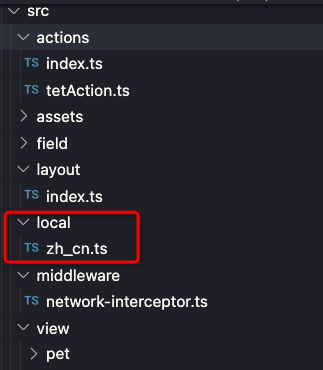
image.png

图4-2-7-1 语言文件

编辑zh_cn.ts文件,增加以下内容:

const zhCN = {
    demo: {
        test: '这是测试'
    }
}

export default zhCN

图4-2-7-2 语言内容格式示意

在mian.ts注册语言资源:

import { LanguageType, registryLanguage} from '@kunlun/dependencies';
import Zh_cn from './local/zh_cn'
registryLanguage(LanguageType['zh-CN'], Zh_cn);

图4-2-7-3 注册语言

三、Vue模板使用

<template>
  <div class="petFormWrapper">
    <form :model="formState" @finish="onFinish">
      <a-form-item :label="translate('demo.test')" id="name" name="kind" :rules="[{ required: true, message: '请输入品种种类!', trigger: 'focus' }]">
        <a-input v-model:value="formState.kind" @input="(e) => onNameChange(e, 'kind')" />
        <span style="color: red">{{ getServiceError('kind') }}</span>
      </a-form-item>

      <a-form-item label="品种名" id="name" name="name" :rules="[{ required: true, message: '请输入品种名!', trigger: 'focus' }]">
        <a-input v-model:value="formState.name" @input="(e) => onNameChange(e, 'name')" />
        <span style="color: red">{{ getServiceError('name') }}</span>
      </a-form-item>
    </form>
  </div>
</template>

<script lang="ts">
import { defineComponent, reactive } from 'vue';
import { Form } from 'ant-design-vue';

export default defineComponent({
  // 引入translate
  props: ['onChange', 'reloadData', 'serviceErrors', 'translate'],
  components: { Form },
  setup(props) {
    const formState = reactive({
      kind: '',
      name: '',
    });

    const onFinish = () => {
      console.log(formState);
    };

    const onNameChange = (event, name) => {
      props.onChange(name, event.target.value);
    };

    const reloadData = async () => {
      await props.reloadData();
    };

    const getServiceError = (name: string) => {
      const error = props.serviceErrors.find(error => error.name === name);
      return error ? error.error : '';
    }

    return {
      formState,
      reloadData,
      onNameChange,
      onFinish,
      getServiceError
    };
  }
});
</script>
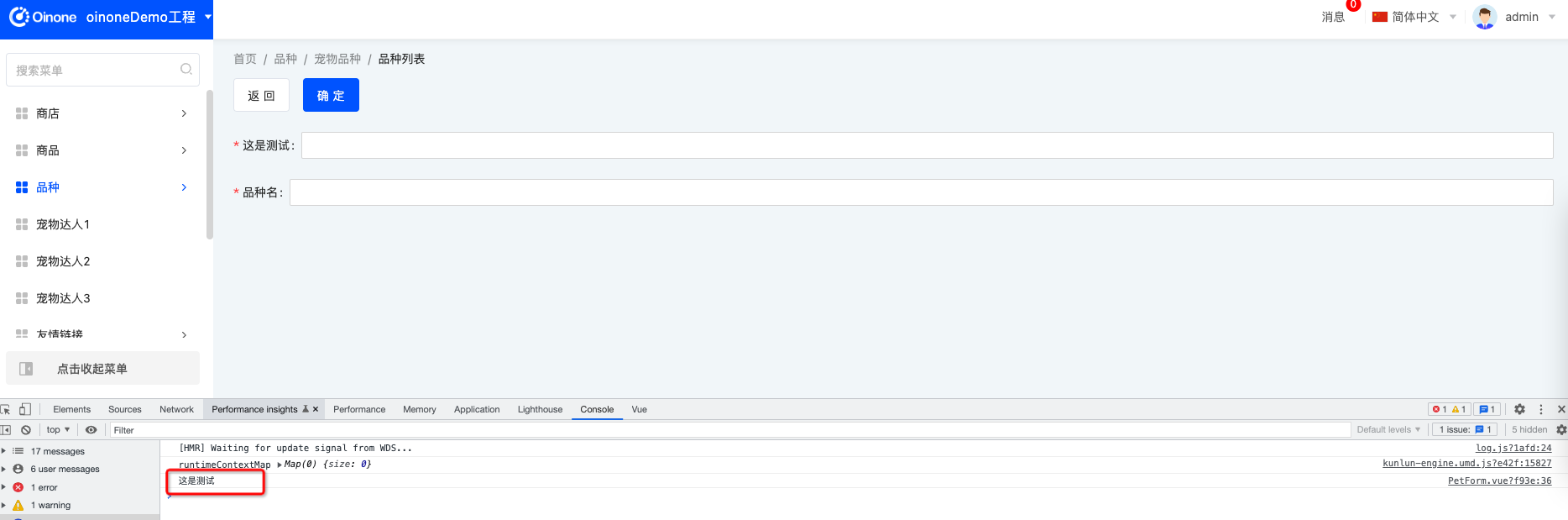
图4-2-7-4 Vue模板使用示例

效果

4.2.7 框架之翻译工具

图4-2-7-5 示例效果

四、JS使用-translate

<template>
  <div class="petFormWrapper">
    <form :model="formState" @finish="onFinish">
      <a-form-item :label="translate('demo.test')" id="name" name="kind" :rules="[{ required: true, message: '请输入品种种类!', trigger: 'focus' }]">
        <a-input v-model:value="formState.kind" @input="(e) => onNameChange(e, 'kind')" />
        <span style="color: red">{{ getServiceError('kind') }}</span>
      </a-form-item>

      <a-form-item label="品种名" id="name" name="name" :rules="[{ required: true, message: '请输入品种名!', trigger: 'focus' }]">
        <a-input v-model:value="formState.name" @input="(e) => onNameChange(e, 'name')" />
        <span style="color: red">{{ getServiceError('name') }}</span>
      </a-form-item>
    </form>
  </div>
</template>

<script lang="ts">
import { defineComponent, reactive, onMounted } from 'vue';
// 引入
import { translate } from '@kunlun/dependencies';
import { Form } from 'ant-design-vue';

export default defineComponent({
  props: ['onChange', 'reloadData', 'serviceErrors', 'translate'],
  components: { Form },
  setup(props) {
    const formState = reactive({
      kind: '',
      name: '',
    });

    const onFinish = () => {
      console.log(formState);
    };

    const onNameChange = (event, name) => {
      props.onChange(name, event.target.value);
    };

    const reloadData = async () => {
      await props.reloadData();
    };

    const getServiceError = (name: string) => {
      const error = props.serviceErrors.find(error => error.name === name);
      return error ? error.error : '';
    }

    onMounted(() => {
      // 使用
      const test = translate('demo.test');
      console.log(test);
    });

    return {
      formState,
      reloadData,
      onNameChange,
      onFinish,
      getServiceError
    };
  }
});
</script>

图4-2-7-6 JS使用-translate示例

image.png

图4-2-7-7 示例效果

五、JS使用-translateValueByKey

translateValueByKey和translate的区别是,获取资源的路径不同,translate从前端定义中获取对应的翻译,translateValueByKey是从平台翻译功能中配置得来。建议使用

import { translateValueByKey } from '@kunlun/dependencies';
translateValueByKey("中文名称") || "默认值"

图4-2-7-8 JS使用-translateValueByKey示例

六、翻译dslNode

处理xml的国际化

import { translateNode } from '@kunlun/translateValueByKey';
translateNode(dslNode);

图4-2-7-9 翻译dslNode示例

Oinone社区 作者:史, 昂原创文章,如若转载,请注明出处:https://doc.oinone.top/oio4/9308.html

访问Oinone官网:https://www.oinone.top获取数式Oinone低代码应用平台体验

(0)
史, 昂的头像史, 昂数式管理员
上一篇 2024年5月23日 am8:30
下一篇 2024年5月23日 am8:32

相关推荐

  • 4.2.6 框架之网络请求-拦截器

    在整个http的链路中,异常错误对前端来说尤为重要,他作用在很多不同的场景,通用的比如500, 502等; 一个好的软件通常需要在不同的错误场景中做不同的事情。当用户cookie失效时,希望能自动跳转到登录页;当用户权限发生变更时,希望能跳转到一个友好的提示页;那么如何满足这些个性化的诉求呢?接下来让我们一起了解oinone前端网络请求-拦截器。 一、入口 在src目录下main.ts中可以看到VueOioProvider,这是系统功能提供者的注册入口 图4-2-6-1 VueOioProvider import interceptor from './middleware/network-interceptor'; VueOioProvider( { http: { callback: interceptor } }, [] ); 图4-2-6-2 拦截器的申明入口 二、middleware 在项目初始化时使用CLI构建初始化前端工程,在src/middleware有拦截器的默认实现: 图4-2-6-3 在src/middleware有拦截器的默认实现 三、interceptor interceptor在请求返回后触发,interceptor有两个回调函数,error和next error参数 graphQLErrors 处理业务异常 networkError 处理网络异常 next extensions 后端返回扩展参数 const interceptor: RequestHandler = (operation, forward) => { return forward(operation).subscribe({ error: ({ graphQLErrors, networkError }) => { console.log(graphQLErrors, networkError); // 默认实现 => interceptor error }, next: ({ extensions }) => { console.log(extensions); // 默认实现 => interceptor next }, }); }; 图4-2-6-4 后端返回扩展参数 四、interceptor error // 定义错误提示等级 const DEFAULT_MESSAGE_LEVEL = ILevel.ERROR; // 错误提示等级 对应提示的报错 const MESSAGE_LEVEL_MAP = { [ILevel.ERROR]: [ILevel.ERROR], [ILevel.WARN]: [ILevel.ERROR, ILevel.WARN], [ILevel.INFO]: [ILevel.ERROR, ILevel.WARN, ILevel.INFO], [ILevel.SUCCESS]: [ILevel.ERROR, ILevel.WARN, ILevel.INFO, ILevel.SUCCESS], [ILevel.DEBUG]: [ILevel.ERROR, ILevel.WARN, ILevel.INFO, ILevel.SUCCESS, ILevel.DEBUG] }; // 错误提示通用函数 const notificationMsg = (type: string = 'error', tip: string = '错误', desc: string = '') => { notification[type]({ message: tip, description: desc }); }; // 根据错误等级 返回错误提示和类型 const getMsgInfoByLevel = (level: ILevel) => { let notificationType = 'info'; let notificationText = translate('kunlun.common.info'); switch (level) { case ILevel.DEBUG: notificationType = 'info'; notificationText = translate('kunlun.common.debug'); break; case ILevel.INFO: notificationType = 'info'; notificationText = translate('kunlun.common.info'); break;…

    2024年5月23日
    1.1K00
  • 3.5.6.1 字段的配置

    字段组件类型 ttype可以配置哪些widget?本文这里把oinone平台默认支持的所有widget都进行了罗列,方便大家查阅。 字段组件匹配规则 字段组件没有严格的按组件名(widget)、字段类型(ttype)、视图组件类型(viewType)限定,而是一个匹配规则 按widget 最优先匹配 按最大匹配原则 ttype、viewType。每个属性权重一分 按后注册优先原则 通用属性 属性 属性描述 属性name 默认值 类型 标题 字段的标题名称 label – string 占位提示 一个字段的描述信息,常用于说明当前字典的范围、注意事项等 placeholder – string 描述说明 组件描述信息 hint – string 数据校验 与表单其他数据联动校验 validator – 表达式 数据校验不通过提示 数据校验不通过提示 validatorMessage 校验失败 string 只读 字段的状态,可见,不可编辑 readonly false boolean或者表达式 隐藏 字段的状态,不,不可编辑 invisible false boolean或者表达式 必填 字段是否必填 required false boolean或者表达式 禁用 字段是否禁用 disabled false boolean或者表达式 宽度 属性在页面中的宽度 colSpan 01/02 标题排列方式 标题排列方式: 水平 , 横向 layout vertical vertical | horizontal 默认值 默认值,多值逗号分割 defaultValue – 根据不同ttype有不同的默认值类型 表3-5-6-1 字段通用属性 字段组件大全 widget为"-"表明不需要指定,是该ttype默认widget 组件名称 widget 对应ttype 属性 属性描述 属性name 默认值 类型 单行文本 – STRING 通用属性 文本类型 密码:password; 文本: text type text string 最小长度 输入框填写数据时最少输入的长度值 minLength – number 最大长度 输入框填写数据时最多输入的长度值 maxLength – number 输入格式 单行文本组件特有的属性,通过规则校验内容,提供一些常用的,也支持自定义校验正则 pattern – 正则表达式 输入格式不通过 输入格式不通过提示语 tips 校验失败 string 显示计数器 设置输入框是否显示字数计数器 showCount FALSE boolean 显示清除按钮 设置输入框是否有一键清除的按钮及功能 allowClear TRUE TRUE 支持前缀 开启前缀 showPrefix FALSE boolean 支持后缀 开启后缀 showSuffix FALSE boolean 前缀类型 ICON: 图标; TEXT:文本 prefixType – string 后缀类型 ICON: 图标; TEXT:文本 suffixType – string 前缀内容 文本内容或者图标引用名 prefix – string 后缀内容 文本内容或者图标引用名 suffix – string 前缀存储 前缀存储, 仅前缀类型为文本可用 prefixStore – boolean 后缀存储 后缀存储, 仅后缀类型为文本可用 suffixStore – boolean 多行文本 -…

    2024年5月23日
    1.2K00
  • 3.4.3.3 SPI机制-扩展点

    扩展点结合拦截器的设计,oinone可以点、线、面一体化管理Function 扩展点用于扩展函数逻辑。扩展点类似于SPI机制(Service Provider Interface),是一种服务发现机制。这一机制为函数逻辑的扩展提供了可能。 一、构建第一个扩展点 自定义扩展点(举例) 在我们日常开发中,随着对业务理解的深入,往往还在一些逻辑中会预留扩展点,以便日后应对不同需求时可以灵活替换某一小块逻辑。 在3.3.4【模型的继承】一文中的PetCatItemQueryService,是独立新增函数只作公共逻辑单元。现在我们给它的实现类增加一个扩展点。在PetCatItemQueryServiceImpl的queryPage方法中原本会先查询PetCatType列表,我们这里假设这个逻辑随着业务发展未来会发生变化,我们可以预先预留【查询萌猫类型扩展点】 Step1 新增扩展点定义PetCatItemQueryCatTypeExtpoint 扩展点命名空间:在接口上用@Ext声明扩展点命名空间。会优先在本类查找@Ext,若为空则往接口向上做遍历查找,返回第一个查找到的@Ext.value注解值,使用该值再获取函数的命名空间;如果未找到,则返回扩展点全限定类名。所以我们这里扩展点命名空间为:pro.shushi.pamirs.demo.api.extpoint.PetCatItemQueryCatTypeExtpoint 扩展点技术名称:先取@ExtPoint.name,若为空则取扩展点接口方法名。所以我们这里技术名为queryCatType package pro.shushi.pamirs.demo.api.extpoint; import pro.shushi.pamirs.demo.api.model.PetCatType; import pro.shushi.pamirs.meta.annotation.Ext; import pro.shushi.pamirs.meta.annotation.ExtPoint; import java.util.List; @Ext public interface PetCatItemQueryCatTypeExtpoint { @ExtPoint(displayName = "查询萌猫类型扩展点") List<PetCatType> queryCatType(); } 图3-4-3-11 新增扩展点定义PetCatItemQueryCatTypeExtpoint Step2 修改PetCatItemQueryServiceImpl(用Ext.run模式调用) 修改queryPage,增加扩展点的使用代码。扩展点的使用有两种方式 方法一,使用命名空间和扩展点名称调用Ext.run(namespace, fun, 参数); 方法二,使用函数式接口调用Ext.run(函数式接口, 参数); 我们这里用了第二种方式 用PetCatItemQueryCatTypeExtpoint的全限定类名作为扩展点的命名空间(namespace) 用queryCatType的方法名作为扩展点的技术名称(name) 根据namespace+name去找到匹配扩展点实现,并根据规则是否匹配,以及优先级唯一确定一个扩展点实现去执行逻辑 package pro.shushi.pamirs.demo.core.service; ……省略依赖包 @Model.model(PetCatItem.MODEL_MODEL) @Component public class PetCatItemAction extends DataStatusBehavior<PetCatItem> { @Override protected PetCatItem fetchData(PetCatItem data) { return data.queryById(); } @Action(displayName = "启用") public PetCatItem dataStatusEnable(PetCatItem data){ data = super.dataStatusEnable(data); data.updateById(); return data; } @Function.Advanced(displayName = "查询模型数据的默认过滤条件", type = FunctionTypeEnum.QUERY, managed = true) @Function(openLevel = {LOCAL}) public String queryFilters() { StringBuilder sqlWhereCondition = new StringBuilder(); // List<PetCatType> typeList = new PetCatType().queryList(); List<PetCatType> typeList = Ext.run(PetCatItemQueryCatTypeExtpoint::queryCatType, new Object[]{}); if(!CollectionUtils.isEmpty(typeList)){ // sqlWhereCondition.append("type_id"); sqlWhereCondition.append(PStringUtils.fieldName2Column(LambdaUtil.fetchFieldName(PetCatItem::getTypeId))); sqlWhereCondition.append(StringUtils.SPACE).append(SqlConstants.IN).append(CharacterConstants.LEFT_BRACKET); for(PetCatType petCatType: typeList){ sqlWhereCondition.append(petCatType.getId()).append(CharacterConstants.SEPARATOR_COMMA); } sqlWhereCondition.deleteCharAt(sqlWhereCondition.lastIndexOf(CharacterConstants.SEPARATOR_COMMA)); sqlWhereCondition.append(StringUtils.SPACE).append(CharacterConstants.RIGHT_BRACKET); } return sqlWhereCondition.toString(); } ……省略其他函数 } 图3-4-3-12 修改PetCatItemQueryServiceImpl Step3 新增扩展点实现PetCatItemQueryCatTypeExtpointOne 扩展点命名空间要与扩展点定义一致,用@Ext(PetCatItemQueryCatTypeExtpoint.class) @ExtPoint.Implement声明这是在@Ext声明的命名空间下,且技术名为queryCatType的扩展点实现 package pro.shushi.pamirs.demo.core.extpoint; import pro.shushi.pamirs.demo.api.extpoint.PetCatItemQueryCatTypeExtpoint; import pro.shushi.pamirs.demo.api.model.PetCatType; import pro.shushi.pamirs.meta.annotation.Ext; import pro.shushi.pamirs.meta.annotation.ExtPoint; import pro.shushi.pamirs.meta.api.session.PamirsSession; import java.util.List; @Ext(PetCatItemQueryCatTypeExtpoint.class) public class PetCatItemQueryCatTypeExtpointOne implements PetCatItemQueryCatTypeExtpoint { @Override @ExtPoint.Implement(displayName = "查询萌猫类型扩展点的默认实现") public List<PetCatType> queryCatType() { PamirsSession.getMessageHub().info("走的是第一个扩展点"); List<PetCatType> typeList = new PetCatType().queryList(); return typeList; } } 图3-4-3-13 新增扩展点实现PetCatItemQueryCatTypeExtpointOne Step4…

    2024年5月23日
    1.3K00
  • 3.5.6.4 动作的配置

    在3.5.3【Action的类型】一文中,我们介绍Action的几种类型,以及组合动作。 通用配置 配置项 可选值 默认值 作用 name 动作名称 label 显示名称 icon 图标 type primary defaultlink primary 按钮类型样式,支持主要样式、次要样式以及链接样式。 bizStyle defaultsuccesswarningdangerinfo default 按钮业务样式,支持成功(green)、警告(yellow)、危险(red)、信息(grey)四种样式。 invisible truefalse condition false 展示规则,有简单的true/false显隐,也支持复杂的表达式 disabled truefalse condition 根据动作上下文类型进行自动推断 是否禁用自动推断规则:当上下文类型为【单行】时,相当于使用表达式LIST_COUNT(context.activeRecords) != 1当上下文类型为【多行】时,相当于使用表达式LIST_COUNT(context.activeRecords) <= 1当上下文类型为【单行或多行】时,相当于使用表达式LIST_COUNT(context.activeRecords) == 0 disabledTitle string 根据动作上下文类型进行自动推断 禁用悬浮提示 表3-5-6-12 动作通用配置 二次确认配置 二次确认框默认支持两种模式,对话框和气泡框; 对话框 图3-5-6-51 对话框提示 气泡框 图3-5-6-52 气泡框警告 配置项 配置项 可选值 默认值 作用 备注 confirm string 二次确认提示文字 配置后开启二次确认 confirmType POPPER(气泡提示框) MODAL(对话框) POPPER 确认框类型 confirmPosition TM(按钮上方) BM(按钮下方) LM(按钮左侧) RM(按钮右侧) BM 确认框位置 气泡框该配置生效 enterText 确定 确定按钮文字 cancelText 取消 取消按钮文字 表3-5-6-13 配置项 弹出层动作配置(窗口动作ViewAction) 目前平台对于弹出层支持了两种展示形式。弹窗(modal/dialog)和抽屉(drawer) 支持两种配置方式【内嵌视图配置】和【引用已有页面】,内嵌视图配置优先于引用已有页面。 内嵌视图配置 该配置对于弹窗和抽屉均适用。 <action name="窗口动作名称" label="创建"> <view model="模型编码" type="form"> <template slot="form" widget="form"> <field data="id" invisible="true" /> <field data="code" label="编码" widget="Input" /> <field data="name" label="名称" widget="Input" /> </template> <template slot="footer"> <action name="$$internal_DialogCancel" label="关闭" type="default" /> <action name="create" label="确定" /> </template> </view> </action> 图3-5-6-53 内嵌视图配置 引用已有页面配置 该配置对于弹窗和抽屉均适用。 <view model="模型编码" type="form"> <template slot="form" widget="form"> <field data="id" invisible="true" /> <field data="code" label="编码" widget="Input" /> <field data="name" label="名称" widget="Input" /> </template> <template slot="footer"> <action name="$$internal_DialogCancel" label="关闭" type="default" /> <action name="create" label="确定" /> </template> </view> 图3-5-6-54 引用已有页面示例 <action name="窗口动作名称" label="创建" resViewName="$viewName$" /> 图3-5-6-55 引用已有页面 弹窗 当窗口动作的路由方式(target)为dialog时,内嵌视图/引用页面将以弹窗形式展示在页面上。 配置项 配置项 可选值 默认值 作用 title…

    2024年5月23日
    95100

Leave a Reply

登录后才能评论
