用户中心

1. 创建用户

  1. 进入用户中心应用,在用户列表中点击创建。

image.png

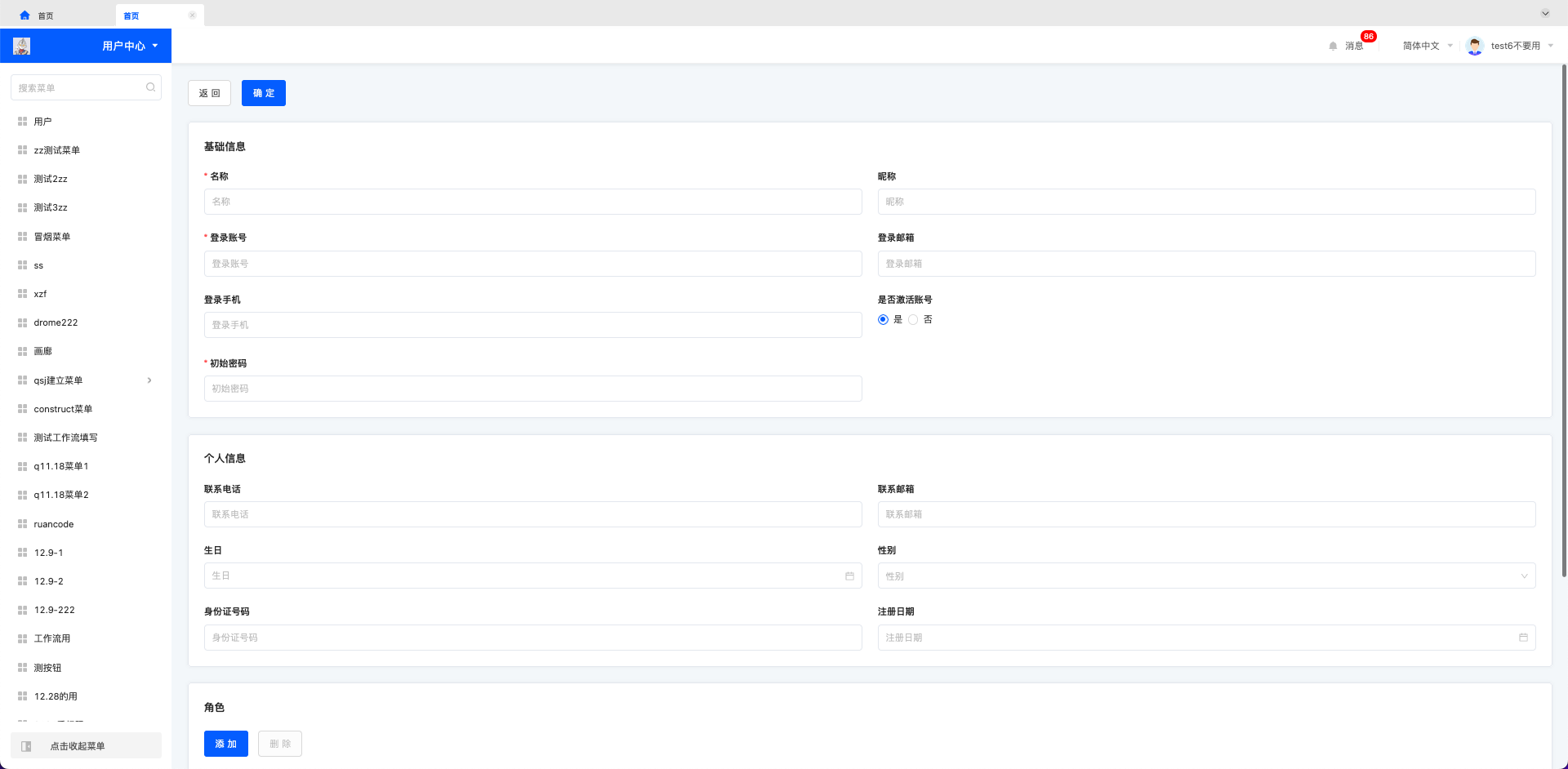
  1. 填写表单中的必填信息。

    1. 若未设置昵称,则右上角头像右侧展示名称。若设置了昵称,则右上角头像右侧展示昵称。

    2. 是否激活账号选择是,选择否时用户登录会显示“未找到首页”。

    3. 角色分组中,选择创建的用户的角色,默认选择了超级管理员(包含所有权限)。

image.png

  1. 点击确定,用户创建完成。

  2. 用户登录时可用登录账号/邮箱/手机号登录。

2. 用户相关操作

  1. 表格页中包含常规的搜索、批量删除功能。

  2. 冻结:当将“是否有效”状态为“是”时展示,将用户“是否有效”修改为“否”。

  3. 解冻:当将“是否有效”状态为“否”时展示,将用户“是否有效”修改为“是”。

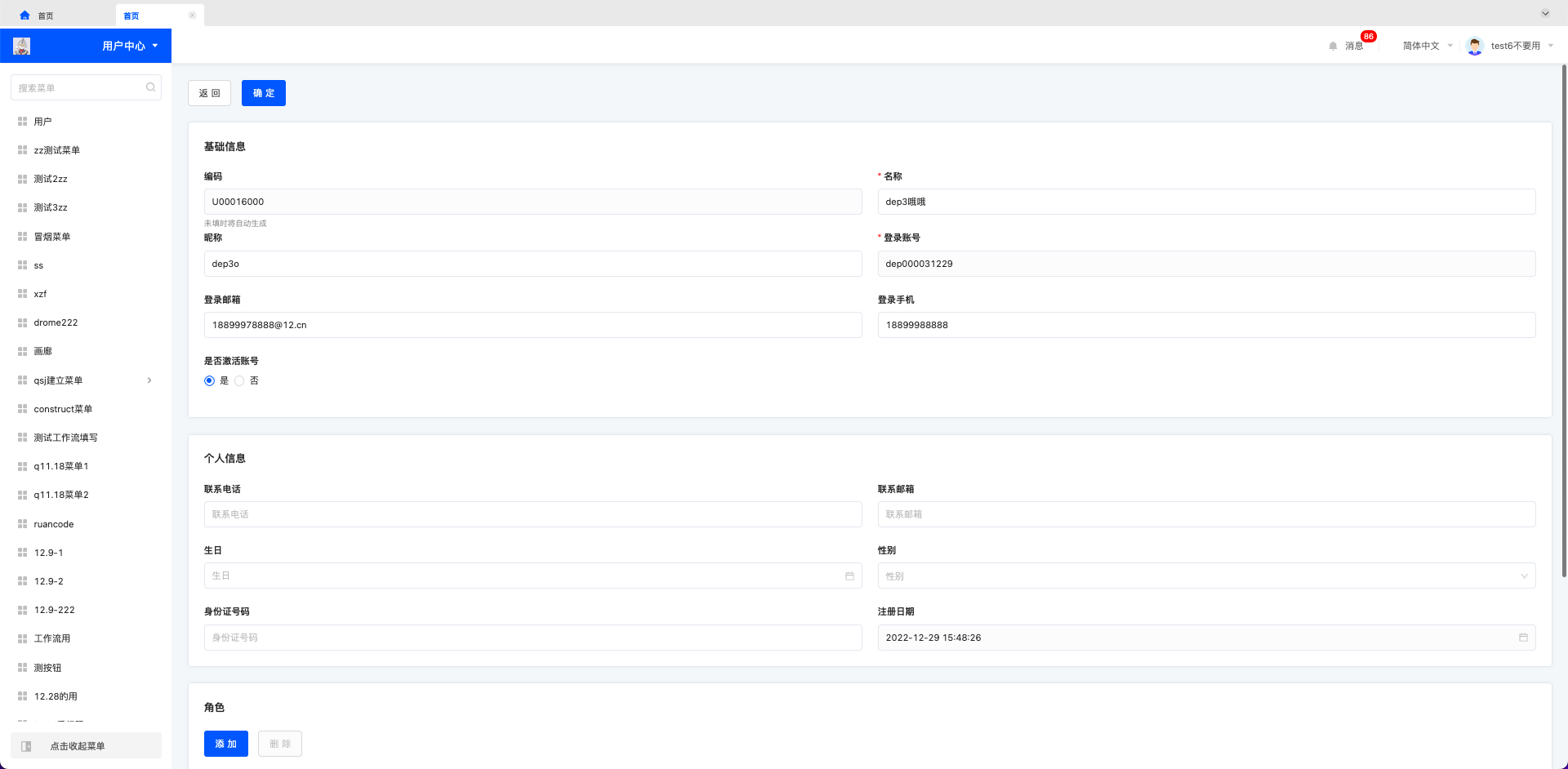
  4. 修改:进入用户信息修改页面,“编码、登录账号、注册时间”只读。

image.png

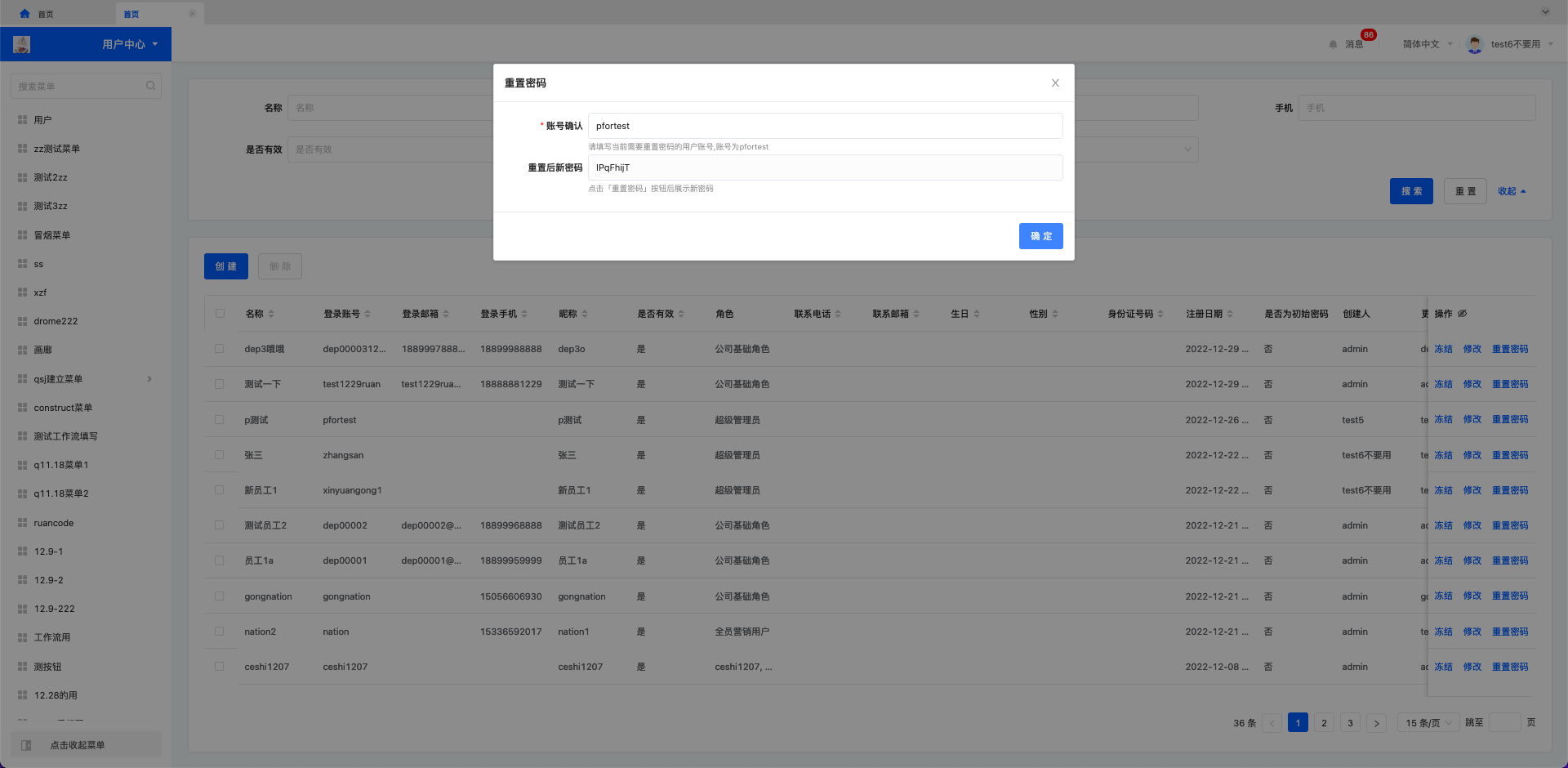
  1. 重置密码:点击后在弹窗“账号确认”中输入账号,点击重置密码后,展示新密码。

image.png

Oinone社区 作者:史, 昂原创文章,如若转载,请注明出处:https://doc.oinone.top/oio4/9390.html

访问Oinone官网:https://www.oinone.top获取数式Oinone低代码应用平台体验

(0)
史, 昂的头像史, 昂数式管理员
上一篇 2024年6月20日 am9:48
下一篇 2024年6月20日 am9:48

相关推荐

  • 3.4.3.3 SPI机制-扩展点

    扩展点结合拦截器的设计,oinone可以点、线、面一体化管理Function 扩展点用于扩展函数逻辑。扩展点类似于SPI机制(Service Provider Interface),是一种服务发现机制。这一机制为函数逻辑的扩展提供了可能。 一、构建第一个扩展点 自定义扩展点(举例) 在我们日常开发中,随着对业务理解的深入,往往还在一些逻辑中会预留扩展点,以便日后应对不同需求时可以灵活替换某一小块逻辑。 在3.3.4【模型的继承】一文中的PetCatItemQueryService,是独立新增函数只作公共逻辑单元。现在我们给它的实现类增加一个扩展点。在PetCatItemQueryServiceImpl的queryPage方法中原本会先查询PetCatType列表,我们这里假设这个逻辑随着业务发展未来会发生变化,我们可以预先预留【查询萌猫类型扩展点】 Step1 新增扩展点定义PetCatItemQueryCatTypeExtpoint 扩展点命名空间:在接口上用@Ext声明扩展点命名空间。会优先在本类查找@Ext,若为空则往接口向上做遍历查找,返回第一个查找到的@Ext.value注解值,使用该值再获取函数的命名空间;如果未找到,则返回扩展点全限定类名。所以我们这里扩展点命名空间为:pro.shushi.pamirs.demo.api.extpoint.PetCatItemQueryCatTypeExtpoint 扩展点技术名称:先取@ExtPoint.name,若为空则取扩展点接口方法名。所以我们这里技术名为queryCatType package pro.shushi.pamirs.demo.api.extpoint; import pro.shushi.pamirs.demo.api.model.PetCatType; import pro.shushi.pamirs.meta.annotation.Ext; import pro.shushi.pamirs.meta.annotation.ExtPoint; import java.util.List; @Ext public interface PetCatItemQueryCatTypeExtpoint { @ExtPoint(displayName = "查询萌猫类型扩展点") List<PetCatType> queryCatType(); } 图3-4-3-11 新增扩展点定义PetCatItemQueryCatTypeExtpoint Step2 修改PetCatItemQueryServiceImpl(用Ext.run模式调用) 修改queryPage,增加扩展点的使用代码。扩展点的使用有两种方式 方法一,使用命名空间和扩展点名称调用Ext.run(namespace, fun, 参数); 方法二,使用函数式接口调用Ext.run(函数式接口, 参数); 我们这里用了第二种方式 用PetCatItemQueryCatTypeExtpoint的全限定类名作为扩展点的命名空间(namespace) 用queryCatType的方法名作为扩展点的技术名称(name) 根据namespace+name去找到匹配扩展点实现,并根据规则是否匹配,以及优先级唯一确定一个扩展点实现去执行逻辑 package pro.shushi.pamirs.demo.core.service; ……省略依赖包 @Model.model(PetCatItem.MODEL_MODEL) @Component public class PetCatItemAction extends DataStatusBehavior<PetCatItem> { @Override protected PetCatItem fetchData(PetCatItem data) { return data.queryById(); } @Action(displayName = "启用") public PetCatItem dataStatusEnable(PetCatItem data){ data = super.dataStatusEnable(data); data.updateById(); return data; } @Function.Advanced(displayName = "查询模型数据的默认过滤条件", type = FunctionTypeEnum.QUERY, managed = true) @Function(openLevel = {LOCAL}) public String queryFilters() { StringBuilder sqlWhereCondition = new StringBuilder(); // List<PetCatType> typeList = new PetCatType().queryList(); List<PetCatType> typeList = Ext.run(PetCatItemQueryCatTypeExtpoint::queryCatType, new Object[]{}); if(!CollectionUtils.isEmpty(typeList)){ // sqlWhereCondition.append("type_id"); sqlWhereCondition.append(PStringUtils.fieldName2Column(LambdaUtil.fetchFieldName(PetCatItem::getTypeId))); sqlWhereCondition.append(StringUtils.SPACE).append(SqlConstants.IN).append(CharacterConstants.LEFT_BRACKET); for(PetCatType petCatType: typeList){ sqlWhereCondition.append(petCatType.getId()).append(CharacterConstants.SEPARATOR_COMMA); } sqlWhereCondition.deleteCharAt(sqlWhereCondition.lastIndexOf(CharacterConstants.SEPARATOR_COMMA)); sqlWhereCondition.append(StringUtils.SPACE).append(CharacterConstants.RIGHT_BRACKET); } return sqlWhereCondition.toString(); } ……省略其他函数 } 图3-4-3-12 修改PetCatItemQueryServiceImpl Step3 新增扩展点实现PetCatItemQueryCatTypeExtpointOne 扩展点命名空间要与扩展点定义一致,用@Ext(PetCatItemQueryCatTypeExtpoint.class) @ExtPoint.Implement声明这是在@Ext声明的命名空间下,且技术名为queryCatType的扩展点实现 package pro.shushi.pamirs.demo.core.extpoint; import pro.shushi.pamirs.demo.api.extpoint.PetCatItemQueryCatTypeExtpoint; import pro.shushi.pamirs.demo.api.model.PetCatType; import pro.shushi.pamirs.meta.annotation.Ext; import pro.shushi.pamirs.meta.annotation.ExtPoint; import pro.shushi.pamirs.meta.api.session.PamirsSession; import java.util.List; @Ext(PetCatItemQueryCatTypeExtpoint.class) public class PetCatItemQueryCatTypeExtpointOne implements PetCatItemQueryCatTypeExtpoint { @Override @ExtPoint.Implement(displayName = "查询萌猫类型扩展点的默认实现") public List<PetCatType> queryCatType() { PamirsSession.getMessageHub().info("走的是第一个扩展点"); List<PetCatType> typeList = new PetCatType().queryList(); return typeList; } } 图3-4-3-13 新增扩展点实现PetCatItemQueryCatTypeExtpointOne Step4…

    2024年5月23日
    1.4K00
  • 4.1.20 框架之Session

    在日常开发中,我们经常需要把一些通用的信息放入程序执行的上下文中,以便业务开发人员快速获取。那么oinone的PamirsSession就是来解决此类问题的。 一、PamirsSession介绍 在oinone的体系中PamirsSession是执行上下文的承载,您能从中获取业务基础信息、指令信息、元数据信息、环境信息、请求参数,以及前后端MessageHub等。在前面的学习过程中我们已经多次接触到了如何使用PamirsSession: 在4.1.19【框架之网关协议-后端占位符】一文中,使用PamirsSession.getUserId()来获取当前登入用户Id,诸如此类的业务基础信息; 在4.1.18【框架之网关协议-variables变量】一文中,使用PamirsSession.getRequestVariables()得到PamirsRequestVariables对象,进而获取前端请求的相关信息; 在4.1.5【模型之持久层配置】一文中,使用PamirsSession.directive(),来操作元位指令系统,进而影响执行策略; 在4.1.13【Action之校验】、3.4.1【构建第一个Function】等文章中,都用到PamirsSession.getMessageHub()来设置返回消息。 二、构建模块自身Session(举例) 不同的应用场景对PamirsSession的诉求是不一样的,这个时候我们就可以去扩展PamirsSession来达到我们的目的 构建模块自身Session的步骤 构建自身特有的数据结构XSessionData 对XSessionData进行线程级缓存封装 利用Hook机制初始化XSessionData并放到ThreadLocal中 定义自身XSessionApi 实现XSessionApi接口、SessionClearApi。在请求结束时会调用SessionClearApi的clear方法 定义XSession继承PamirsSession 扩展PamirsSession的经典案例设计图 图4-1-20-1 扩展PamirsSession的经典案例设计图 构建Demo应用自身Session 下面的例子为给Session放入当前登陆用户 Step1 新建DemoSessionData类 构建自身特有的数据结构DemoSessionData,增加一个模型为PamirsUser的字段user,DemoSessionData用Data注解,注意要用Oinone平台提供的@Data package pro.shushi.pamirs.demo.core.session; import pro.shushi.pamirs.meta.annotation.fun.Data; import pro.shushi.pamirs.user.api.model.PamirsUser; @Data public class DemoSessionData { private PamirsUser user; } 图4-1-20-2 新建DemoSessionData类 Step2 新建DemoSessionCache 对DemoSessionData进行线程级缓存封装 package pro.shushi.pamirs.demo.core.session; import pro.shushi.pamirs.meta.api.CommonApiFactory; import pro.shushi.pamirs.meta.api.session.PamirsSession; import pro.shushi.pamirs.user.api.model.PamirsUser; import pro.shushi.pamirs.user.api.service.UserService; public class DemoSessionCache { private static final ThreadLocal<DemoSessionData> BIZ_DATA_THREAD_LOCAL = new ThreadLocal<>(); public static PamirsUser getUser(){ return BIZ_DATA_THREAD_LOCAL.get()==null?null:BIZ_DATA_THREAD_LOCAL.get().getUser(); } public static void init(){ if(getUser()!=null){ return ; } Long uid = PamirsSession.getUserId(); if(uid == null){ return; } PamirsUser user = CommonApiFactory.getApi(UserService.class).queryById(uid); if(user!=null){ DemoSessionData demoSessionData = new DemoSessionData(); demoSessionData.setUser(user); BIZ_DATA_THREAD_LOCAL.set(demoSessionData); } } public static void clear(){ BIZ_DATA_THREAD_LOCAL.remove(); } } 图4-1-20-3 对DemoSessionData进行线程级缓存封装 Step3 新建DemoSessionHook 利用Hook机制,调用DemoSessionCache的init方法初始化DemoSessionData并放到ThreadLocal中。 @Hook(module= DemoModule.MODULE_MODULE), 规定只有增对DemoModule模块访问的请求该拦截器才会生效,不然其他模块的请求都会被DemoSessionHook拦截。 package pro.shushi.pamirs.demo.core.hook; import org.springframework.stereotype.Component; import pro.shushi.pamirs.demo.api.DemoModule; import pro.shushi.pamirs.demo.core.session.DemoSessionCache; import pro.shushi.pamirs.meta.annotation.Hook; import pro.shushi.pamirs.meta.api.core.faas.HookBefore; import pro.shushi.pamirs.meta.api.dto.fun.Function; @Component public class DemoSessionHook implements HookBefore { @Override @Hook(priority = 1,module = DemoModule.MODULE_MODULE) public Object run(Function function, Object… args) { DemoSessionCache.init(); return function; } } 图4-1-20-4 新建DemoSessionHook Step4 新建DemoSessionApi package pro.shushi.pamirs.demo.core.session; import pro.shushi.pamirs.meta.api.CommonApi; import pro.shushi.pamirs.user.api.model.PamirsUser; public interface DemoSessionApi extends CommonApi { PamirsUser getUser(); } 图4-1-20-5 新建DemoSessionApi Step5…

    2024年5月23日
    1.2K00
  • 开发者

    1.开发者 1.1 Webhook 通过webhook流程节点可以向第三方系统发送请求。 1.1.1 请求方式 支持GET、POST两种请求方式。 1.1.2 URL 在Webhook URL中填写发送请求的HTTP地址。 1.1.3 Headers&Body Headers的value支持通过表达式配置变量 Body的数据类型支持KEY_VALUE和APPLICATION_JSON两种。

    2024年6月20日
    1.5K00
  • 3.5.2.3 构建View的Layout

    在日常需求中也经常需要调整Layout的情况,如出现树表结构(左树右表、级联),我们则需要通过修改View的Layout来完成。今天就带您学习下Layout的自定义 第一个表格Layout 如果我们想去除表格视图区域的搜索区、ActionBar(操作区),就可以为视图自定义一个简单的Layout就行啦 Step1 新建一个表格的Layout 在views/demo_core/layout路径下增加一个名为sample_table_layout.xml文件,name设置为sampleTableLayout <view type="TABLE" name="sampleTableLayout"> <!– <view type="SEARCH">–> <!– <pack widget="fieldset">–> <!– <element widget="search" slot="search" slotSupport="field"/>–> <!– </pack>–> <!– </view>–> <pack widget="fieldset" style="height: 100%" wrapperStyle="height: 100%"> <pack widget="row" style="height: 100%; flex-direction: column"> <!– <pack widget="col" mode="full" style="flex: 0 0 auto">–> <!– <element widget="actionBar" slot="actionBar" slotSupport="action">–> <!– <xslot name="actions" slotSupport="action" />–> <!– </element>–> <!– </pack>–> <pack widget="col" mode="full" style="min-height: 234px"> <element widget="table" slot="table" slotSupport="field"> <xslot name="fields" slotSupport="field" /> <element widget="rowAction" slot="rowActions" slotSupport="action"/> </element> </pack> </pack> </pack> </view> 图3-5-2-27 新建一个表格的Layout Step2 修改宠物达人自定义表格Template 在view标签上增加layout属性值为"sampleTableLayout" <view name="tableView" model="demo.PetTalent" cols="1" type="TABLE" enableSequence="true" layout="sampleTableLayout"> ……省略其他 </view> 图3-5-2-28 修改宠物达人自定义表格Template Step3 重启看效果 图3-5-2-29 示例效果 Step4 修改宠物达人自定义表格Template 去除在view标签上的layout属性配置,让其回复正常 第一个树表Layout 本节以“给商品管理页面以树表的方式增加商品类目过滤”为例 Step1 增加商品类目模型 增加PetItemCategory模型继承CodeModel,新增两个字段定义name和parent,其中parent字段M2O关联自身模型,非必填字段(如字段值为空即为一级类目): package pro.shushi.pamirs.demo.api.model; import pro.shushi.pamirs.meta.annotation.Field; import pro.shushi.pamirs.meta.annotation.Model; import pro.shushi.pamirs.meta.base.common.CodeModel; @Model.model(PetItemCategory.MODEL_MODEL) @Model(displayName = "宠物商品类目",summary="宠物商品类目",labelFields={"name"}) public class PetItemCategory extends CodeModel { public static final String MODEL_MODEL="demo.PetItemCategory"; @Field(displayName = "类目名称",required = true) private String name; @Field(displayName = "父类目") @Field.many2one private PetItemCategory parent; } 图3-5-2-30 增加商品类目模型 Step2 修改自定义商品模型 为商品模型PetItem增加一个category字段m2o关联PetItemCategory @Field(displayName = "类目") @Field.many2one private PetItemCategory category; 图3-5-2-31 修改宠物商品模型 Step3 新增名为treeTableLayout的Layout 在views/demo_core/layout路径下增加一个名为tree_table_layout.xml文件,name设置为treeTableLayout 图3-5-2-32 新增名为treeTableLayout的Layout <view type="TABLE" name="treeTableLayout"> <view type="SEARCH"> <pack widget="fieldset"> <element widget="search" slot="search" slotSupport="field"/> </pack> </view> <pack…

    2024年5月23日
    1.0K00
  • 3.5.5.1 设计器数据导出

    简介 通过调用导出接口,将设计器的设计数据与运动数据打包导出到文件中。 提供了download/export两类接口。 export 导出到OSS。导出的文件会上传到文件服务,通过返回的url下载导出文件。 请求示例: mutation { uiDesignerExportReqMutation { export( data: { module: "gemini_core", fileName: "meta", moduleBasics: true } ) { jsonUrl } } } 响应示例: { "data": { "uiDesignerExportReqMutation": { "export": { "jsonUrl": "https://xxx/meta.json" } } }, "errors": [], "extensions": {} } download 直接返回导出数据。适用于通过浏览器直接下载文件。 请求示例: mutation { uiDesignerExportReqMutation { download( data: { module: "gemini_core", fileName: "meta", moduleBasics: true } ) { jsonUrl } } } 如何构造url protocol :// hostname[:port] / path ? query=URLEncode(GraphQL) 例: http://127.0.0.1:8080/pamirs/base?query=mutation%20%7B%0A%09uiDesignerExportReqMutation%20%7B%0A%09%09download(%0A%09%09%09data%3A%20%7B%20module%3A%20%22gemini_core%22%2C%20fileName%3A%20%22meta%22%2C%20moduleBasics%3A%20true%20%7D%0A%09%09)%20%7B%0A%09%09%09jsonUrl%0A%09%09%7D%0A%09%7D%0A%7D 在浏览器中访问构造后的url,可直接下载文件 接口列表 模型设计器 指定模块导出 query { modelMetaDataExporterQuery { export/download(query: { module: "模块编码" }) { module url } } } module参数:指定导出的模块编码 url返回结果:export方式导出的文件url 页面设计器 导出页面 指定模块导出 mmutation { uiDesignerExportReqMutation { download/export( data: { module: "gemini_core", fileName: "meta", moduleBasics: false } ) { jsonUrl } } } module参数:模块编码 fileName参数:指定生成的json文件名称 moduleBasics参数:指定是否只导出模块基础数据,如果为true,只导出内置布局、模块菜单、菜单关联的动作。 如果为false,还会导出模块内的所有页面,以及页面关联的动作元数据、页面设计数据 等等。 默认值为false。 指定菜单导出 mutation { uiDesignerExportReqMutation { download/export( data: { menu: { name: "uiMenu0000000000048001" } fileName: "meta" relationViews: true } ) { jsonUrl } } } menu参数:菜单对象,指定菜单的name。只会导出该菜单及其绑定页面,不会递归查询子菜单 fileName参数:指定生成的json文件名称 relationViews参数:指定是否导出关联页面,默认为false,只导出菜单关联的页面。如果为true,还会导出该页面通过跳转动作关联的自定义页面。 指定页面导出 mutation { uiDesignerExportReqMutation { download/export( data: { view: { name: "xx_TABLE_0000000000119001" model: "ui.designer.TestUiDesigner" } fileName: "meta" relationViews: true } ) { jsonUrl } } }…

    Oinone 7天入门到精通 2024年5月23日
    1.8K00

Leave a Reply

登录后才能评论