工作台

1. 工作台介绍

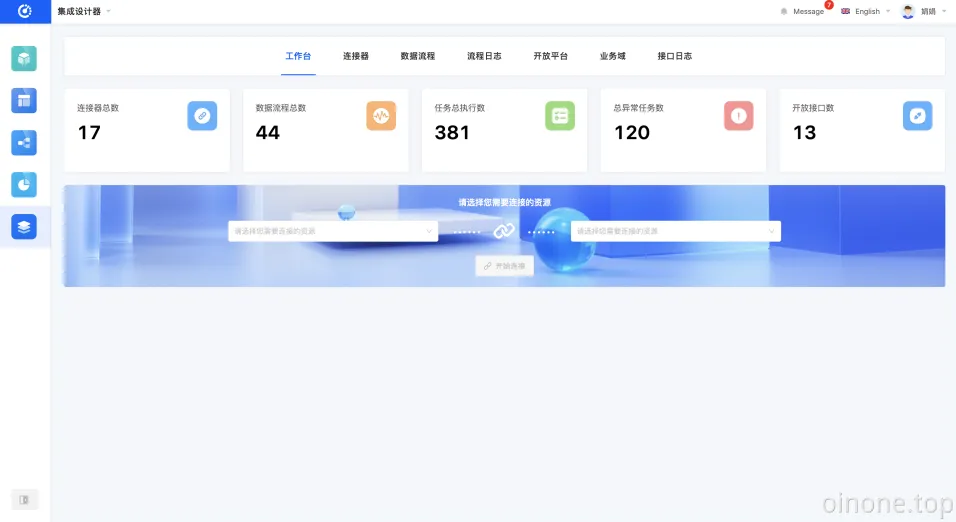
工作台用于呈现集成相关的统计数据,包括:

  • 连接器总数:集成资源连接器总数;
  • 数据流程总数:定义的数据连接流程总数;
  • 任务总执行数:任务总执行数(统计流程实例数量);
  • 总异常任务数:总执行异常的任务数;
  • 开放接口数:合计开放接口数量(包含所有状态)。

image.png

2. 快捷连接

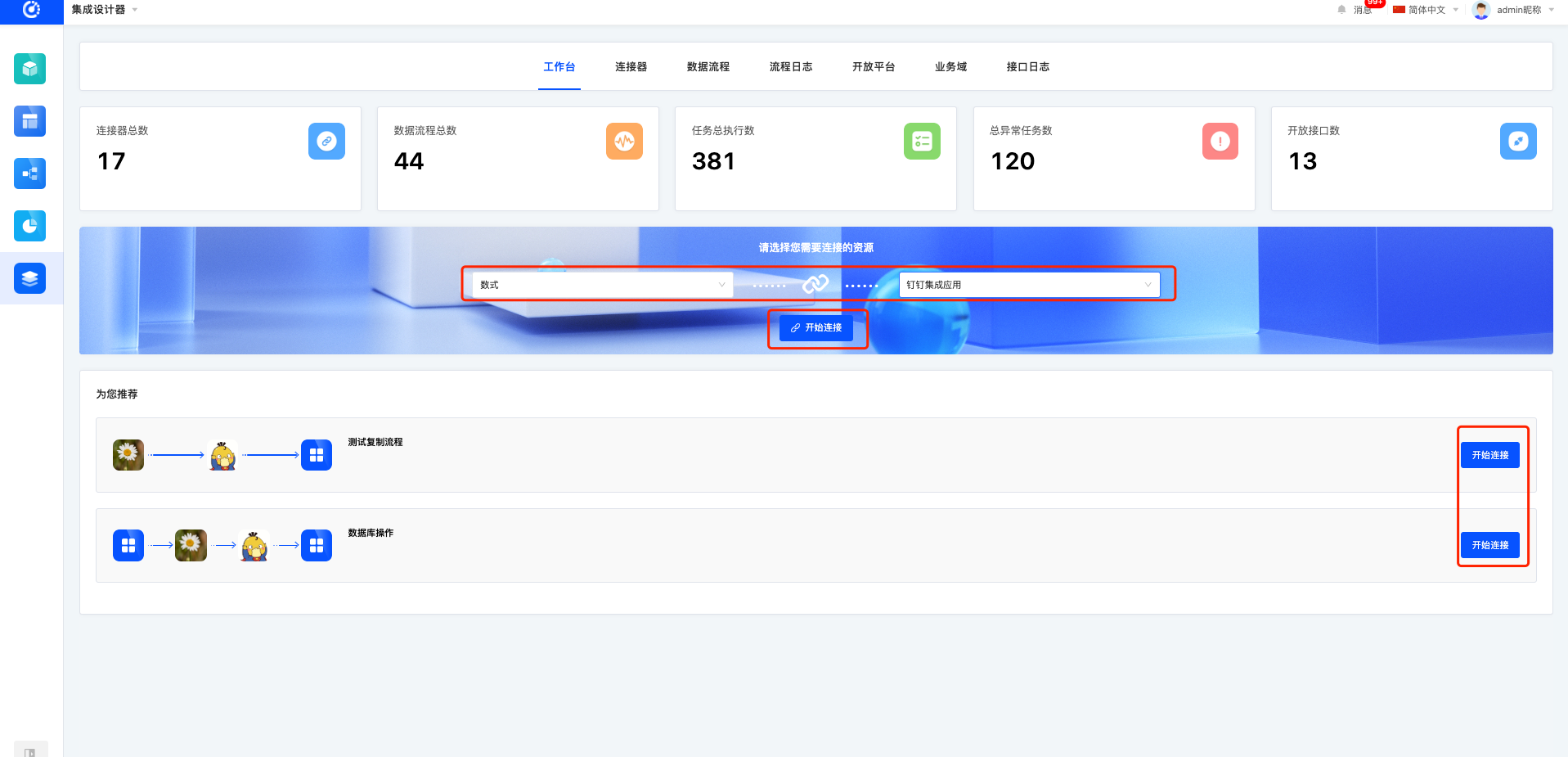
快捷连接是通过快捷筛选所需要链接的集成资源(应用/Oinone平台应用/数据库等),进入【数据流程创建页】,同时展示平台提供的数据流程模版,点击开始连接可使用数据流程模型创建数据流程。

image.png

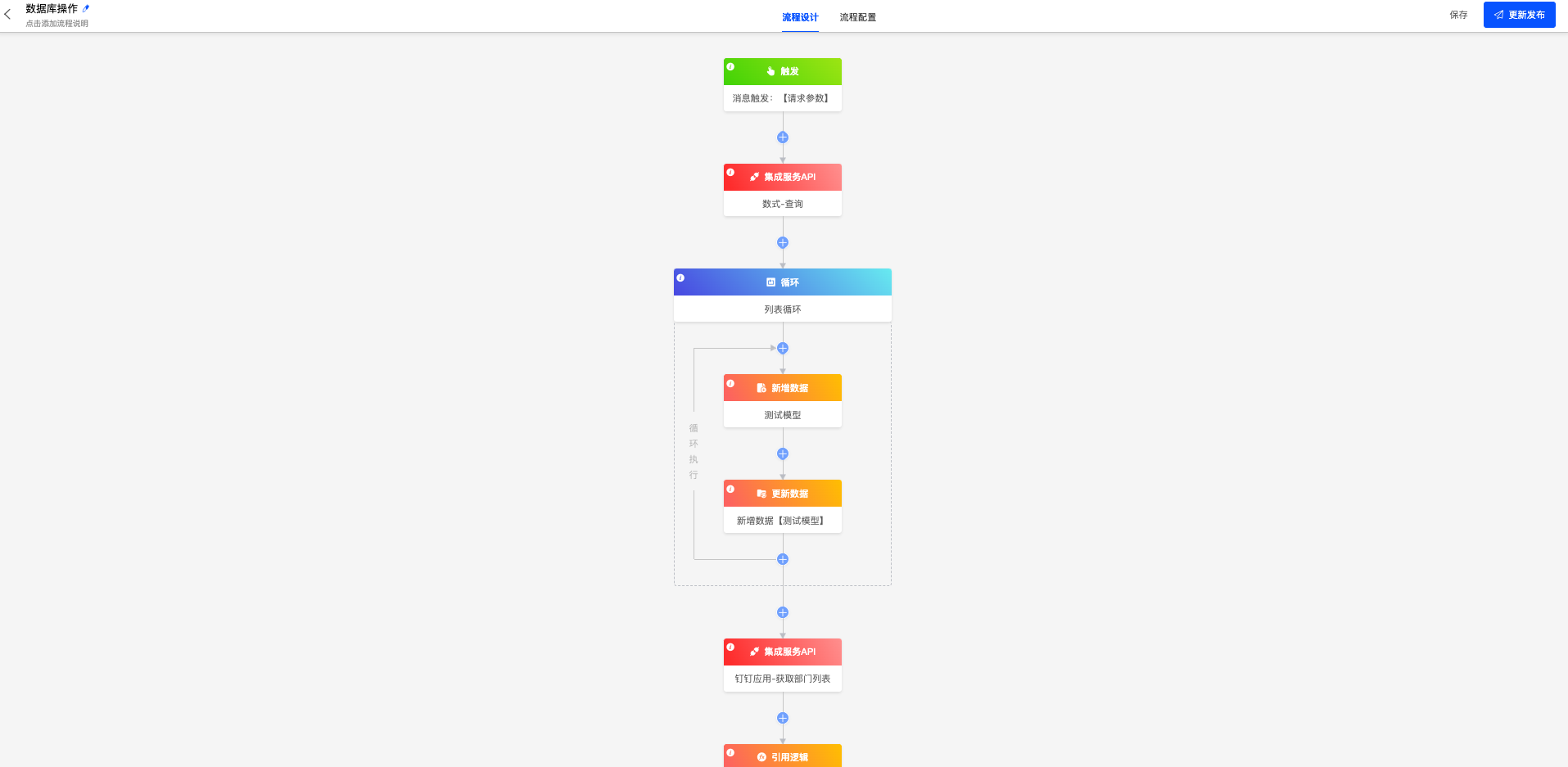
开始连接后进入流程创建页:

image.png

Oinone社区 作者:史, 昂原创文章,如若转载,请注明出处:https://doc.oinone.top/oio4/9426.html

访问Oinone官网:https://www.oinone.top获取数式Oinone低代码应用平台体验

(0)
史, 昂的头像史, 昂数式管理员
上一篇 2024年6月20日
下一篇 2024年6月20日

相关推荐

  • 4.1.11 函数之异步执行

    异步任务是非常常见的一种开发模式,它在分布式的开发模式中有很多应用场景如: 高并发场景中,我们一般采用把长流程切短,用异步方式去掉可以异步的非关键功能,缩小主流程响应时间,提升用户体验 异构系统的集成调用,通过异步任务完成解耦与自动重试 分布式系统最终一致性的可选方案 今天我们了解oinone是如何结合Spring+TbSchedule来完成异步任务 一、TbSchedule介绍 它是一个支持分布式的调度框架,让批量任务或者不断变化的任务能够被动态的分配到多个主机的JVM中,在不同的线程组中并行执行,所有的任务能够被不重复,不遗漏的快速处理。基于ZooKeeper的纯Java实现,由Alibaba开源。在互联网和电商领域TBSchedule的使用非常广泛,目前被应用于阿里巴巴、淘宝、支付宝、京东、聚美、汽车之家、国美等很多互联网企业的流程调度系统。也是笔者早期在阿里参与设计的一款产品。 oinone的异步任务执行原理(如下图4-1-11-1所示),先做一个大致了解: 图4-1-11-1 Oinone的异步任务执行原理图 基础管理工具 下载tbSchedule的控制台jar包去除文件后缀.txt(详见本书籍【附件一】)pamirs-middleware-schedule-console-3.0.1.jar.txt(31.2 MB) 启动控制台 java -jar pamirs-middleware-schedule-console-3.0.1.jar 图4-1-11-2 控制台启动方式 访问地址 http://127.0.0.1:10014/schedule/index.jsp?manager=true 图4-1-11-3 访问地址 配置zk连接参数 图4-1-11-4 配置zk连接参数 oinone默认实现任务类型 图4-1-11-5 Oinone默认实现任务类型 baseScheduleNoTransactionTask baseScheduleTask remoteScheduleTask — 适用于pamirs-middleware-schedule独立部署场景 serialBaseScheduleNoTransactionTask serialBaseScheduleTask serialRemoteScheduleTask — 适用于pamirs-middleware-schedule独立部署场景 cycleScheduleNoTransactionTask delayMsgTransferScheduleTask deleteTransferScheduleTask 注: a. 默认情况下:所有任务的任务项都只配置了一个任务项0,只有一台机器能分配任务。 1. 如果要修改配置可以在启动项目中放置schedule.json,来修改配置 2. 人工进入控制修改任务对应任务项的配置 b. 如果想为某一个核心任务配置的独立调度器,不受其他任务执行影响。那么见独立调度的异步任务 任务表相关说明 图4-1-11-6 任务表相关说明 二、构建第一个异步任务(举例) Step1 新建PetShopService和PetShopServiceImpl 1 新建PetShopService定义updatePetShops方法 package pro.shushi.pamirs.demo.api.service; import pro.shushi.pamirs.demo.api.model.PetShop; import pro.shushi.pamirs.meta.annotation.Fun; import pro.shushi.pamirs.meta.annotation.Function; import java.util.List; @Fun(PetShopService.FUN_NAMESPACE) public interface PetShopService { String FUN_NAMESPACE = "demo.PetShop.PetShopService"; @Function void updatePetShops(List<PetShop> petShops); } 图4-1-11-7 新建PetShopService定义updatePetShops方法 PetShopServiceImpl实现PetShopService接口并在updatePetShops增加@XAsync注解 displayName = "异步批量更新宠物商店",定义异步任务展示名称 limitRetryNumber = 3,定义任务失败重试次数,,默认:-1不断重试 nextRetryTimeValue = 60,定义任务失败重试的时间数,默认:3 nextRetryTimeUnit,定义任务失败重试的时间单位,默认:TimeUnitEnum.SECOND delayTime,定义任务延迟执行的时间数,默认:0 delayTimeUnit,定义任务延迟执行的时间单位,默认:TimeUnitEnum.SECOND package pro.shushi.pamirs.demo.core.service; import org.springframework.stereotype.Component; import pro.shushi.pamirs.demo.api.model.PetShop; import pro.shushi.pamirs.demo.api.service.PetShopService; import pro.shushi.pamirs.meta.annotation.Fun; import pro.shushi.pamirs.meta.annotation.Function; import pro.shushi.pamirs.trigger.annotation.XAsync; import java.util.List; @Fun(PetShopService.FUN_NAMESPACE) @Component public class PetShopServiceImpl implements PetShopService { @Override @Function @XAsync(displayName = "异步批量更新宠物商店",limitRetryNumber = 3,nextRetryTimeValue = 60) public void updatePetShops(List<PetShop> petShops) { new PetShop().updateBatch(petShops); } } 图4-1-11-8 实现PetShopService接口并在updatePetShops增加@XAsync注解 Step2 修改PetShopBatchUpdateAction的conform方法 引入PetShopService 修改conform方法 利用ArgUtils进行参数转化,ArgUtils会经常用到。 调用petShopService.updatePetShops方法 package pro.shushi.pamirs.demo.core.action; …… 引依赖类 @Model.model(PetShopBatchUpdate.MODEL_MODEL) @Component public class PetShopBatchUpdateAction { @Autowired private PetShopService petShopService; ……其他代码 @Action(displayName = "确定",bindingType = ViewTypeEnum.FORM,contextType = ActionContextTypeEnum.SINGLE) public PetShopBatchUpdate conform(PetShopBatchUpdate data){ if(data.getPetShopList() == null || data.getPetShopList().size()==0){ throw…

    2024年5月23日
    1.2K00
  • 3.4.3.3 SPI机制-扩展点

    扩展点结合拦截器的设计,oinone可以点、线、面一体化管理Function 扩展点用于扩展函数逻辑。扩展点类似于SPI机制(Service Provider Interface),是一种服务发现机制。这一机制为函数逻辑的扩展提供了可能。 一、构建第一个扩展点 自定义扩展点(举例) 在我们日常开发中,随着对业务理解的深入,往往还在一些逻辑中会预留扩展点,以便日后应对不同需求时可以灵活替换某一小块逻辑。 在3.3.4【模型的继承】一文中的PetCatItemQueryService,是独立新增函数只作公共逻辑单元。现在我们给它的实现类增加一个扩展点。在PetCatItemQueryServiceImpl的queryPage方法中原本会先查询PetCatType列表,我们这里假设这个逻辑随着业务发展未来会发生变化,我们可以预先预留【查询萌猫类型扩展点】 Step1 新增扩展点定义PetCatItemQueryCatTypeExtpoint 扩展点命名空间:在接口上用@Ext声明扩展点命名空间。会优先在本类查找@Ext,若为空则往接口向上做遍历查找,返回第一个查找到的@Ext.value注解值,使用该值再获取函数的命名空间;如果未找到,则返回扩展点全限定类名。所以我们这里扩展点命名空间为:pro.shushi.pamirs.demo.api.extpoint.PetCatItemQueryCatTypeExtpoint 扩展点技术名称:先取@ExtPoint.name,若为空则取扩展点接口方法名。所以我们这里技术名为queryCatType package pro.shushi.pamirs.demo.api.extpoint; import pro.shushi.pamirs.demo.api.model.PetCatType; import pro.shushi.pamirs.meta.annotation.Ext; import pro.shushi.pamirs.meta.annotation.ExtPoint; import java.util.List; @Ext public interface PetCatItemQueryCatTypeExtpoint { @ExtPoint(displayName = "查询萌猫类型扩展点") List<PetCatType> queryCatType(); } 图3-4-3-11 新增扩展点定义PetCatItemQueryCatTypeExtpoint Step2 修改PetCatItemQueryServiceImpl(用Ext.run模式调用) 修改queryPage,增加扩展点的使用代码。扩展点的使用有两种方式 方法一,使用命名空间和扩展点名称调用Ext.run(namespace, fun, 参数); 方法二,使用函数式接口调用Ext.run(函数式接口, 参数); 我们这里用了第二种方式 用PetCatItemQueryCatTypeExtpoint的全限定类名作为扩展点的命名空间(namespace) 用queryCatType的方法名作为扩展点的技术名称(name) 根据namespace+name去找到匹配扩展点实现,并根据规则是否匹配,以及优先级唯一确定一个扩展点实现去执行逻辑 package pro.shushi.pamirs.demo.core.service; ……省略依赖包 @Model.model(PetCatItem.MODEL_MODEL) @Component public class PetCatItemAction extends DataStatusBehavior<PetCatItem> { @Override protected PetCatItem fetchData(PetCatItem data) { return data.queryById(); } @Action(displayName = "启用") public PetCatItem dataStatusEnable(PetCatItem data){ data = super.dataStatusEnable(data); data.updateById(); return data; } @Function.Advanced(displayName = "查询模型数据的默认过滤条件", type = FunctionTypeEnum.QUERY, managed = true) @Function(openLevel = {LOCAL}) public String queryFilters() { StringBuilder sqlWhereCondition = new StringBuilder(); // List<PetCatType> typeList = new PetCatType().queryList(); List<PetCatType> typeList = Ext.run(PetCatItemQueryCatTypeExtpoint::queryCatType, new Object[]{}); if(!CollectionUtils.isEmpty(typeList)){ // sqlWhereCondition.append("type_id"); sqlWhereCondition.append(PStringUtils.fieldName2Column(LambdaUtil.fetchFieldName(PetCatItem::getTypeId))); sqlWhereCondition.append(StringUtils.SPACE).append(SqlConstants.IN).append(CharacterConstants.LEFT_BRACKET); for(PetCatType petCatType: typeList){ sqlWhereCondition.append(petCatType.getId()).append(CharacterConstants.SEPARATOR_COMMA); } sqlWhereCondition.deleteCharAt(sqlWhereCondition.lastIndexOf(CharacterConstants.SEPARATOR_COMMA)); sqlWhereCondition.append(StringUtils.SPACE).append(CharacterConstants.RIGHT_BRACKET); } return sqlWhereCondition.toString(); } ……省略其他函数 } 图3-4-3-12 修改PetCatItemQueryServiceImpl Step3 新增扩展点实现PetCatItemQueryCatTypeExtpointOne 扩展点命名空间要与扩展点定义一致,用@Ext(PetCatItemQueryCatTypeExtpoint.class) @ExtPoint.Implement声明这是在@Ext声明的命名空间下,且技术名为queryCatType的扩展点实现 package pro.shushi.pamirs.demo.core.extpoint; import pro.shushi.pamirs.demo.api.extpoint.PetCatItemQueryCatTypeExtpoint; import pro.shushi.pamirs.demo.api.model.PetCatType; import pro.shushi.pamirs.meta.annotation.Ext; import pro.shushi.pamirs.meta.annotation.ExtPoint; import pro.shushi.pamirs.meta.api.session.PamirsSession; import java.util.List; @Ext(PetCatItemQueryCatTypeExtpoint.class) public class PetCatItemQueryCatTypeExtpointOne implements PetCatItemQueryCatTypeExtpoint { @Override @ExtPoint.Implement(displayName = "查询萌猫类型扩展点的默认实现") public List<PetCatType> queryCatType() { PamirsSession.getMessageHub().info("走的是第一个扩展点"); List<PetCatType> typeList = new PetCatType().queryList(); return typeList; } } 图3-4-3-13 新增扩展点实现PetCatItemQueryCatTypeExtpointOne Step4…

    2024年5月23日
    1.5K00
  • 3.5.1 构建第一个Menu

    在前面章节中我们也涉及到菜单,因为菜单我们模块就是地图、导航,没有地图、导航就无法畅游模块并进行相关业务操作。在3.3.4【模块的继承】一文关于多表继承的内容就有涉及到菜单的初始化,本文将展开介绍初始化Menu的两种方式分别是:注解式、数据初始化式。 注解式(举例) Step1 分析现有菜单注解 用@UxMenus声明DemoMenus为菜单初始化入口,同时该类在DemoModule配置扫描路径中,那么通过DemoMenus初始化的菜单都挂在demo_core这个模块上。 如果采用这种模式,建议同一个模块的菜单都只配置在一处 package pro.shushi.pamirs.demo.core.init; import pro.shushi.pamirs.boot.base.constants.ViewActionConstants; import pro.shushi.pamirs.boot.base.ux.annotation.action.UxRoute; import pro.shushi.pamirs.boot.base.ux.annotation.navigator.UxMenu; import pro.shushi.pamirs.boot.base.ux.annotation.navigator.UxMenus; import pro.shushi.pamirs.demo.api.model.*; import pro.shushi.pamirs.demo.api.proxy.PetShopProxy; import pro.shushi.pamirs.demo.api.proxy.PetShopProxyA; import pro.shushi.pamirs.demo.api.proxy.PetShopProxyB; @UxMenus public class DemoMenus implements ViewActionConstants { @UxMenu("商店管理")@UxRoute(PetShopProxy.MODEL_MODEL) class PetShopProxyMenu{} @UxMenu("商店管理A")@UxRoute(PetShopProxyA.MODEL_MODEL) class PetShopProxyAMenu{} @UxMenu("商店管理B")@UxRoute(PetShopProxyB.MODEL_MODEL) class PetShopProxyBMenu{} @UxMenu("商品管理")@UxRoute(PetItem.MODEL_MODEL) class ItemMenu{} @UxMenu("宠狗商品")@UxRoute(PetDogItem.MODEL_MODEL) class DogItemMenu{} @UxMenu("萌猫商品")@UxRoute(PetCatItem.MODEL_MODEL) class CatItemMenu{} @UxMenu("宠物品种")@UxRoute(PetType.MODEL_MODEL) class PetTypeMenu{} @UxMenu("萌猫品种")@UxRoute(PetCatType.MODEL_MODEL) class CatTypeMenu{} @UxMenu("宠狗品种")@UxRoute(PetDogType.MODEL_MODEL) class DogTypeMenu{} @UxMenu("宠物达人")@UxRoute(PetTalent.MODEL_MODEL) class PetTalentMenu{} } 图3-5-1-1 菜单注解 Step2 改造现有菜单注解 菜单的层级关系通过@UxMenu的嵌套进行描述 菜单点击效果有三种分别对应不同的Action的类型,关于Action的类型详见3.5.3【Action的类型】一文。 通过@UxRoute定义一个与菜单绑定的viewAction,@UxMenu("创建商店")@UxRoute(value = PetShop.MODEL_MODEL,viewName = "redirectCreatePage",viewType = ViewTypeEnum.FORM),其中viewName代表视图的name(其默认值为redirectListPage,也就是跳转到列表也),value代码视图所属模型的编码,viewType代表view类型(其默认值为ViewTypeEnum.TABLE) @UxServer定义一个与菜单绑定的serverAction,@UxMenu("UxServer")@UxServer(model = PetCatItem.MODEL_MODEL,name = "uxServer") ,其中name代表serverAction的name,model或value代码serverAction所属模型的编码 @UxLink定义一个与菜单绑定的UrlAction,@UxMenu("Oinone官网")@UxLink(value = "http://www.oinone.top”,openType= ActionTargetEnum.OPEN_WINDOW) ,其中value为跳转url,openType为打开方式默认为ActionTargetEnum.ROUTER,打开方式有以下几种 ROUTER("router", "页面路由", "页面路由") DIALOG("dialog", "页面弹窗", "页面弹窗") DRAWER("drawer", "打开抽屉", "打开抽屉") OPEN_WINDOW("openWindow", "打开新窗口", "打开新窗口") 配合菜单演示,PetCatItemAction增加一个uxServer的ServerAction package pro.shushi.pamirs.demo.core.action; ……包引用 @Model.model(PetCatItem.MODEL_MODEL) @Component public class PetCatItemAction extends DataStatusBehavior<PetCatItem> { ……省略其他代码 @Action(displayName = "uxServer") public PetCatItem uxServer(PetCatItem data){ PamirsSession.getMessageHub().info("uxServer"); return data; } } 图3-5-1-2 示例代码 新的菜单初始化代码如下 package pro.shushi.pamirs.demo.core.init; import pro.shushi.pamirs.boot.base.constants.ViewActionConstants; import pro.shushi.pamirs.boot.base.enmu.ActionTargetEnum; import pro.shushi.pamirs.boot.base.ux.annotation.action.UxLink; import pro.shushi.pamirs.boot.base.ux.annotation.action.UxRoute; import pro.shushi.pamirs.boot.base.ux.annotation.action.UxServer; import pro.shushi.pamirs.boot.base.ux.annotation.navigator.UxMenu; import pro.shushi.pamirs.boot.base.ux.annotation.navigator.UxMenus; import pro.shushi.pamirs.demo.api.model.*; import pro.shushi.pamirs.demo.api.proxy.PetShopProxy; import pro.shushi.pamirs.demo.api.proxy.PetShopProxyA; import pro.shushi.pamirs.demo.api.proxy.PetShopProxyB; import pro.shushi.pamirs.meta.enmu.ViewTypeEnum; @UxMenus public class DemoMenus implements ViewActionConstants { @UxMenu("商店") class ShopMenu{ @UxMenu("UxServer")@UxServer(model = PetCatItem.MODEL_MODEL,name = "uxServer") class ShopSayHelloMenu{ } @UxMenu("创建商店")@UxRoute(value = PetShop.MODEL_MODEL,viewName = "redirectCreatePage",viewType = ViewTypeEnum.FORM) class ShopCreateMenu{ }…

    2024年5月23日
    1.4K00
  • 5.7 商业支撑之库存域

    库存的差异会反馈到企业的整个价值链上,所以对库存的设计是至关重要的 一、基础介绍 我们先抛开仓库中对库存的实操管理和整个流通领域的库存,只围绕企业自身一级的采销链路上我们可以从管理和销售两个角度去看。 从管理角度上我们会关心:实物库存、在途库存、在产库存、库存批次等等,也就是企业有多少库存分布在哪里在什么环节。 从销售角度上我们会关心:可售库存、安全库存等等,也就是企业在特定渠道销售中库存分配规则。 在商业场景中库存管理一头对接仓库、生成、采购,另一头对接多个销售渠道。它的挑战在于不同行业不同特征商品都有比较大的差异。比如家具行业卖的是生产能力,家电区域化销售,生鲜拼车销售,服饰一仓销全国。热销的要分配提升体验防止超卖,滞销的要活动拉流量,普通的要渠道共享最大化可售。库存管理的差异会反馈到企业的整个价值链上,所以对库存的设计是至关重要的。 库存设计挑战在于: 技术上:库存类似账户账本的设计,需要能追溯库存变化的过程,且库存操作都能可追溯业务单据。热点数据的并发控制 业务上:在管理角度上游能跟仓库、采购、生产等进行对接、对账、并为其设置可售规则,下游能为各个销售渠道设置库存分配与同步规则 二、模型介绍 图5-7-1 模型介绍 核心设计逻辑: 单据链路:业务单据(外部业务单据+库存业务单据)产生库存指令(库存调整入\出库单),再由库存指令操作库存并记录库存流水。 管理链路:基础数据维护仓库、供应商、服务范围与费用。这些数据是订单履约路由和可售库存同步的基础 库存数据:对外跟商品域,通过库存指令进行操作。不同库存各自维护自身库存与流水记录,确保可追溯。 如果跟销售渠道对接,还需要扩展可售库存逻辑规则以及同步规则。比如oms类似的应用

    2024年5月23日
    1.4K00
  • 3.5.2.1 整体介绍

    虽然我们有小眼睛可以让用户自定义展示字段和排序喜好,以及通过权限控制行、列展示,但在我们日常业务开发中还是会对页面进行调整,以满足业务方的对交互友好和便捷性的要求。本节会在如何自定义之前我们先介绍页面结构与逻辑,再带小伙伴一起完成自定义view的Template和Layout,以及整个母版的Template和Layout 页面的构成讲解 页面交互拓扑图 页面交互拓扑图 图3-5-2-1 页面交互拓扑图 注:页面逻辑交互拓扑图说明 模块作为主切换入口 模块决定菜单列表 菜单切换触发点击action 前端根据Mask、View进行渲染, a. Mask是母版是确定了主题、非主内容分发区域所使用组件和主内容分发区域联动方式的页面模板。全局、应用、视图动作、视图都可以通过mask属性指定母版 bMask和View都是有layout定义和template定义合并而成,系统会提供默认母版,以及为每种视图提供默认layout c. layout与template通过插槽进行匹配 Action根据不同类型做出不同访问后端服务、url跳转、页面路由、发起客户端动作等 Aciton路由可以指定Mask、视图组件的layout、template a. 当layout没有指定的时候则用系统默认的 b. 当template没有指定的时候,且视图组件相同类型有多条记录时,根据优先级选取 Mask和视图组件的layout优先级(视图组件>视图动作 > 应用 > 全局) 默认母版以及各类视图组件 母版布局 默认母版基础布局base-layout <mask layout="default"> <header slot="header"/> <container slot="main" name="main"> <sidebar slot="sidebar"/> <container slot="content"/> </container> <footer slot="footer"/> </mask> 图3-5-2-2 默认母版基础布局base-layout 母版template <mask layout="default"> <mask name="defaultMask"> <template slot="header"> <container name="appBar"> <element widget="logo"/> <element widget="appFinder"/> </container> <container name="operationBar"> <element widget="notification"/> <element widget="dividerVertical"/> <element widget="languages"/> </container> <element widget="userProfile"/> </template> <template slot="sidebar"> <element widget="navMenu"/> </template> <template slot="content"> <element widget="breadcrumb"/> <element widget="mainView"/> </template> </mask> 图3-5-2-3 母版template 注: 上例中因为名称为main的插槽不需要设置更多的属性,所以在template中缺省了main插槽的template标签。 最终可执行视图 <mask name="defaultMask"> <header> <container name="appBar"> <element widget="logo"/> <element widget="appFinder"/> </container> <container name="operationBar"> <element widget="notification"/> <element widget="dividerVertical"/> <element widget="languages"/> </container> <element widget="userProfile"/> </header> <container name="main"> <sidebar name="sidebar"> <element widget="navMenu"/> </sidebar> <container name="content"> <element widget="breadcrumb"/> <element widget="mainView"/> </container> </container> <footer/> </mask> 图3-5-2-4 最终可执行视图 表格视图布局 默认表格视图基础布局base-layout <view type="table"> <view type="search"> <element widget="search" slot="search"> <xslot name="fields" slotSupport="field" /> </element> </view> <pack widget="fieldset"> <element widget="actionBar" slot="actions" slotSupport="action" /> <element widget="table" slot="table"> <xslot name="fields" slotSupport="field" /> <element widget="actionsColumn" slot="actionsColumn"> <xslot name="rowActions" slotSupport="action" /> </element> </element> </pack> </view> 图3-5-2-5 默认表格视图基础布局base-layout 注:table标签的子标签为column组件,如果field填充到元数据插槽fields没有column组件将自动包裹column组件。 表格视图template <view type="table" model="xxx" name="tableViewExample">…

    2024年5月23日
    1.3K00

Leave a Reply

登录后才能评论