4.1.18 框架之网关协议-Variables变量

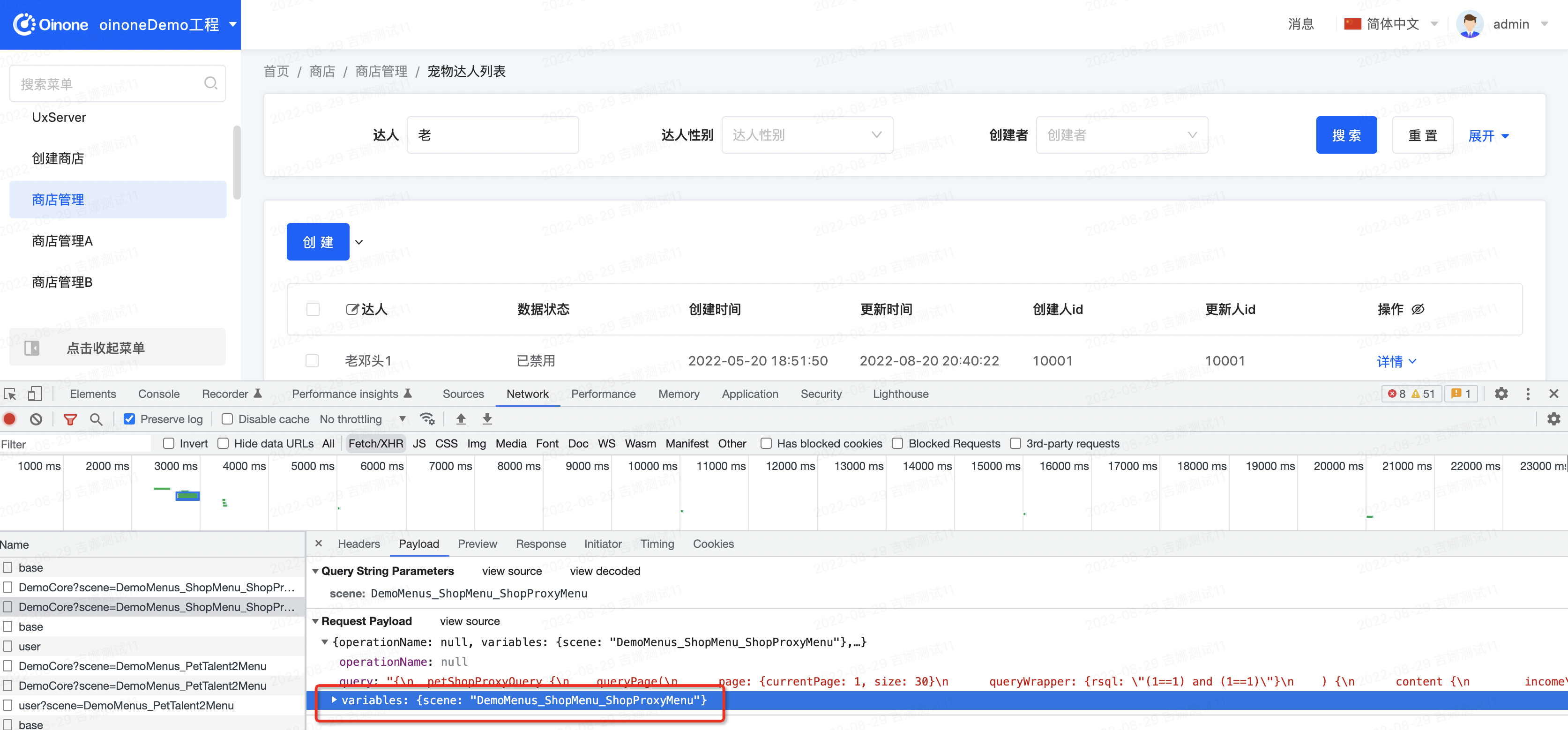
我们在应用开发过程有一种特殊情况在后端逻辑编写的时候需要知道请求的发起入口,平台利用GQL协议中的Variables属性来传递信息,本文就介绍如何获取。

一、前端附带额外变量

属性名 类型 说明
scene String 菜单入口

表4-1-18-1 前端附带额外变量

image.png

图4-1-18-1 variables信息中的scene

二、后端如何接收variables信息

通过PamirsSession.getRequestVariables()可以得到PamirsRequestVariables对象。

三、第一个variable(举例)

Step1 修改PetTalentAction,获取得到前端传递的Variables

package pro.shushi.pamirs.demo.core.action;
……类引用
@Model.model(PetTalent.MODEL_MODEL)
@Component
public class PetTalentAction {
……其他代码
 @Function.Advanced(type= FunctionTypeEnum.QUERY)
 @Function.fun(FunctionConstants.queryPage)
 @Function(openLevel = {FunctionOpenEnum.API})
 public Pagination<PetTalent> queryPage(Pagination<PetTalent> page, IWrapper<PetTalent> queryWrapper){
 String scene = (String)PamirsSession.getRequestVariables().getVariables().get("scene");
 System.out.println("scene: "+ scene);
 ……其他代码
 }
……其他代码
}

图4-1-18-2 修改PetTalentAction

Step2 重启验证

点击宠物达人不同菜单入口,查看效果

image.png

图4-1-18-3 示例效果(一)

image.png

图4-1-18-4 示例效果(二)

Oinone社区 作者:史, 昂原创文章,如若转载,请注明出处:https://doc.oinone.top/oio4/9293.html

访问Oinone官网:https://www.oinone.top获取数式Oinone低代码应用平台体验

Like (0)
史, 昂's avatar史, 昂数式管理员
Previous 2024年5月23日 am8:45
Next 2024年5月23日

相关推荐

  • 4.5.2 研发辅助之SQL优化

    Oinone体系中是不需要针对模型写SQL的,默认提供了通用的数据管理器。在带来便利的情况下,也导致传统的sql审查就没办法开展。但是我们可以以技术的手段收集慢SQL和限制问题SQL执行。 慢SQL搜集目的:去发现非原则性问题的慢SQL,并进行整改 限制问题SQL执行:对应一些不规范的SQL系统上直接做限制,如果有特殊情况手动放开 一、发现慢SQL 这个功能并没有直接加入到oinone的版本中,需要业务自行写插件,插件代码如下。大家可以根据实际情况进行改造比如: 堆栈入口,例子中只是放了pamirs,可以根据实际情况改成业务包路径 对慢SQL的定义是5s还是3s,根据实际情况变 package pro.shushi.pamirs.demo.core.plugin; import org.apache.ibatis.executor.Executor; import org.apache.ibatis.mapping.MappedStatement; import org.apache.ibatis.plugin.*; import org.apache.ibatis.session.ResultHandler; import org.apache.ibatis.session.RowBounds; import org.springframework.stereotype.Component; import pro.shushi.pamirs.meta.annotation.fun.extern.Slf4j; @Intercepts({ @Signature(type = Executor.class,method = "query",args = {MappedStatement.class,Object.class, RowBounds.class, ResultHandler.class}) }) @Component @Slf4j public class SlowSQLAnalysisInterceptor implements Interceptor { @Override public Object intercept(Invocation invocation) throws Throwable { long start = System.currentTimeMillis(); Object result = invocation.proceed(); long end = System.currentTimeMillis(); if (end – start > 10000) {//大于10秒 try { StackTraceElement[] stackTraceElements = Thread.currentThread().getStackTrace(); StringBuffer slowLog = new StringBuffer(); slowLog.append(System.lineSeparator()); for (StackTraceElement element : stackTraceElements) { if (element.getClassName().indexOf("pamirs") > 0) { slowLog.append(element.getClassName()).append(":").append(element.getMethodName()).append(":").append(element.getLineNumber()).append(System.lineSeparator()); } } Object parameter = null; if (invocation.getArgs().length > 1) { parameter = invocation.getArgs()[1]; } MappedStatement mappedStatement = (MappedStatement) invocation.getArgs()[0]; BoundSql boundSql = mappedStatement.getBoundSql(parameter); Configuration configuration = mappedStatement.getConfiguration(); String originalSql = showSql(configuration, boundSql); originalSql = originalSql.replaceAll("\'", "").replace("\"", ""); log.warn("检测到的慢SQL为:" + originalSql); log.warn("业务慢SQL入口为:" + slowLog.toString()); } catch (Throwable e1) { //忽略 } } return result; } public String showSql(Configuration configuration, BoundSql boundSql) { Object parameterObject = boundSql.getParameterObject(); List<ParameterMapping> parameterMappings = boundSql.getParameterMappings(); String sql = boundSql.getSql().replaceAll("[\\s]+", " "); if (parameterMappings.size() > 0 && parameterObject != null) { TypeHandlerRegistry typeHandlerRegistry…

    Oinone 7天入门到精通 2024年5月23日
    1.6K00
  • 6.3 数据审计(改)

    在业务应用中我们经常需要为一些核心数据的变更做审计追踪,记录字段的前后变化、操作IP、操作人、操作地址等等。数据审计模块为此提供了支撑和统一管理。它在成熟的企业的核心业务系统中,需求是比较旺盛的。接下来我们开始学习下数据审计模块 准备工作 pamirs-demo-core的pom文件中引入pamirs-data-audit-api包依赖 <dependency> <groupId>pro.shushi.pamirs.core</groupId> <artifactId>pamirs-data-audit-api</artifactId> </dependency> pamirs-demo-boot的pom文件中引入pamirs-data-audit-core和pamirs-third-party-map-core包依赖,数据审计会记录操作人的地址信息,所以也依赖了pamirs-third-party-map-core <dependency> <groupId>pro.shushi.pamirs.core</groupId> <artifactId>pamirs-data-audit-core</artifactId> </dependency> <dependency> <groupId>pro.shushi.pamirs.core.map</groupId> <artifactId>pamirs-third-party-map-core</artifactId> </dependency> pamirs-demo-boot的application-dev.yml文件中增加配置pamirs.boot.modules增加data_audit 和third_party_map,即在启动模块中增加data_audit和third_party_map模块 pamirs: boot: modules: – data_audit – tp_map 为third_party_map模块增加高德接口api,下面e439dda234467b07709f28b57f0a9bd5换成自己的key pamirs: eip: map: gd: key: e439dda234467b07709f28b57f0a9bd5 数据审计 注解式(举例) Step1 新增PetTalentDataAudit数据审计定义类 package pro.shushi.pamirs.demo.core.init.audit; import pro.shushi.pamirs.data.audit.api.annotation.DataAudit; import pro.shushi.pamirs.demo.api.model.PetTalent; @DataAudit( model = PetTalent.MODEL_MODEL,//需要审计的模型 modelName = "宠物达人" ,//模型名称,默认模型对应的displayName //操作名称 optTypes = {PetTalentDataAudit.PETTALENT_CREATE,PetTalentDataAudit.PETTALENT_UDPATE}, fields={"nick","picList.id","picList.url","petShops.id","petShops.shopName"}//需要审计的字段,关系字段用"."连结 ) public class PetTalentDataAudit { public static final String PETTALENT_CREATE ="宠物达人创建"; public static final String PETTALENT_UDPATE ="宠物达人修改"; Step2 修改PetTalentAction的update方法 做审计日志埋点:手工调用 OperationLogBuilder.newInstance().record()方法。需要注意的是这里需要把原有记录的数据值先查出来做对比 @Function.Advanced(type= FunctionTypeEnum.UPDATE) @Function.fun(FunctionConstants.update) @Function(openLevel = {FunctionOpenEnum.API}) public PetTalent update(PetTalent data){ //记录日志 OperationLogBuilder.newInstance(PetTalent.MODEL_MODEL, PetTalentDataAudit.PETTALENT_UDPATE).record(data.queryById().fieldQuery(PetTalent::getPicList).fieldQuery(PetTalent::getPetShops),data); PetTalent existPetTalent = new PetTalent().queryById(data.getId()); if(existPetTalent !=null){ existPetTalent.fieldQuery(PetTalent::getPicList); existPetTalent.fieldQuery(PetTalent::getPetShops); existPetTalent.relationDelete(PetTalent::getPicList); existPetTalent.relationDelete(PetTalent::getPetShops); } data.updateById(); data.fieldSave(PetTalent::getPicList); data.fieldSave(PetTalent::getPetShops); return data; } Step3 重启看效果 修改宠物达人记录对应的字段,然后进入审计模块查看日志

    2024年5月23日
    1.4K00
  • 3.5.7.8 自定义菜单栏

    在业务中,可能会遇到需要对菜单栏的交互或UI做全新设计的需求,这个时候可以自定义菜单栏组件支持。 首先继承平台的CustomMenuWidget 组件,将自己vue文件设置到component处 import { NavMenu, SPI, ViewWidget } from '@kunlun/dependencies'; import Component from './CustomMenu.vue'; @SPI.ClassFactory( ViewWidget.Token({ // 这里的widget跟平台的组件一样,这样才能覆盖平台的组件 widget: 'nav-menu' }) ) export class CustomMenuWidget extends NavMenu { public initialize(props) { super.initialize(props); this.setComponent(Component); return this; } } vue文件中继承平台的props,编写自定义页面代码 export const NavMenuProps = { /** * 当前模块 */ module: { type: Object as PropType<IModule | null> }, /** * 树结构的菜单 */ menus: { type: Array as PropType<IResolvedMenu[]>, default: () => [] }, /** * 菜单类型,现在支持垂直、水平、和内嵌模式三种 */ mode: { type: String as PropType<'vertical' | 'horizontal' | 'inline'>, default: 'inline' }, /** * 菜单栏是否折叠收起 */ collapsed: { type: Boolean, default: false }, /** * 当前展开的 SubMenu 菜单项 key 数组 */ openKeys: { type: Array as PropType<string[]>, default: () => [] }, /** * 当前选中的菜单项 key 数组 */ selectKeys: { type: Array as PropType<string[]>, default: () => [] }, /** * 菜单搜索下拉选中菜单项 */ selectMenuBySearch: { type: Function as PropType<(menuName: String) => void> }, /** * 选中菜单项 */ selectMenu: { type: Function as PropType<(menuName: String) => Promise<void>> }, /** * SubMenu 展开/关闭的回调 */ openChange: { type: Function as PropType<(openKeys: string[]) => void> }, /**…

    2024年5月23日
    1.7K00

Leave a Reply

Please Login to Comment